
The Sierra Leone Urban Research Centre (SLURC), through its Urban Futures Project, convened a stakeholder co-design workshop on Tuesday, July 28, 2026, to examine land-use challenges and develop sustainable pathways for informal settlements in Freetown. The project focuses on two communities—Thompson Bay in the west of the city and Pamoronko in the east.
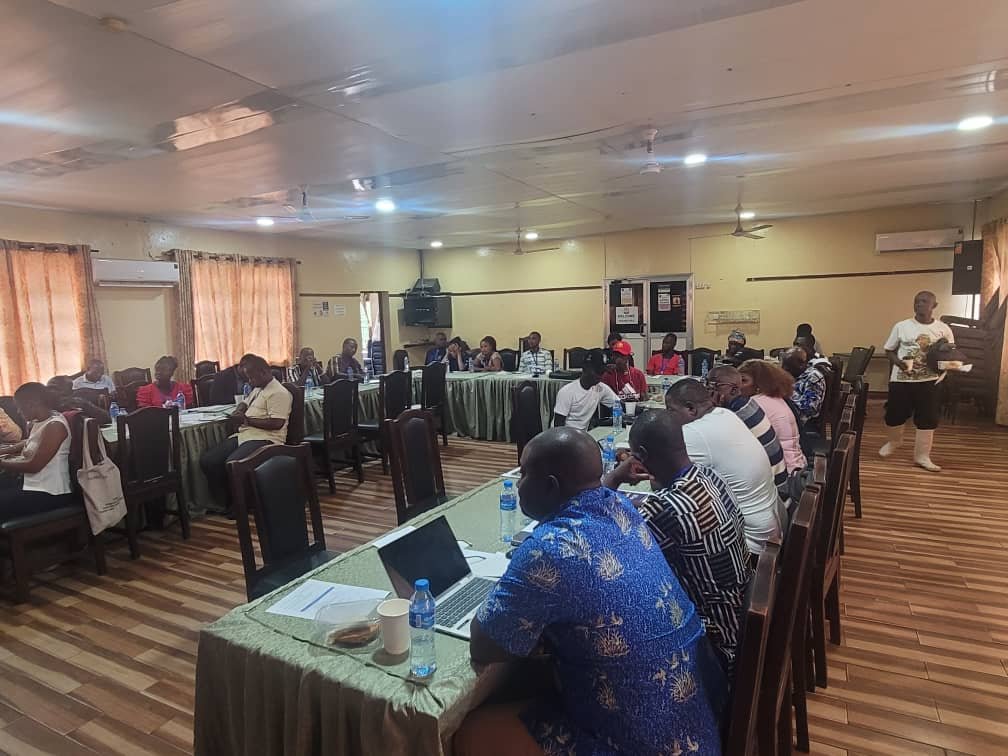
Held at the Council of Churches Sierra Leone Hall in Freetown, the workshop brought together representatives from government institutions, community groups, civil society organizations and researchers to explore how land-use practices and governance contribute to climate change vulnerabilities while identifying socially just adaptation strategies.
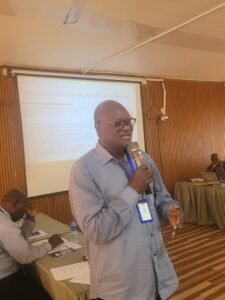
Delivering the opening remarks, Executive Director of SLURC, Dr. Joseph Macarthy, said informal settlements remain among the least understood parts of Freetown despite their increasing importance to the city’s growth and development.
He emphasized that the vision of inclusive cities, as outlined in the New Urban Agenda and Sustainable Development Goal 11, cannot be achieved if residents of informal settlements continue to be excluded from planning and decision-making processes.
“When people think of Freetown, they often think only of formal settlements,” Dr. Macarthy said, noting that informal communities are frequently underserved and overlooked. He stressed that all residents must be included in discussions about the future development of the city.
He further underscored the need for collaborative approaches to address climate change and land-use challenges in informal settlements, rather than relying solely on evictions. Drawing on experiences from other countries, he said sustained engagement among government institutions, communities and development partners is essential to finding lasting solutions.
“No one institution has a monopoly over the answers,” he stated. “The solutions rest with all of us.”
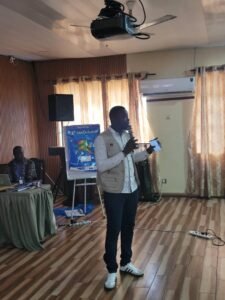
Providing an overview of the Urban Futures Project, Research Officer Amadu Kamara Labor explained that the initiative seeks to better understand climate change vulnerabilities in Freetown’s informal settlements while promoting socially just adaptation strategies.
According to him, the project is being implemented in two phases. The first phase focused on gathering information through community dialogue workshops, asset mapping, visual research methods, focus group discussions and key informant interviews.
Presenting findings from the initial phase, Labor identified weak enforcement of land-use regulations, rapid urbanization, increasing housing demand and limited economic opportunities as major drivers of vulnerability within informal settlements.
He disclosed that proposed interventions include mapping and reviewing existing land-use regulatory frameworks, co-designing localized wetland protection bylaws to reduce flood risks and facilitating stakeholder dialogue to identify alternative livelihood opportunities for affected communities.
Participants later broke into discussion groups to share experiences on how existing land-use practices and governance arrangements affect livelihoods and living conditions. They also examined how governance structures influence community resilience and explored practical ways stakeholders could contribute to sustainable land management.
Representing the National Protected Area Authority, Eshaka Lamin Sesay acknowledged that the growing encroachment of settlements into protected areas continues to pose significant challenges for the institution.
He explained that officials frequently encounter resistance during efforts to remove illegal occupants from protected areas, adding that although demolitions have been used to discourage encroachment, the workshop had generated valuable insights that could inform more effective and inclusive approaches in the future.
Speaking on behalf of the communities, Pamoronko resident Alpha Idrissa Dumbuya welcomed the initiative, describing it as an important platform that had deepened his understanding of the challenges confronting informal settlements.
He expressed optimism that the deliberations would lead to concrete actions and stronger collaboration among stakeholders aimed at improving living conditions in informal settlements across Freetown.
The workshop concluded with discussions on the next phase of the Urban Futures Project, including the identification of impact pathways designed to support long-term systems change and promote sustainable land-use management in the city’s informal settlements.