
The National Communications Authority (NaTCA) has marked its 20th anniversary with renewed commitments to expand connectivity, protect consumers and prepare Sierra Leone for emerging technologies, while Government challenged the sector to close the wide gap between mobile-network coverage and actual internet use.
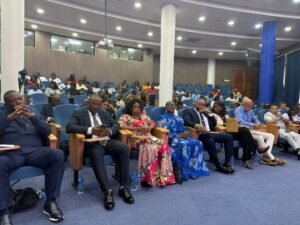
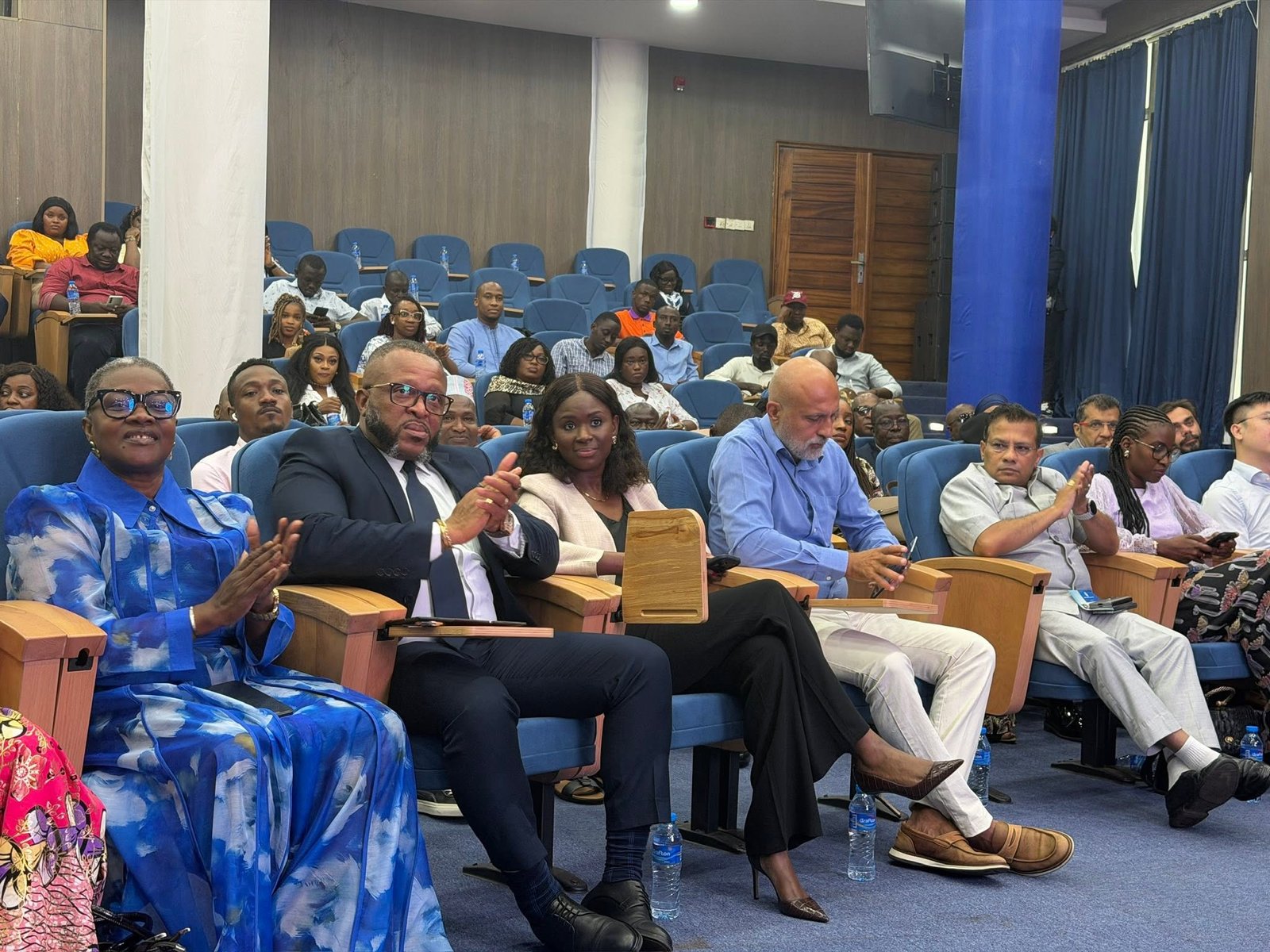
The celebration, held on Monday, August 3, 2026, at the NatCA Tower in Southridge, IMATT, Freetown, brought together Government officials, former leaders of the institution, telecommunications operators, development partners, staff and media representatives. It was organized on the theme, “Twenty Years of Consumer-Focused Connectivity.”
In his address, NatCA Director General, Amara Brewah, described the anniversary as an important milestone in Sierra Leone’s transition from limited fixed-line telephone services to a competitive and increasingly digital economy. He said a child born when the regulator was established in 2006 would now be a young adult accustomed to mobile phones, broadband internet, mobile money, online learning and instant communication.
He recalled a period when making an international call required travelling to Freetown, waiting in a queue and relying on collect-call services. Today, he said, citizens communicate instantly across borders, conduct financial transactions, obtain information and develop businesses through digital platforms.
Parliament established the National Telecommunications Commission, then known as NATCOM, through the Telecommunications Act of 2006. The law was amended in 2009 to broaden the regulator’s responsibilities, while the landing of the Africa Coast to Europe submarine fibre-optic cable in 2013 connected Sierra Leone to high-speed international broadband. The National Communications Authority Act of 2022 subsequently transformed NATCOM into NatCA, creating a technology-neutral regulator with an expanded mandate.
DG Brewah said that mandate now covers consumer protection, fair competition, service quality, regulatory compliance, nationwide coverage and efforts to bridge the rural-urban digital divide. Sierra Leone, he noted, has progressed from basic 2G services to widespread 3G and 4G connectivity and is now preparing for greater deployment of 5G and other advanced technologies.
According to him, the sector currently has four mobile-network operators, one mobile virtual-network operator, 32 internet service providers, 21 digital television stations, 222 FM radio stations and three open-access infrastructure providers. Mobile voice subscriptions have reached approximately 8.66 million, while mobile data subscriptions stand at about 3.78 million.
NatCA has also supported mobile-money interoperability, improved subscriber-registration systems, harmonised short codes, promoted regional roaming arrangements and introduced regulatory measures for satellite services. Brewah said the Authority had conducted market and consumer studies, strengthened quality-of-service rules and issued 5G trial licences to interested operators.
He stressed that progress should be judged by its impact on ordinary people, including farmers obtaining market information, traders receiving mobile payments, students accessing educational materials and entrepreneurs operating digital businesses from different parts of the country.
Addressing complaints about dropped calls and poor connections, Brewah said NatCA must follow lawful monitoring, investigation and enforcement procedures before sanctioning an operator. He maintained that regulation must protect consumers while providing investors with a fair and predictable business environment.
Brewah concluded that the Authority must prepare for artificial intelligence, satellite broadband, cloud computing, digital identity, cybersecurity and the Internet of Things. He pledged that NatCA would pursue a future in which every Sierra Leonean, regardless of location, gender or economic circumstances, could participate meaningfully in the digital economy.
In her keynote address, Minister of Communication, Technology and Innovation Haja Salima Monorma Bah said mobile-network coverage had reached about 96 per cent of Sierra Leone’s population, but internet usage remained at approximately 42 per cent. She described the disparity as one of the country’s most serious digital challenges.
Haja Salima Monorma Bah said the national fibre-optic backbone had reached 14 of Sierra Leone’s 16 districts, while satellite providers and new licensing models had further expanded communications infrastructure. However, she argued that the next phase of digital transformation must focus on affordability, reliability, digital skills, suitable devices and meaningful use.
“The next 20 years should be about bridging the usage gap, making services more affordable and ensuring that citizens receive better quality of service,” she said.
The Minister called for cooperation among Government, Parliament, NatCA, operators, civil society and development partners. She also urged telecommunications companies to respond promptly to complaints, communicate openly during service interruptions and respect customers who expected value for money.
Acting NatCA Board Chairman Paul Squire said stronger and more responsive regulation would be required as artificial intelligence, 5G, cybersecurity and digital financial services reshape economies. He urged management and staff to improve performance, declaring that if their previous effort stood at 60 per cent, it should rise immediately to 90 per cent.
Orange Sierra Leone Chief Executive Officer Aïcha Touré reaffirmed her company’s commitment to network expansion, digital infrastructure and financial inclusion.
She said Orange Money had widened access to financial services, while the telecommunications industry supported national revenue through taxes, licence fees, regulatory levies, employment and infrastructure investment.
QCell Sierra Leone Chief Executive Officer Karthik Jayamani praised NatCA for enforcing standards and holding operators accountable. Comparing the sector to a sporting contest, he described NatCA as the referee, operators as the players and consumers as the supporters whose interests must remain central.
Jayamani said competition had widened customer choice, while mobile money had strengthened financial inclusion for people without conventional bank accounts. He acknowledged that operators must continually invest as technologies change, even before recovering the full cost of previous upgrades.
Africell Sierra Leone Chief Executive Officer Shadi Gerjawi called for collaboration instead of confrontation between operators and the regulator. Africell began operating in 2005, he noted, making it slightly older than NatCA, and both institutions had developed alongside Sierra Leone’s communications industry.
CEO Gerjawi said NatCA must balance operator investments, Government expectations and public demand for affordable, reliable services. He highlighted rising fuel costs as a major burden because operators rely heavily on generators to power network sites where electricity remains limited.
The ceremony recognised former leaders, retired personnel and long-serving employees, while deceased officials and staff were remembered for their contributions. An anniversary logo was unveiled, a commemorative cake was cut and guests toured the NatCA facility.