

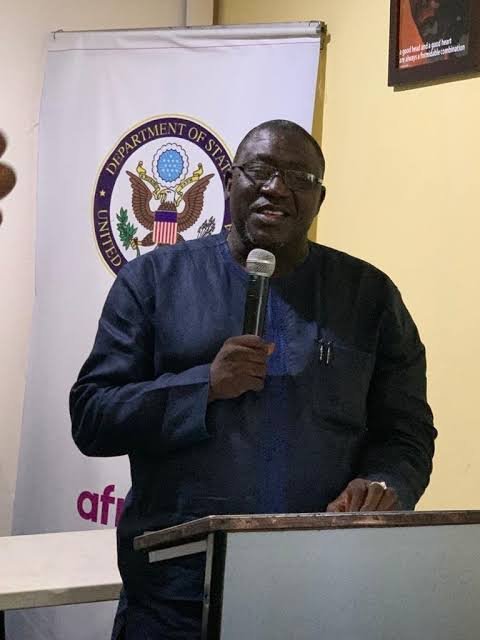
Director-General of the National Civil Registration Authority (NCRA), Mohamed Mubashir Massaquoi, has called for Sierra Leone’s Digital Public Infrastructure (DPI) programme to be built on the country’s existing legal identity systems, institutional mandates and technological investments.
Speaking at the First National Digital Public Infrastructure Stakeholder Consultation Forum on August 5, 2026, Mohamed Mubashir Massaquoi said trusted legal digital identity must remain the foundation of Sierra Leone’s digital transformation.
He commended President Julius Maada Bio and the organizers of the forum for advancing discussions on how technology could support national development, improve public services and strengthen the country’s digital economy.
Mohamed Mubashir Massaquoi said digital transformation was no longer limited to introducing new technologies, but involved establishing trusted public infrastructure that enables the Government to serve citizens efficiently, securely and inclusively.
He explained that DPI operates in the digital world in much the same way as roads, bridges, airports, electricity networks and water systems function in the physical world.
“Just as roads allow vehicles to reach their destinations, Digital Public Infrastructure allows digital services to reach every citizen quickly, securely and efficiently,” he stated.
According to him, DPI has three essential building blocks: legal digital identity, digital payments and secure data exchange. Those components, he said, must work together to enable Government institutions, financial service providers and private businesses to offer seamless and citizen-centred digital services.
However, Mohamed Mubashir Massaquoi stressed that none of those systems could function effectively without a reliable legal digital identity framework.
“Without trusted legal digital identity, Digital Public Infrastructure cannot achieve its full potential,” he said. “Identity is the foundation upon which trust, authentication, interoperability and digital service delivery are built.”
He described digital identity as a secure electronic representation of a person’s physical identity, which can be used to verify who the individual is when accessing services online.
The NCRA Director-General maintained that the Authority was legally mandated under the National Civil Registration Act of 2016 to manage Sierra Leone’s civil registration, vital statistics and national identity systems.
He said the NCRA’s role should not be treated as separate from the DPI agenda because the institution represents its foundational identity component.
According to Mohamed Mubashir Massaquoi, Sierra Leone has already made significant investments in building an integrated Civil Registration, Vital Statistics and Identity Management System that should be strengthened and connected to emerging digital platforms.
He disclosed that the NCRA had established a Tier III-compliant primary data centre to store and manage the country’s identity information within Sierra Leone, thereby supporting national data sovereignty and security.
He said the Authority had also developed a National Biometric Identity Management System and Data Register, with approximately 93 per cent of Sierra Leone’s population registered and assigned unique National Identification Numbers.
The NINs, he explained, are not duplicated, reassigned or reused and can therefore provide a reliable foundation for identity verification across Government and private-sector services.
Mohamed Mubashir Massaquoi added that the NCRA issues multipurpose biometric identity cards to citizens, foreign nationals and ECOWAS citizens residing in Sierra Leone. He said the cards comply with International Civil Aviation Organization and ECOWAS standards.
The Authority also issues secure certificates and credentials for births, deaths, marriages, divorces and adoptions, while operating an electronic Know Your Customer identity verification platform.
According to him, the verification system has been integrated with several Government institutions and private service providers to support financial transactions, mobile communication, immigration services, governance and public accountability.
He disclosed that the NCRA had successfully piloted the Modular Open Source Identity Platform, commonly known as MOSIP and is seeking resources for its full implementation. He said the platform would help Sierra Leone transition from vendor-dependent systems to a secure, open-source foundational identity platform.
Mohamed Mubashir Massaquoi also highlighted the NCRA’s nationwide presence, stating that it had established offices and access points in every district and many populated communities. The Authority, he said, employs nearly 700 permanent professional staff and recruits thousands of temporary workers for major national registration exercises.
He noted that the NCRA had worked with the World Bank, the Ministry of Communication, Technology and Innovation and other stakeholders on Sierra Leone’s Digital Identity Country Diagnostic Assessment.
According to him, the assessment reviewed the country’s identity ecosystem against international standards and reaffirmed the NCRA’s systems as a credible foundation for Sierra Leone’s DPI programme.
Mohamed Mubashir Massaquoi also recalled the NCRA’s 2019 collaboration with Kiva and the Bank of Sierra Leone under a United Nations Capital Development Fund financial inclusion project. He said the partnership developed and launched what was described as Africa’s first blockchain-based digital identity solution for electronic identity verification and eKYC services.
“These are not isolated investments. They are strategic national assets and clear evidence that the NCRA is not merely a participant in Sierra Leone’s Digital Public Infrastructure agenda, but its foundational identity hub,” he said.
He urged the Government and development partners, including the World Bank, to protect those investments by strengthening and connecting existing systems instead of replacing or duplicating them.
“Digital Public Infrastructure should serve as an enabling framework that connects institutions, not one that duplicates or weakens them,” Mohamed Mubashir Massaquoi emphasized.
The NCRA Director-General maintained that successful digital infrastructure programmes must respect existing legal mandates and avoid creating overlapping institutional responsibilities. Clear mandates, he said, promote transparency, accountability and public trust.
Mohamed Mubashir Massaquoi reaffirmed the NCRA’s support for Sierra Leone’s DPI agenda, provided that its implementation complements and reinforces the legal and institutional gains already achieved.
He cited the May 2024 Memorandum of Understanding between the NCRA and the Ministry of Communication, Technology and Innovation for the development of a National Data Exchange Layer.
The agreement, he said, recognized an “Identity at the Centre” approach, under which the NCRA’s legal identity system would provide the trusted foundation for secure information sharing and digital public services.
He also noted that the Ministry of Finance was piloting a Data Exchange Layer based on Estonia’s globally recognized X-Road system, with the NCRA serving as a critical provider of legal identity through the NIN.
“Rather than creating entirely new structures, let us operationalize what has already been agreed and signed. Let us build on existing partnerships, connect existing investments and move forward together,” he urged.
Mohamed Mubashir Massaquoi stressed that no single institution could independently build Sierra Leone’s DPI because it required a coordinated, whole-of-government approach.
He explained that the Ministry of Communication, Technology and Innovation provides digital transformation policy direction, while the NCRA supplies legal identity and the NIN.
Institutions already using the NIN include the National Revenue Authority for tax administration, the Ministry of Finance for payroll verification, the Sierra Leone Road Safety Authority for driver’s licences and vehicle registration, NASSIT for social security services and the National Investment Board for business registration.
Educational institutions, banks, telecommunications companies and mobile money operators also use identity verification services for enrolment, eKYC, SIM card registration and fraud prevention.
Mohamed Mubashir Massaquoi said the Bank of Sierra Leone provides the country’s payment infrastructure through the National Payment Switch, while the Ministry of Finance continues to modernize public financial management and digital interoperability systems.
“The success of DPI depends not on institutional competition but on institutional coordination,” he declared.
The NCRA Director-General further warned that technology alone could not build public trust. He said legislation, effective governance, transparency, cybersecurity, data protection and institutional accountability must remain central to Sierra Leone’s DPI implementation.
Citizens, he added, must be confident that their personal information is collected lawfully, processed responsibly, shared appropriately and protected effectively.
Drawing lessons from Estonia, India, Brazil, Singapore, the United Arab Emirates and European countries, Mohamed Mubashir Massaquoi said Sierra Leone should adapt international best practices to its own legal and institutional realities instead of copying foreign models wholesale.
He envisioned a system in which children are registered at birth and receive lifelong legal identities that support access to education, healthcare, financial services, employment, social protection and digital Government services.
He said such a system would allow businesses to verify customers instantly, enable banks to conduct secure eKYC procedures and allow Government institutions to exchange information electronically without repeatedly requesting the same documents from citizens.
Mohamed Mubashir Massaquoi concluded by reaffirming the NCRA’s commitment to working with Government Ministries, the Bank of Sierra Leone, development partners, Civil Society Organisations and the private sector to build an inclusive, secure and citizen-centred digital economy.
He also urged policymakers to strengthen existing legislation and avoid introducing conflicting or duplicated mandates that could undermine the progress already made in managing legal identity.
While expressing support for responsible data sharing, he cautioned that sensitive information relating to national security, elections and other matters of national interest must receive appropriate protection.
Mohamed Mubashir Massaquoi said the NCRA remain open to innovative technologies, including blockchain-based identity solutions, provided they complemented Sierra Leone’s legal, security and governance frameworks.
“Let us preserve the investments we have already made, strengthen the institutions and systems we have already built and implement Digital Public Infrastructure through partnership, sound governance and mutual respect for institutional mandates,” he said.
He maintained that a properly designed DPI would strengthen public trust, expand economic opportunities and ensure that every resident of Sierra Leone could access secure and inclusive digital services without being left behind.