

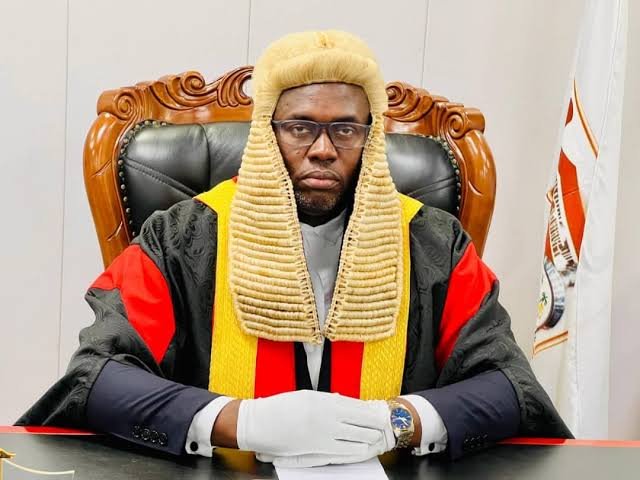
Growing concern over online fraud and cyber-enabled scams has prompted calls for the Speaker of Parliament, the Right Honourable Segepoh Solomon Thomas, to facilitate the summoning of the Sierra Leone Police Cyber Crime Investigations Unit before the appropriate parliamentary committee.
The proposed hearing should examine the Unit’s response to the increasing reports of phishing, identity theft, hacked social-media accounts, mobile-money fraud, digital extortion, fake investment schemes and other forms of online deception targeting Sierra Leoneans.
The Sierra Leone Police operates a specialized cybercrime unit within the Criminal Investigations Department to investigate digital offences and other technology-assisted crimes. Those offences are addressed under the Cyber Security and Crime Act, 2021, which criminalizes conduct including computer fraud, identity theft, unauthorized access and interference with computer systems.
Despite the existence of the Unit and the relevant legislation, victims continue to complain about inadequate investigation, limited feedback and the apparent absence of robust enforcement against suspected online fraudsters.
The lack of visible and sustained action has created a public perception that the Cyber Crime Investigations Unit is failing Sierra Leone. Parliament must now use its oversight authority to determine whether the Unit has sufficient personnel, training, digital forensic equipment, financial resources and institutional support to perform its mandate effectively.
The parliamentary hearing should require the Unit to present detailed information on the number of complaints received, investigations conducted, suspects arrested, cases forwarded for prosecution and funds recovered for victims. It should also explain the major operational challenges preventing the timely investigation of cybercrime cases.
Such scrutiny should not be treated as an attack on the Sierra Leone Police. It would provide an opportunity for the Unit to explain its constraints and help Parliament identify the legislative, financial and technical support required to strengthen its operations.
The Right Honourable Segepoh Solomon Thomas leadership could help place online fraud firmly on the national accountability agenda and ensure that the institutions responsible for protecting citizens provide clear answers.
Telecommunications companies, including Orange Sierra Leone, should not be automatically blamed whenever fraudsters use their networks to commit crimes. Online scams occur across the world, including in highly developed countries with sophisticated telecommunications and cybersecurity systems.
The use of an Orange telephone number, mobile-money account or communications platform to commit fraud does not, by itself, prove that the company caused or supported the crime. Criminal investigation remains primarily the responsibility of the Sierra Leone Police.
Orange and other telecommunications operators must, however, continue to protect their systems, enforce customer-registration requirements, preserve relevant digital evidence and cooperate fully with investigators. Any evidence of negligence, security failure or non-compliance should be independently investigated, but operators must not become convenient scapegoats for failures in criminal enforcement.
The National Communications Authority deserves commendation for its nationwide consumer education and public-awareness campaigns against online fraud, phishing, mobile-money scams and other digital threats.
NatCA’s cybersecurity programme promotes safe online practices, stronger passwords, responsible use of mobile-money services, data protection and the reporting of suspicious activity. This preventive work is essential because many online scams succeed through social engineering, deception and the careless disclosure of personal information.
Consumer education, however, must be supported by effective investigation and prosecution. Awareness campaigns can help citizens recognize scams, but they cannot replace the arrest and prosecution of perpetrators. NatCA, the Police, telecommunications companies, financial institutions and the National Cybersecurity Coordination Centre must therefore work together under a clear and coordinated national response.
The Office of National Security also has an important strategic role in coordinating institutions when cyber-enabled fraud threatens national or economic security. Its mandate includes coordinating responses to organized crime and other national threats.
Citizens must be encouraged to report suspected fraud immediately, preserve messages and transaction records, and avoid deleting potential evidence. They should never disclose mobile-money PINs, passwords, verification codes or one-time passwords to callers claiming to represent telecommunications companies, banks or Government institutions.
The Sierra Leone Police lists 900 as its national emergency hotline, while the Office of National Security operates the national emergency line 119. Victims may also report incidents at the nearest police station or the Criminal Investigations Department headquarters in Freetown.
The central issue is not whether online scams can be eliminated completely. No country has achieved that. The real test is whether Sierra Leone possesses a responsive system that educates consumers, investigates complaints, traces digital evidence, arrests offenders and successfully prosecutes those responsible.
Parliament should demand measurable results. The Cyber Crime Investigations Unit must become more visible, accessible and proactive in protecting the public. Sierra Leoneans deserve more than warnings about online fraud; they deserve effective investigation, enforcement and justice.