

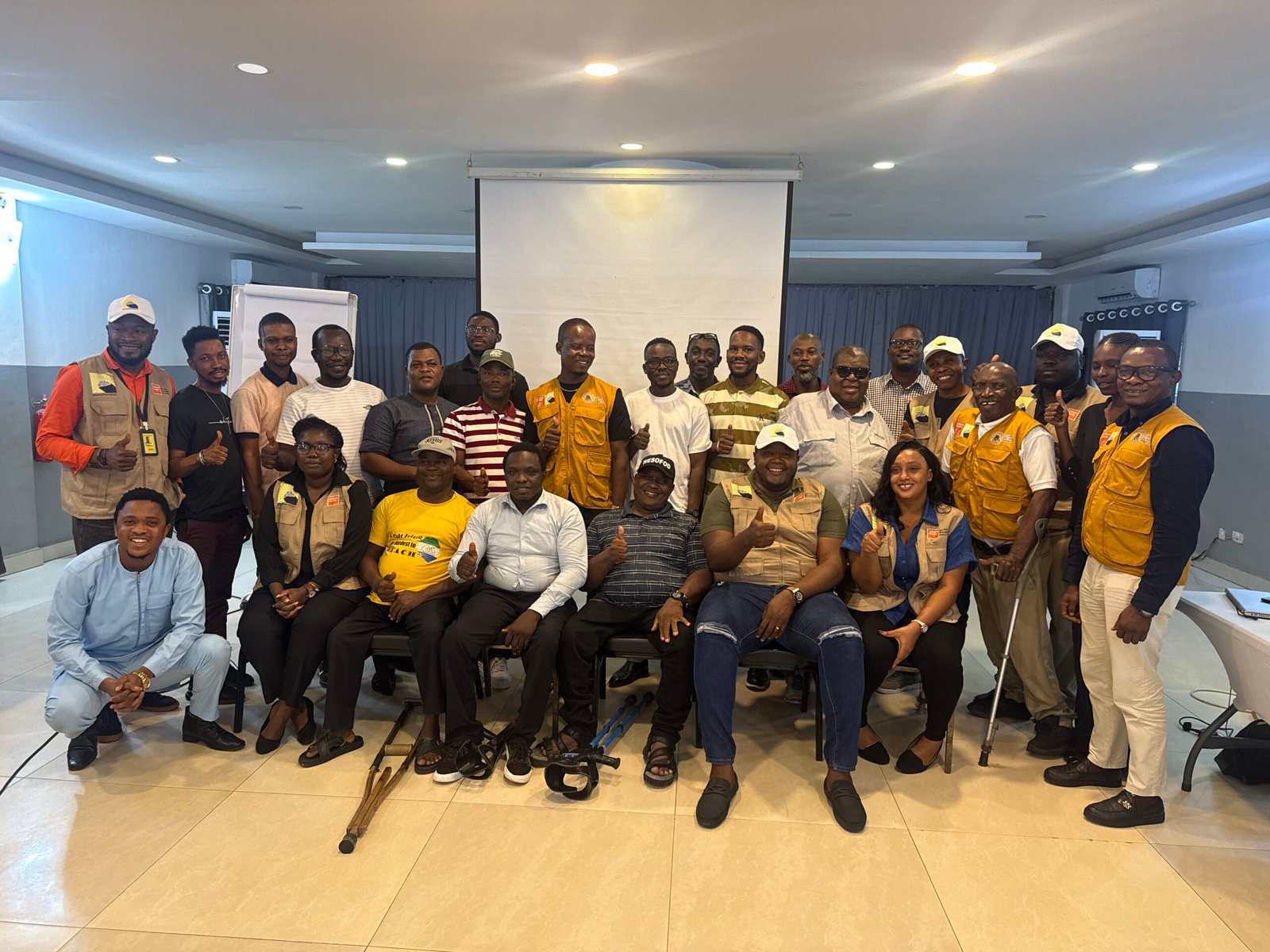
One Family People (OFP), with support from Liliane Fonds, has concluded a one-day fundraising strategic development workshop designed to strengthen the capacity of partner organisations and networks to mobilize sustainable resources for humanitarian, disability inclusion and empowerment programmes in Sierra Leone.
The workshop was held on Wednesday, 12 August 2026, at Saphyre Court on Kingharman Road in Freetown under the theme, “Strong Partnerships: A Fundraising Strategic Development Plan for Partners and the Network.” It brought together representatives of partner organisations working to promote disability rights, inclusion and community development.
Speaking during the training, Samuel P.O.V. Macauley, Operations Director at One Family People, said the initiative was organized in response to the continuing decline in global resources available for humanitarian and development work.
Samuel P.O.V. Macauley explained that OFP and its partners depend heavily on effective resource mobilization to sustain their programmes. He said the changing international funding environment therefore represents a serious challenge that requires organisations to review their traditional approaches and identify alternative, sustainable sources of support.
According to him, the training began with an assessment of the resource mobilization capacity of each participating organisation. Participants also examined the conditions prevailing in their respective districts and operational areas to understand the opportunities, limitations and risks affecting their fundraising activities.
He said the results of those assessments would guide the development of comprehensive resource mobilization strategies tailored to the capacity, priorities and circumstances of each organisation. The proposed strategies would also include realistic budget planning, giving partners clearer direction when identifying donors and submitting applications for financial support.
Samuel P.O.V. Macauley observed that some organisations had been applying for different funding opportunities without clearly defined plans. He noted that an effective strategy should help an organisation determine what it wants to finance, why a particular opportunity is relevant and which donor or funding source is most suitable for its objectives.
“Outside the traditional funding schemes, we need our partners to be able to address more long-term resource mobilization solutions,” Samuel P.O.V. Macauley stated.
He said OFP recognizes that every partner already uses some form of fundraising model. The workshop was therefore intended to help participants review, refine and strengthen their existing approaches rather than replace them entirely.
He pointed to reductions in international development assistance from major partners as evidence that local organisations must become more strategic and innovative.
At the end of the process, OFP expects every participating organisation to develop a practical resource mobilization strategy reflecting its institutional capacity, operational environment and available funding opportunities.
Amadu Amos Bangura, a staff member of the Disability Awareness Action Group (DAAG), described the workshop as a timely intervention that would strengthen disability-focused organisations and improve their ability to attract resources.
Amadu Amos Bangura said participants received practical knowledge that could help them design stronger fundraising plans, establish productive relationships with potential donors and seek assistance from a wider range of institutions.
He noted that securing funding for disability programmes remained difficult, particularly for organisations operating with limited resources. According to him, financial constraints continue to restrict their ability to undertake activities, expand essential services and advocate effectively for the rights and welfare of persons with disabilities.
“This workshop will help build the capacity of our organisation and other partners working in the disability sector,” Amadu Amos Bangura said. “The knowledge gained will support us in developing better fundraising approaches and reaching out to different organisations for assistance.”
He maintained that strong partnerships are crucial to sustaining disability programmes and keeping inclusion at the centre of national development. He called for closer cooperation among local disability organisations, international partners, Government institutions and other stakeholders.
He pledged that DAAG would share the knowledge acquired with staff members who did not attend the workshop and incorporate the strategies into its programme planning and fundraising activities.
“We will ensure that whatever we have learnt from this training is shared at the organizational level, especially with other members of staff,” he stated.
Amadu Amos Bangura added that DAAG would pursue stronger relationships with institutions and development partners to support disability inclusion and empowerment. He stressed that persons with disabilities must participate meaningfully in national development and that inclusion should be reflected in policies, programmes and institutional practices.
Matthew Tholley, Executive Director of the Polio Persons Development Association (PoPDA), also welcomed the training, describing it as an important capacity-building initiative that would strengthen the association’s work.
Matthew Tholley said the workshop broadened his understanding of fundraising and provided practical guidance on identifying prospective donors, approaching funding institutions and presenting organizational programmes in ways capable of attracting support.
He explained that organisations promoting the rights and welfare of people affected by polio often struggle to secure adequate resources. Before the training, he said, PoPDA had limited knowledge of the institutions it should approach and the most effective methods of engaging them.
“This training has impacted me greatly because it has added to my knowledge,” Matthew Tholley said. “We now understand better whom to approach, how to approach them and the techniques we can use to seek support.”
He said the newly acquired skills would enable PoPDA to mobilize resources and implement more activities for its members and communities. Three representatives from the association the Executive Director, Programme Manager and Finance Officer participated in the workshop and would transfer the lessons to other employees.
Matthew Tholley said sharing the knowledge internally would help PoPDA establish a coordinated strategy, expand community programmes, strengthen advocacy and raise awareness about issues affecting persons with disabilities.
He commended One Family People and Liliane Fonds for investing in the institutional development of their partners and expressed hope that similar capacity-building opportunities would continue.
Matthew Tholley pledged that PPDA would apply the techniques introduced during the training to improve fundraising, lobbying and advocacy while developing more sustainable programmes. He maintained that stronger collaboration among disability organisations, development partners and other stakeholders would increase their collective ability to defend rights, promote empowerment and achieve meaningful inclusion.
The workshop advanced efforts to sustain humanitarian, inclusion and empowerment programmes amid declining global funding.