
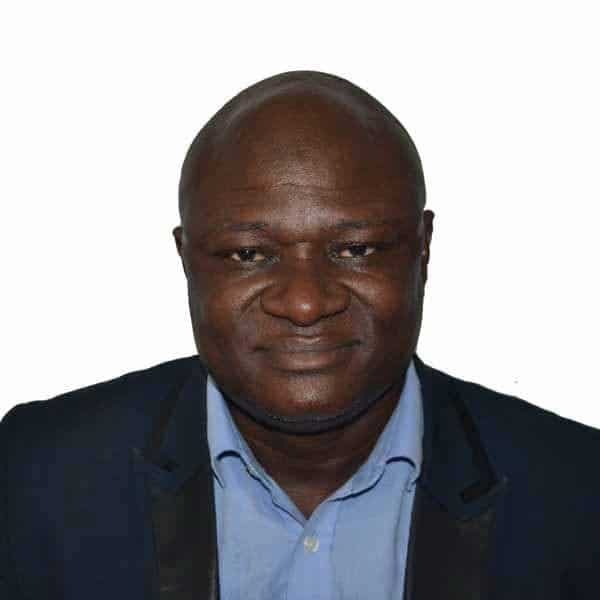
Sierra Leonean researcher, Braima Koroma, of the Sierra Leone Urban Research Centre (SLURC) is among a team of international researchers who received the 2026 Area Development and Policy Best Paper Award from the Regional Studies Association (RSA).
The team earned the prestigious award for its research paper titled: “Accessibility, (Dis)advantage and Everyday Mobility Practices and Experiences: The Cases of Maputo and Freetown.” The study examines how mobility challenges, access to transportation and related inequalities affect residents of Freetown in Sierra Leone and Maputo in Mozambique.
Braima Koroma co-authored the paper with Daniel Oviedo, Clémence Cavoli, Alexandria Z. W. Chong, Joaquín Romero de Tejada and Yasmina Yusuf.
According to the Regional Studies Association’s 2026 awards listing, Daniel Oviedo, Clémence Cavoli, Alexandria Z. W. Chong and Yasmina Yusuf are affiliated with University College London (UCL) in the United Kingdom, while Joaquín Romero de Tejada is affiliated with the Mozambique Transport and Mobility Observatory and Braima Koroma with the Sierra Leone Urban Research Centre.
The award places Sierra Leone and Freetown firmly within an important international conversation on urban development, transport accessibility and the everyday experiences of people living in rapidly growing African cities.
The research explores how accessibility is shaped not simply by the availability of transport, but also by wider social and economic circumstances that determine how easily individuals can move around their cities and reach essential opportunities and services.
Using Freetown and Maputo as case studies, the researchers examine the relationship between mobility practices, accessibility and disadvantage, providing evidence on the realities confronting residents as they navigate their cities.
The findings are particularly relevant to developing cities where population growth, urban expansion and pressure on transport infrastructure continue to create challenges for residents seeking access to employment, education, healthcare, markets and other essential destinations.
For Sierra Leone, the international recognition also highlights the growing contribution of locally grounded research to discussions on sustainable urban development and policymaking.
Braima Koroma’s involvement brings Sierra Leonean research experience and knowledge of Freetown into a collaborative international study, ensuring that the realities of the capital city form part of wider academic and policy discussions on mobility and urban inequality.
The award-winning study was published in Area Development and Policy, an academic journal associated with the Regional Studies Association. The RSA’s 2026 awards programme recognizes original and inspiring research that contributes to understanding significant regional development issues.
The recognition is significant for Freetown, where mobility remains closely connected to wider development challenges. Understanding how residents experience transport systems and accessibility can provide useful evidence for policymakers, urban planners, researchers and development partners working to create more inclusive cities.
Beyond recognizing academic excellence, the award underscores the importance of ensuring that urban planning takes into consideration the experiences of people whose daily movements may be affected by economic circumstances, location, infrastructure and access to reliable transportation.
The Regional Studies Association also recognized outstanding researchers and publications across several of its academic journals and award categories during its 2026 awards programme, highlighting research dealing with regional development, spatial economics, governance, finance, innovation and urban policy.
For Sierra Leone, the success of Braima Koroma and his co-authors provides further international visibility for research centred on Freetown and demonstrates the value of collaboration between Sierra Leonean institutions and researchers from other parts of the world.
The recognition could also strengthen calls for research findings on urban mobility to be translated into practical policies capable of improving transport planning, accessibility and the quality of urban life, particularly for disadvantaged communities.