
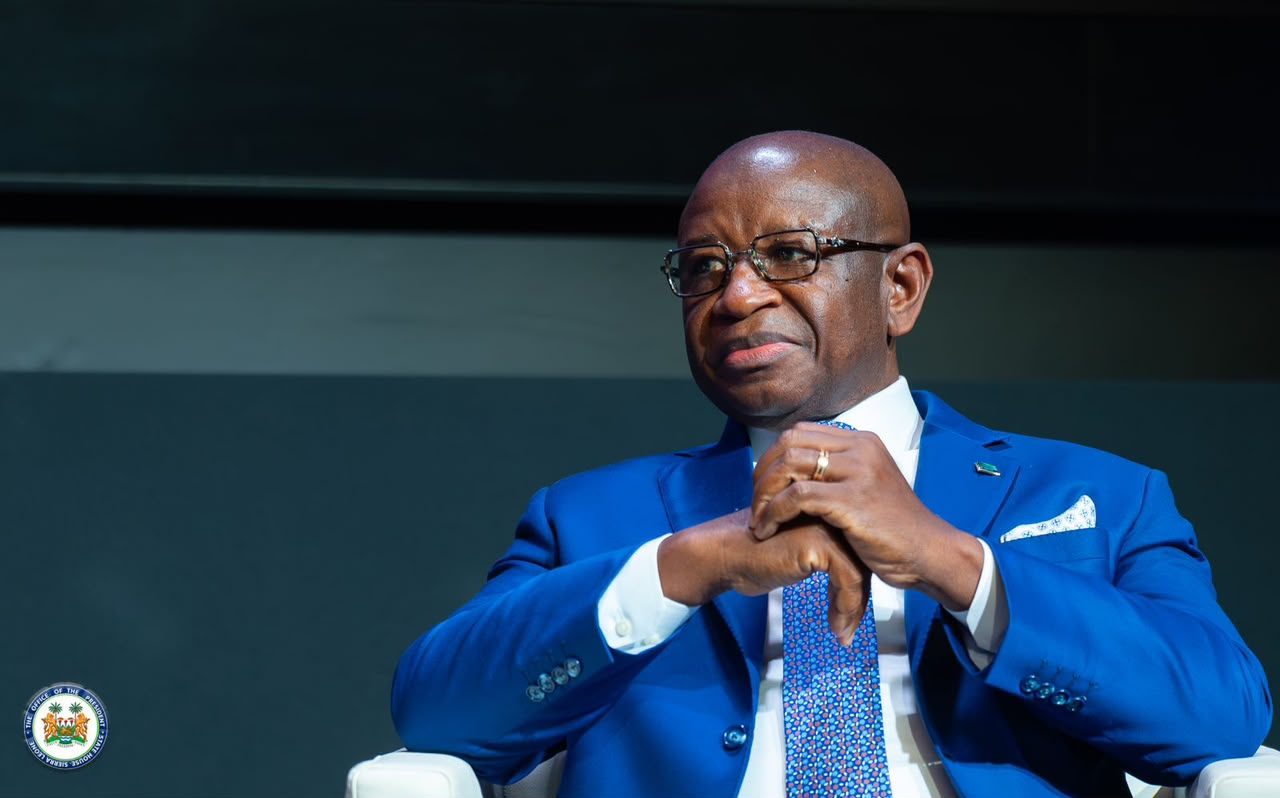
President Dr. Julius Maada Bio has called on world leaders and international institutions to prioritize investment in conflict prevention rather than spending enormous resources responding to wars after they have erupted, proposing a new Geneva Commitment to Prevention aimed at strengthening early intervention and promoting lasting global peace.
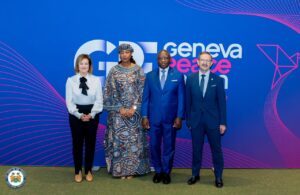
Delivering the keynote address at the inaugural Geneva Peace Forum on Monday, 12 October 2026, at the International Conference Centre Geneva (CICG) in Switzerland, President Bio challenged the international community to reconsider its approach to peace and security by addressing the underlying causes of conflicts before they escalate into violence.
Speaking under the theme, “Choose Peace”, the Sierra Leonean leader questioned why Governments and international organisations continue to mobilize substantial financial and humanitarian resources during armed conflicts while committing comparatively limited investments to preventing such crises.
“We have become experts at managing the consequences of war. We must show the same determination in preventing its causes,” President Bio declared.
To translate his proposal into practical action, President Bio outlined two commitments that he believes could strengthen international efforts to prevent conflicts. Those include progressively increasing the proportion of international assistance allocated to conflict prevention and introducing annual reports detailing early-warning signals received and the measures taken in response.
He maintained that the effectiveness of international peace initiatives should be assessed not simply by the number of resolutions or declarations adopted, but by the conflicts successfully prevented and the lives protected through timely intervention.
Drawing on Sierra Leone’s painful experience during its eleven-year civil war, President Bio reminded participants of the devastating human consequences of armed conflict and the importance of sustained investment in peacebuilding and national reconciliation.
He referred to the Broken Chair monument at Geneva’s Place des Nations, which symbolizes the suffering of landmine victims, explaining that the monument reminded him of Sierra Leoneans who lost their limbs during the civil war but demonstrated remarkable resilience in rebuilding their lives.
“War does not end when the guns fall silent,” he stated, emphasizing that the consequences of violence often continue for generations through physical disabilities, psychological trauma, divided communities and the suffering of children who inherit the consequences of conflicts they played no part in creating.
Reflecting on his personal and professional experiences, President Bio recalled his service as a soldier with the Economic Community of West African States Monitoring Group (ECOMOG) in Liberia, his leadership as military Head of State during Sierra Leone’s transition to civilian Government in 1996 and his subsequent election as President.
He also recalled the historic declaration made in January 2002, when Sierra Leone officially announced the end of its civil war with the words, “Di wor don don,” meaning the war is over.
President Bio explained that ending armed hostilities represented only the beginning of Sierra Leone’s difficult journey towards lasting peace, stressing that reconciliation, accountability, justice and national reconstruction were equally important in restoring stability.
He cited the establishment of the Truth and Reconciliation Commission and the Special Court for Sierra Leone as important mechanisms that helped the country confront its troubled past while laying the foundation for national healing.
“We learned that reconciliation without justice is fragile and justice without reconciliation is incomplete. A nation needs both,” President Bio said.
He further highlighted Sierra Leone’s transformation from a country that once depended heavily on international peacekeeping assistance into a nation contributing personnel to peacekeeping operations and participating in global peace and security discussions.
According to President Bio, Sierra Leone’s membership of the United Nations Security Council during 2024 and 2025 demonstrated the country’s renewed commitment to international peacebuilding and its growing role in addressing global security challenges.
Turning his attention to ongoing international conflicts, President Bio expressed concern over the humanitarian and security situations in Sudan, the Sahel, eastern Democratic Republic of Congo, the Middle East and Ukraine.
He observed that the international community frequently responds only after violence has intensified, despite warning signs such as political exclusion, economic inequality, social grievances and declining public trust.
The President therefore called for stronger early-warning mechanisms supported by decisive political action to address tensions before they develop into widespread violence.
He warned that unresolved disagreements could gradually deepen into hostility, while misinformation and manipulation could encourage mobilisation and transform existing grievances into violent confrontations.
President Bio stressed that effective conflict prevention must extend beyond diplomatic negotiations and security interventions to include sustained investments in education, employment opportunities, credible electoral processes, independent judicial institutions and meaningful economic opportunities, particularly for young people.
He argued that societies where citizens enjoy access to justice, economic opportunities and responsive public institutions are better positioned to address disagreements peacefully and resist the conditions that often contribute to instability.
Addressing emerging global threats, President Bio warned that climate-related disasters could worsen poverty, inequality and social exclusion, thereby increasing the risk of conflict in already vulnerable communities.
He also expressed concern over the misuse of artificial intelligence, the spread of misinformation and the growing threat of cyberattacks, noting that those developments could undermine public confidence, disrupt essential services and create new security challenges.
To address those concerns, he advocated fairer climate financing arrangements and more inclusive international rules governing emerging technologies, particularly to ensure that developing countries are not excluded from decisions affecting their future.
“On all of these challenges, Africa does not come to Geneva only to seek solutions. Africa comes to offer them,” President Bio declared.
Drawing on his experience as Chair of the Authority of Heads of State and Government of the Economic Community of West African States (ECOWAS), President Bio emphasized the importance of regional leadership in resolving conflicts and maintaining stability.
He maintained that sustainable peace initiatives must be driven by the regions directly affected, supported by international partners and guided by mutual respect, cooperation and shared responsibility.
The President also encouraged continued diplomatic engagement with Mali, Burkina Faso and Niger, stressing that West African countries remain connected through their common history, economic relationships and shared aspirations for regional development.
He noted that dialogue and cooperation remain essential to addressing regional disagreements and protecting the long-term interests of West African citizens.
In outlining a practical approach to strengthening global peace efforts, President Bio identified three priorities for international leaders: acting earlier to prevent emerging threats, sustaining dialogue even during difficult political circumstances and ensuring broader participation in peacebuilding processes.
He emphasized that meaningful peace requires the involvement of Governments, regional organisations, civil society, young people, women and communities whose lives are directly affected by conflict.
President Bio further urged international institutions to move beyond expressions of commitment and establish measurable mechanisms for monitoring progress, strengthening accountability and ensuring that early-warning information leads to timely preventive action.
Concluding his address, the President challenged world leaders to demonstrate the political courage required to choose dialogue over confrontation and prevention over costly military and humanitarian responses.
“Because the greatest victory of peace is not the war we end. It is the war we never allow to begin,” President Bio declared.
The inaugural Geneva Peace Forum brought together international and regional stakeholders to discuss conflict prevention, peacebuilding and practical approaches to sustaining global peace.
President Bio’s participation placed Sierra Leone’s experience of conflict, reconciliation and national recovery at the centre of international discussions, while reinforcing his call for a new global approach that prioritizes early intervention, shared responsibility and measurable commitments to preventing future wars.