

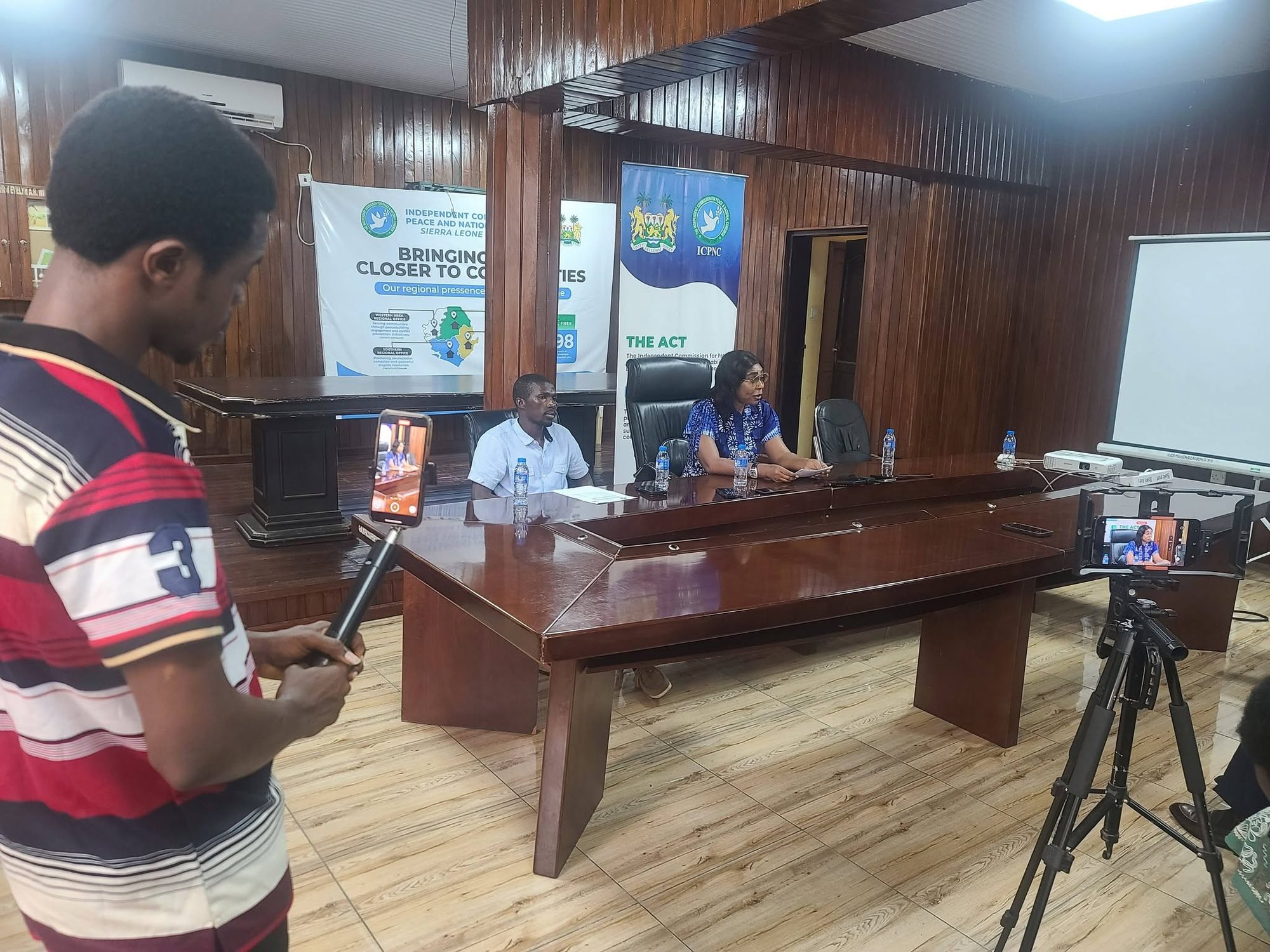
Sierra Leone is taking steps towards strengthening its national capacity to prevent conflicts, promote peaceful coexistence and consolidate lasting peace through the development of its first National Prevention Strategy on Conflict Prevention and Sustaining Peace, aimed at bringing together Government institutions, civil society organizations and local communities under a more coordinated national framework.
The initiative forms part of the Sustaining Peace and Social Cohesion Through a National-led Prevention Approach in Sierra Leone (SPESOCO) project, which was discussed during a Local Project Appraisal Committee meeting held at the United Nations Development Programme (UNDP) office in Wilberforce, Freetown.
The proposed strategy seeks to address existing gaps in conflict prevention mechanisms by improving institutional coordination, strengthening early warning and response systems and ensuring that emerging tensions are identified and addressed before they escalate into violence.
Speaking during the meeting, the Executive Secretary of the Independent Commission for Peace and National Cohesion (ICPNC), Hawa Sally Samai, underscored the importance of stronger collaboration among Government institutions, civil society organizations, development partners and community stakeholders in safeguarding Sierra Leone’s hard-earned peace.
She emphasized that effective conflict prevention requires collective responsibility, sustained dialogue and proactive engagement among institutions and communities to address grievances, misunderstandings and emerging disputes that could undermine national stability.
According to Hawa Sally Samai, maintaining peace should not be viewed solely as the responsibility of Government or designated peacebuilding institutions but as a shared national obligation requiring the active participation of citizens, traditional authorities, religious leaders, political actors and civil society organizations.
She further stressed the need for a coordinated national approach that prioritizes early intervention, constructive dialogue and peaceful resolution of disagreements rather than waiting for tensions to develop into serious conflicts.
The ICPNC Executive Secretary also expressed appreciation to the United Nations Development Programme for its continued partnership with the Commission and its commitment to supporting peacebuilding, national cohesion and sustainable development initiatives in Sierra Leone.
She acknowledged the importance of development partnerships in strengthening national institutions and providing the technical support necessary to establish effective and sustainable conflict prevention mechanisms.
Beyond improving institutional coordination, the proposed National Prevention Strategy will place particular emphasis on promoting peaceful political engagement, encouraging community participation and addressing challenges associated with hate speech, misinformation and disinformation.
Those issues remain important considerations in efforts to strengthen public trust, encourage responsible communication and prevent the spread of divisive narratives capable of creating tensions within communities.
The strategy will also seek to strengthen relationships among communities, promote inclusive dialogue and empower citizens to participate more actively in peacebuilding initiatives at both national and local levels.
Through the proposed framework, Government institutions and other stakeholders are expected to work towards developing a more structured approach to identifying potential sources of conflict, addressing underlying grievances and promoting peaceful solutions to disputes.
The meeting was hosted by the UNDP Deputy Resident Representative, Kevin Petrini, and attended by the Minister of Planning and Economic Development, alongside representatives of Government institutions, non-governmental organizations and other stakeholders involved in peacebuilding and national development.
The gathering provided an opportunity for participants to examine the proposed project’s objectives, assess its relevance to Sierra Leone’s peacebuilding priorities and consider how stronger institutional collaboration could improve the country’s ability to respond to emerging threats to peace and stability.
The development of the National Prevention Strategy is expected to establish a common framework for coordinating conflict prevention initiatives across the country, ensuring that relevant institutions and communities adopt a more consistent and proactive approach to managing tensions.
It is also anticipated that the strategy will contribute to strengthening national ownership of peacebuilding interventions while encouraging greater cooperation among institutions responsible for promoting stability, social cohesion and peaceful coexistence.
For Sierra Leone, a country that has made significant progress in consolidating peace following its civil conflict, the proposed initiative represents another opportunity to reinforce existing peacebuilding structures and promote a culture of dialogue, tolerance and mutual understanding.
By prioritizing prevention over reaction, the SPESOCO project seeks to support a national system in which emerging disagreements and potential threats to stability can be addressed through timely intervention, inclusive participation and coordinated institutional action.
The proposed National Prevention Strategy, once developed and adopted, is expected to provide an important foundation for strengthening Sierra Leone’s long-term peacebuilding efforts, protecting national cohesion and ensuring that the responsibility for sustaining peace remains a shared commitment among Government institutions, civil society and citizens across the country.