

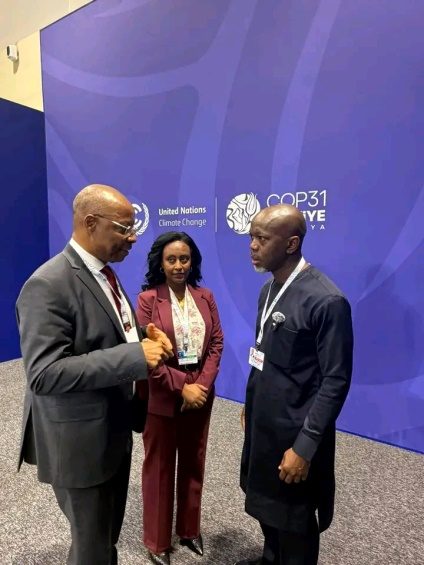
Sierra Leone has secured US$30 million in climate investment support under the Climate Investment Funds (CIF) Accelerating Resilience Investments and Innovations for Sustainable Economies (ARISE) Programme at the ongoing 31st Conference of the Parties (COP31) in Antalya, Türkiye, marking a significant milestone in the country’s efforts to strengthen climate resilience and protect vulnerable communities.
The announcement, made on Thursday, 12 November 2026, has been welcomed by the Ministry of Environment and Climate Change as an opportunity to advance climate adaptation, promote sustainable economic development and address the growing environmental challenges confronting the country.
However, beyond the international recognition and financial commitment, attention must now focus on how the investment will translate into tangible benefits for ordinary Sierra Leoneans, particularly communities whose livelihoods are increasingly threatened by climate change.
Across Sierra Leone, coastal communities continue to experience erosion, flooding and destruction of property, while farmers face unpredictable rainfall, changing agricultural seasons and declining productivity. In Freetown, inadequate drainage infrastructure and poor waste management continue to expose residents of vulnerable settlements to flooding and other environmental hazards.
Reacting to the announcement, Minister of Environment and Climate Change, Jiwoh Emmanuel Abdulai, described Sierra Leone’s recognition as a front-runner country under the ARISE Programme as an affirmation of the Government’s commitment to strengthening climate resilience and advancing adaptation initiatives.
Jiwoh Emmanuel Abdulai emphasized the importance of building resilient communities, protecting livelihoods, safeguarding food and water security and investing in infrastructure capable of withstanding the impacts of climate change.
While those priorities reflect the country’s pressing environmental needs, the effectiveness of the investment will depend on its implementation and the extent to which it improves the living conditions of vulnerable populations.
It is important to clarify that the US$30 million commitment does not necessarily mean the funds have already been transferred into Government accounts. Financing arrangements, project components, allocation mechanisms and implementation timelines will determine how the support is eventually deployed.
The Government must therefore provide clear information on the financing conditions, implementing institutions and intended beneficiaries. Transparency, accountability and effective resource management will be essential to maintaining public confidence and achieving sustainable development outcomes.
Investments under the ARISE Programme should prioritize practical interventions, including coastal protection, improved urban drainage, climate-smart agriculture, sustainable water infrastructure, disaster preparedness and early-warning systems.
Equally important is the involvement of local communities in identifying priorities and shaping project implementation. Farmers, fishermen, traditional leaders, women, young people and civil society organisations must have meaningful opportunities to participate in decisions affecting their livelihoods.
Independent monitoring, periodic public reporting and measurable performance indicators should also form part of the implementation framework to ensure resources reach intended beneficiaries and deliver sustainable results.
The Government must guard against climate financing being consumed by excessive administrative activities, workshops and policy discussions without producing visible improvements in affected communities.
While securing US$30 million in climate investment support represents an important achievement, the real test lies in effective implementation and equitable distribution of benefits.
For ordinary Sierra Leoneans, success will be measured not by international recognition but by whether farmers in Kenema can protect their crops against changing weather patterns, families in Kroo Bay face reduced flooding risks and coastal communities can better safeguard their homes and livelihoods.
Ultimately, climate resilience must extend beyond international commitments and Government policies to become a practical reality that improves livelihoods, strengthens communities and protects future generations across Sierra Leone.