

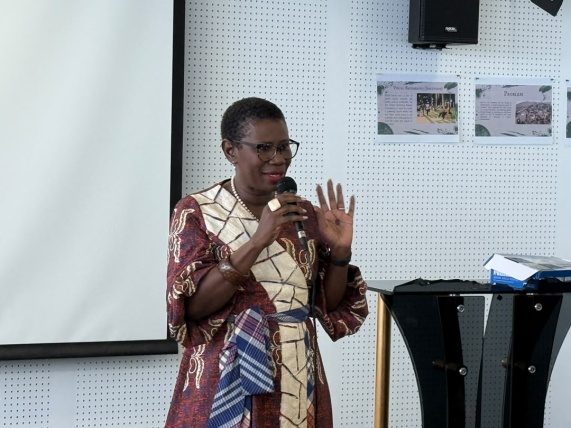
The Mayor of Freetown Municipality, Yvonne Aki-Sawyerr, has officially launched a five-day heat-health outreach campaign aimed at strengthening public awareness and resilience against the health risks associated with rising temperatures in Freetown. The campaign, themed “Fritong Don Wam Oh!”, runs from November 16 to 20, 2026, and is being implemented by the Freetown City Council (FCC), in collaboration with the Ministry of Health and Sanitation, with support from C40 Cities.
The initiative, titled Enhancing Heat-Health Resilience in Freetown, seeks to educate residents about the dangers of extreme heat and promote practical measures to protect themselves, particularly ahead of the anticipated January to April 2027 hot season.
Speaking at the launch on Monday, November 16, Mayor Aki-Sawyerr highlighted the increasing impact of extreme temperatures on residents, noting that Freetown had experienced unusually hot conditions in recent weeks.
She recalled that when she became Mayor in 2018, climate change was already a major concern, particularly its environmental implications and the importance of protecting and planting trees to address rising temperatures.
According to her, the loss of trees and green spaces has contributed to increasing heat across the city. She emphasized that vegetation plays an important role in reducing temperatures and creating cooler environments.
Using her recent experience visiting a garden as an example, she explained that the temperature under trees was noticeably different from that in exposed areas, reinforcing the need to protect existing trees and expand green spaces.
The Mayor also highlighted the health implications of prolonged exposure to high temperatures, explaining that excessive sweating causes the body to lose water, which must be replenished to prevent dehydration and other complications.
She identified market women, street traders and other outdoor workers among those particularly exposed to heat-related illnesses, including heatstroke and heat rash. She also expressed concern about vulnerable households whose housing conditions and limited access to drinking water make it difficult to cope with extreme temperatures, especially at night.
Mayor Aki-Sawyerr disclosed that 500 healthcare workers had been trained through the project to strengthen their ability to identify heat-related illnesses, recognize symptoms and provide appropriate guidance to patients.
She called on Government institutions, healthcare professionals, communities and the media to work together in addressing the growing public health challenge. She also encouraged residents to take collective responsibility through tree planting and the protection of existing green spaces.
Meanwhile, Bockarie P. Sesay, Senior Public Health Superintendent at the Ministry of Health and Sanitation, described extreme heat as an emerging public health concern requiring coordinated institutional and community action.
He explained that the Ministry is working to strengthen its capacity to respond to climate-related health challenges, including through climate and health structures and training initiatives for healthcare personnel.
According to Bockarie P. Sesay, the training-of-trainers approach supported by the project is intended to equip frontline health workers with the knowledge and skills to identify and respond to heat-related illnesses.
He urged residents to adopt protective measures, including drinking sufficient water, avoiding prolonged exposure to direct sunlight and taking precautions when sleeping in hot and poorly ventilated environments.
He further called on development partners, community stakeholders and relevant institutions to intensify public education, particularly among vulnerable populations.
On his part, Joseph Polynus Thomas, Head of Climatology at the Sierra Leone Meteorological Agency, reaffirmed the Agency’s commitment to supporting the City Council with scientific information to guide climate adaptation and heat-health interventions.
He explained that the Agency collects information on rainfall, temperature and humidity, but stressed that such data must also be communicated in ways that enable institutions and members of the public to make informed decisions.
Joseph Polynus Thomas said the heat-health initiative provides an important platform for translating meteorological information into practical interventions, particularly through the use of temperature and humidity data to improve public understanding of heat exposure.
He assured the City Council of the Agency’s continued technical support and emphasized that collaboration should extend beyond the current project to strengthen Freetown’s long-term resilience to climate change.
Providing an overview of the project, Eugenia Kargbo, Chief Heat Officer of the Freetown City Council, warned that daytime and night-time temperatures had risen, making preparation ahead of the 2027 hot season increasingly important.
In her presentation, Eugenia Kargbo said prevailing global warming trends and anticipated El Niño conditions could intensify the next hot season, stressing the need for early preparation rather than waiting until temperatures peak.
She outlined five major components of the project: establishing a heat-health taskforce network, training healthcare workers, conducting vulnerability assessments, developing heat communication toolkits and protocols, and implementing community engagement activities.
According to figures presented by Eugenia Kargbo, the project has established a 20-member multi-agency taskforce and held seven monthly coordination meetings over the past seven months.
She also reported that 500 healthcare workers had been trained across 72 Peripheral Health Units (PHUs), while 20 temperature and humidity sensors had been installed in health facilities to monitor environmental conditions.
Data collected between May and September 2026 showed variations in temperature and humidity across the monitored facilities. Her presentation highlighted that high humidity could increase the body’s perceived heat exposure even when recorded temperatures are relatively moderate.
For instance, the presentation indicated that a temperature of 26°C combined with 93 per cent humidity in Hill Station could produce a perceived heat index of approximately 33–34°C.
On urban heat island mapping, Eugenia Kargbo explained that the exercise had identified areas experiencing higher surface temperatures, particularly densely populated communities with limited tree cover, inadequate shade and restricted access to water.
She said the findings would guide authorities in identifying priority communities for interventions such as shade provision, access to drinking water, cooling facilities and targeted public awareness activities.
Meanwhile, Dr. Francis Sowa, Communications Consultant of the project, outlined the communication and community engagement strategy, which includes television appearances, social media activities, media interactions and direct outreach to residents.
He encouraged stakeholders, project taskforce members and the public to share campaign materials across Facebook, WhatsApp and other social media platforms to broaden the reach of heat-health messages.
Dr. Francis Sowa also disclosed that the campaign would include media engagements and direct community outreach, with activities planned for Lumley and other busy locations in Freetown, followed by engagements in eastern communities.
He clarified that although the intensive outreach activities would run from November 16 to 20, the communication campaign would continue beyond the five-day period to sustain public awareness and encourage lasting behavioural change.
The “Fritong Don Wam Oh!” campaign forms part of the Freetown Heat Health Resilience Project, which seeks to strengthen the city’s preparedness for extreme heat and ensure that residents, particularly vulnerable groups, have the information and support needed to protect their health.