

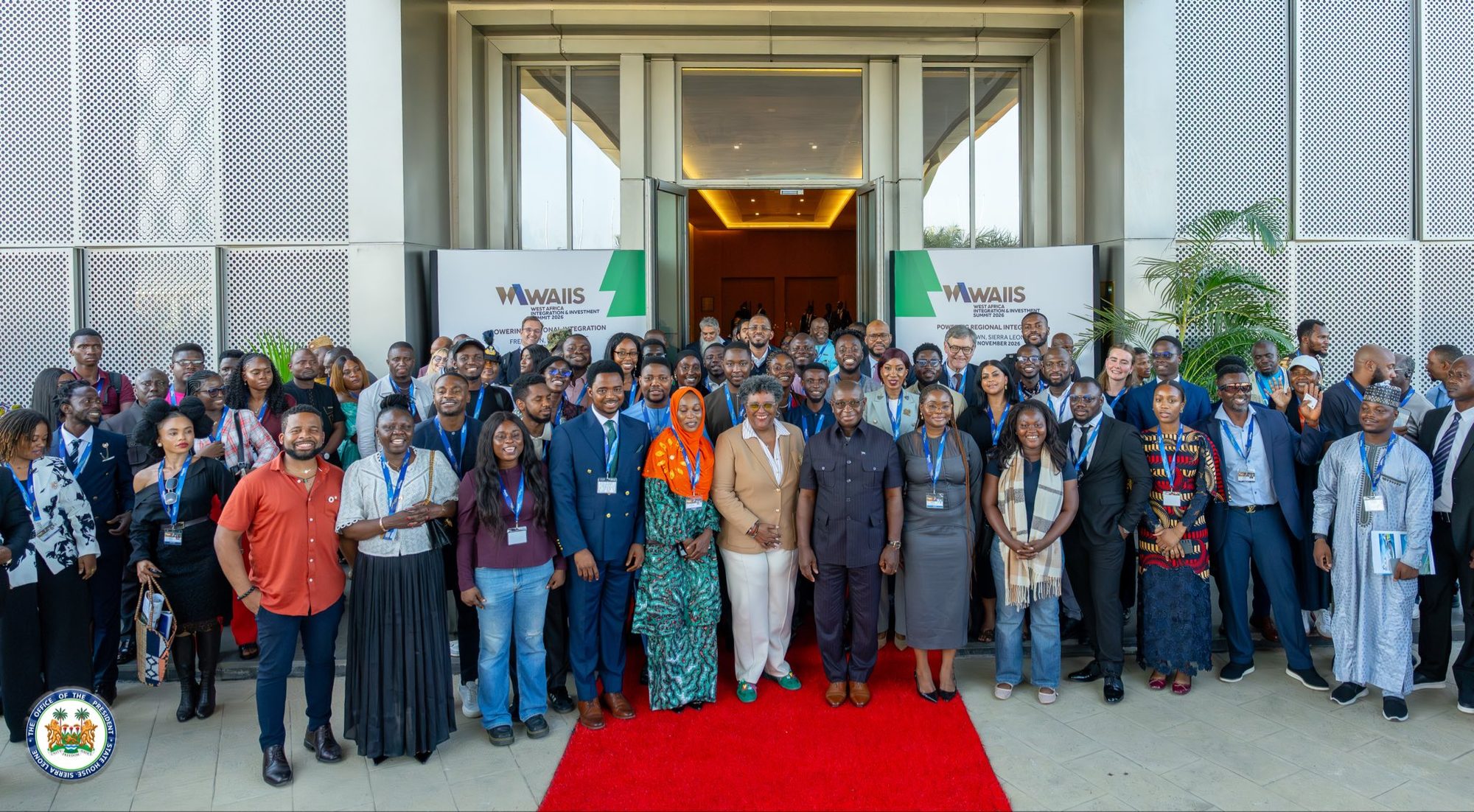
The inaugural West Africa Integration and Investment Summit (WAIIS 2026) has recorded significant milestones in advancing regional economic integration, infrastructure development, energy security and agricultural transformation, with four major agreements signed and three strategic regional initiatives announced or launched on the opening day of the summit in Lungi, Sierra Leone.
The landmark outcomes were recorded on Tuesday, November 17, 2026, at the Julius Maada Bio International Conference Centre (JMBICC), with several agreements and initiatives unveiled in the presence of visiting Heads of State, senior Government officials, international investors, development partners and regional stakeholders.
According to a press brief issued by the WAIIS Secretariat on Wednesday, November 18, 2026, the seven outcomes represent significant steps towards translating West Africa’s economic potential into actionable investment programmes capable of stimulating sustainable growth, strengthening regional connectivity and creating employment opportunities.
Among the major highlights was the signing of a Memorandum of Understanding (MoU) between Gento Group of Companies, Dangote Industries and the African Export-Import Bank (Afreximbank) for the proposed development of the Banana Island Port and Railway Project, with the WAIIS Secretariat serving as coordinator.
The ambitious project encompasses the construction of a deep-water port at Banana Island, the establishment of a logistics hub at Kent and the development of a railway network connecting Sierra Leone’s mining regions to the proposed port facility. The port component alone is estimated by the project sponsor to cost approximately US$2.7 billion.
The proposed investment is expected to strengthen Sierra Leone’s maritime infrastructure, improve mineral transportation, facilitate international trade and position the country as a strategic logistics and shipping hub in West Africa.
Another significant development was the signing of an MoU between Sierra Leone’s Ministry of Planning and Economic Development, Ploutus Holding LLC and NZOIA Corporation to develop and pilot a regular coastal cabotage shipping service connecting Freetown with other destinations along the West African coastline.
The agreement, witnessed by the African Continental Free Trade Area (AfCFTA) Secretariat, seeks to address the high cost and inefficiencies associated with transporting goods by road across neighbouring West African countries. The proposed coastal shipping service is intended to improve regional trade, reduce transportation costs and strengthen maritime connectivity.
In the energy sector, Sierra Leone’s Ministry of Energy and Ministry of Mines and Mineral Resources signed an MoU with the Africa Finance Corporation (AFC) and LeoneVolt, an engineering, procurement and construction developer, to advance the Northern Transmission Corridor project.
The initiative, titled “Connecting the Mines”, seeks to develop electricity transmission infrastructure linking mining operations to the national electricity grid. The project is expected to provide reliable electricity to mining companies, stimulate demand for additional power generation and strengthen Sierra Leone’s energy infrastructure.
Infrastructure development also received a significant boost with the signing of an agreement by Pavi Fort-AL Associates Group to advance the Three Cities Development Project Initiative and the proposed upgrading and tolling of the Ring Road and its associated road networks.
The initiative is aimed at improving urban infrastructure, enhancing transportation connectivity and supporting economic development through strategic investments in road networks.
Beyond the four agreements, the summit witnessed the announcement of the Mano River Union Strategic Economic and Industrial Corridor, a regional investment programme estimated at approximately US$600 million.
The initiative was announced by the Economic Community of West African States (ECOWAS) Commission, the Mano River Union Secretariat, the United Nations Industrial Development Organization (UNIDO) and the WAIIS Secretariat, with the institutions committing to collaborate in advancing the regional development agenda.
The corridor brings together five priority projects across Côte d’Ivoire, Guinea, Liberia and Sierra Leone, a sub-region with a combined population of nearly 60 million people.
The projects focus on renewable energy, electricity transmission, port logistics, agro-processing and digital customs systems, with the overarching objective of strengthening cross-border trade, industrial development and economic cooperation among Mano River Union member states.
Agricultural transformation also featured prominently at the summit with the official launch of the Sierra Leone AgriConnect Compact by the Government of Sierra Leone, through the Ministry of Agriculture and Food Security, in partnership with the World Bank.
The Compact establishes a coordinated agricultural development framework covering the period 2026 to 2030 under the Government’s flagship Feed Salone initiative. It is anchored by a US$40 million World Bank grant targeting the development of the rice, maize, onion and cocoa value chains.
The programme seeks to increase agricultural productivity, strengthen food security, improve farmers’ livelihoods and promote sustainable investments across Sierra Leone’s agricultural sector.
In another major development, the ECOWAS Commission, Sierra Leone’s Ministry of Agriculture and Food Security, the ECOWAS Bank for Investment and Development (EBID), the WAIIS Secretariat, the German development cooperation agency GIZ and AfricaRice officially launched the Agribusiness and Rice Sovereignty Facility.
The regional financing initiative is designed to mobilize US$1 billion to accelerate agricultural transformation across West Africa, with US$500 million earmarked for a dedicated Rice Window and the remaining amount intended to support other agricultural value chains, including cocoa and cashew.
The facility seeks to address West Africa’s continued dependence on imported rice by mobilizing investments in domestic production, processing and agricultural value chain development. It is also intended to strengthen regional food sovereignty, generate employment opportunities and enhance the competitiveness of West African agricultural products.
The seven major outcomes recorded on the opening day of WAIIS 2026 underscore the summit’s commitment to moving beyond policy discussions and diplomatic declarations towards concrete investment partnerships and practical regional development initiatives.
With proposed multibillion-dollar infrastructure investments, regional financing mechanisms and strategic partnerships spanning transportation, energy, agriculture and industrial development, the summit has provided Sierra Leone and its West African neighbours with an important platform for advancing economic integration and sustainable transformation.
The successful implementation of those agreements and initiatives will, however, depend on effective coordination, financing mobilisation, regulatory approvals and sustained commitment from Governments, investors and development partners.
The opening-day achievements position WAIIS 2026 as a significant platform for unlocking West Africa’s investment potential, strengthening regional competitiveness and advancing a shared vision of inclusive economic prosperity.