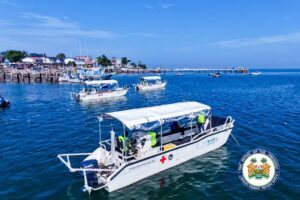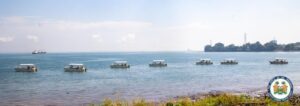

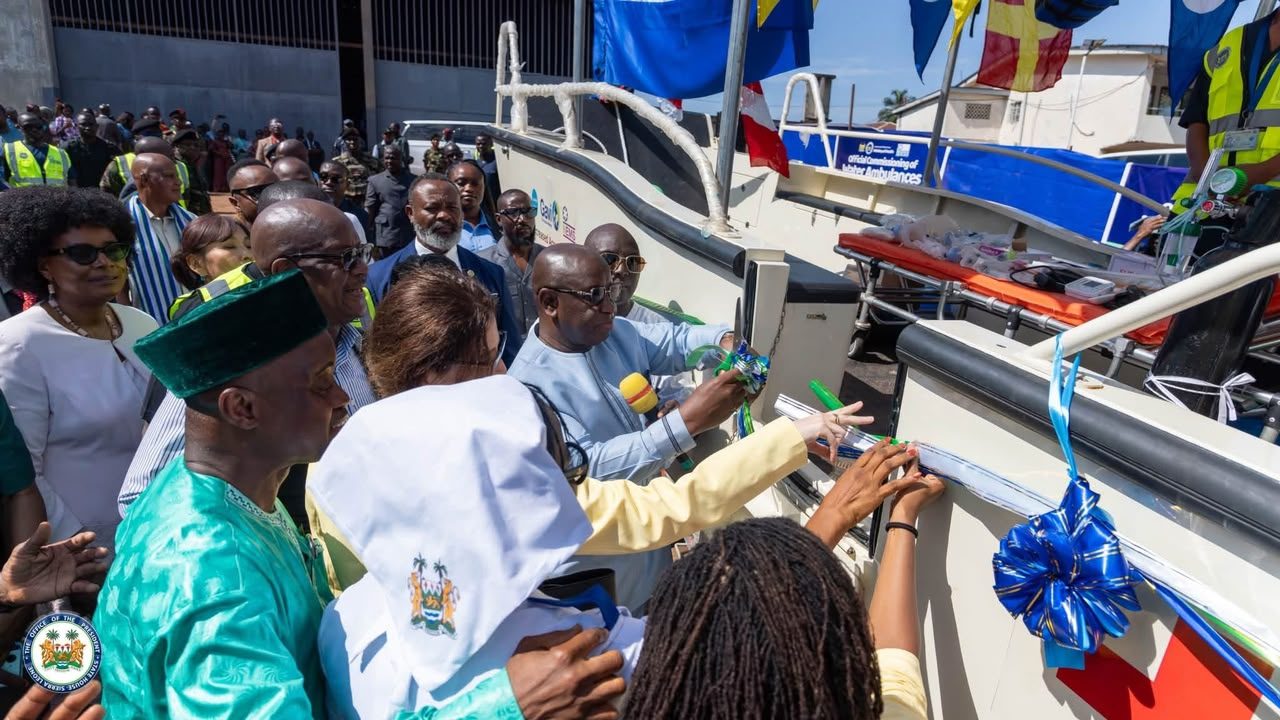
President Dr. Julius Maada Bio has officially commissioned eight newly built water ambulances aimed at improving emergency healthcare delivery in Sierra Leone’s riverine communities, marking another significant intervention by the Government to reduce maternal, infant and child mortality while expanding access to essential medical services in underserved areas.
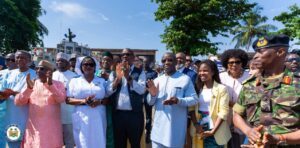
The commissioning ceremony, held on Friday, 20 November 2026, at the Navy Base in Murray Town, Freetown, brought together Government officials, healthcare professionals, development partners and other stakeholders to witness the introduction of the specially equipped vessels designed to overcome geographical barriers affecting healthcare delivery.
The initiative, spearheaded by the Ministry of Health in collaboration with development partners, forms part of the Government’s broader efforts to strengthen the national healthcare system, improve emergency referral services and ensure that vulnerable populations receive timely medical attention regardless of their geographical locations.
For many communities situated along rivers, coastal settlements and remote waterways, accessing healthcare facilities remains a major challenge, particularly during medical emergencies. Pregnant women experiencing complications, critically ill children and other patients requiring urgent treatment often face delays because of limited transportation options and difficult geographical conditions.
The introduction of the eight water ambulances is therefore expected to provide a more reliable means of transporting patients from isolated communities to nearby healthcare facilities, helping to reduce delays that can contribute to preventable deaths.
Speaking during the commissioning ceremony, the Minister of Health, Dr. Austin Demby, expressed appreciation to the Government of Sierra Leone for prioritizing healthcare investments and acknowledged the contributions of development partners in supporting efforts to improve the health and wellbeing of citizens.
Dr. Austin Demby described the vessels as newly constructed, durable and specifically designed to operate effectively within Sierra Leone’s riverine environment. He explained that each ambulance is equipped with essential life-saving medical equipment to enable healthcare personnel to provide emergency assistance while transporting patients to appropriate medical facilities.
According to the Minister, the water ambulances are powered by 85-horsepower engines and fitted with modern communication equipment and satellite systems to facilitate emergency coordination, improve response times and maintain communication with receiving healthcare institutions.
He further disclosed that the vessels would be deployed to selected riverine communities, with Paramount Chiefs and Community Health Officers playing important roles in supporting their supervision, monitoring and effective utilization.
Dr. Austin Demby emphasized that the ambulances are intended to serve pregnant women, children and other patients facing life-threatening medical emergencies, particularly in locations where waterways have historically restricted access to healthcare services.
He encouraged community members to promptly contact emergency response services whenever medical assistance is required, stressing that early intervention and timely referrals are essential to preventing avoidable complications and deaths.
The Minister further explained that the initiative would complement existing healthcare infrastructure, strengthen emergency referral mechanisms and support national efforts to improve maternal and child health outcomes.
Also addressing the gathering, Dr. Patricia Bah highlighted the longstanding difficulties confronting healthcare delivery in riverine settlements, where geographical isolation has frequently prevented patients from reaching health facilities and complicated the work of medical personnel.
Dr. Patricia Bah noted that the deployment of water ambulances would help address those challenges by improving patient transportation, facilitating quicker emergency responses and strengthening connections between remote communities and established healthcare facilities.
The intervention is particularly important for pregnant women requiring emergency obstetric care, newborn babies experiencing complications and children suffering from conditions that demand immediate medical attention.
Beyond providing transportation, the vessels are expected to strengthen coordination between community healthcare workers and referral facilities, creating opportunities for more responsive emergency healthcare delivery in geographically isolated communities.
The commissioning of the eight water ambulances reflects the Government’s continued commitment to addressing inequalities in healthcare access and strengthening essential services for vulnerable populations.
With effective deployment, proper maintenance, trained personnel and sustained operational support, the initiative has the potential to improve emergency medical referrals, reduce preventable deaths and ensure that residents of Sierra Leone’s riverine communities have greater access to timely and potentially life-saving healthcare services.