

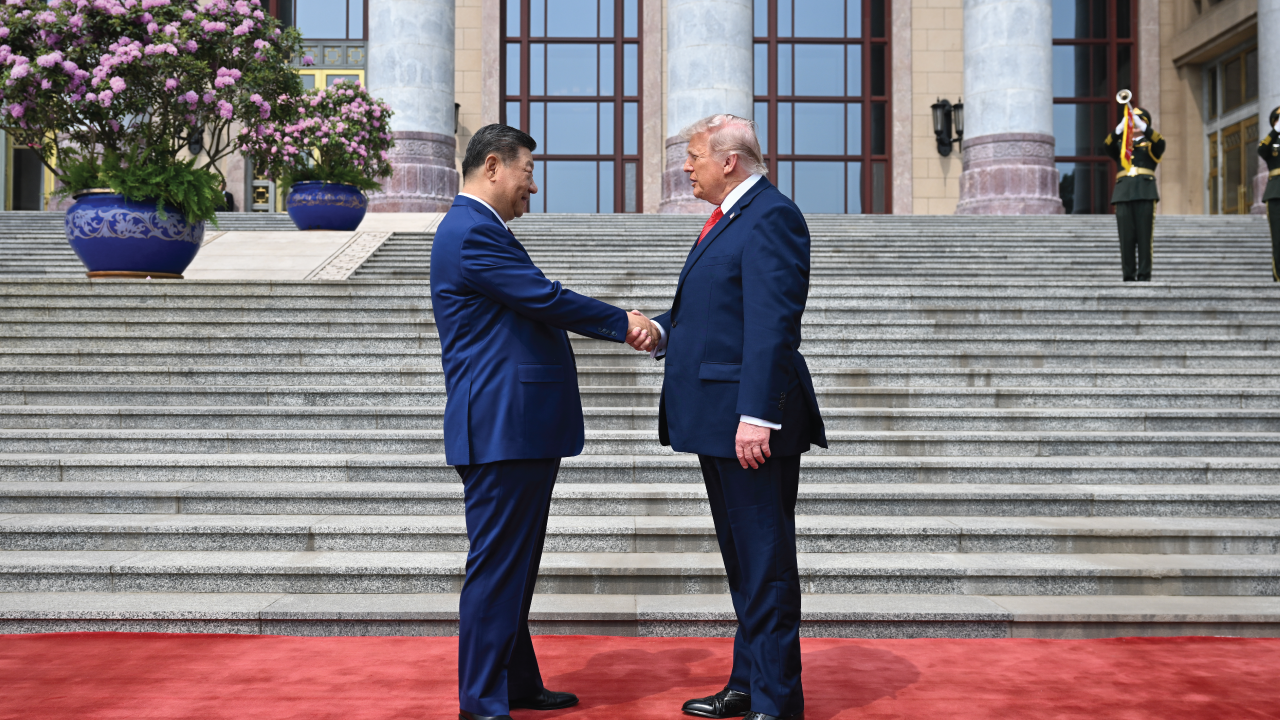
China is now viewed more favourably than the United States in most Pew Research Center surveys. This marks a significant shift in global public opinion. Beijing’s international image improves while confidence in Washington continues to decline.
Two Pew Research Center reports, released on July 15, 2026, show public attitudes toward China have recovered. The recovery follows historic lows recorded during the COVID-19 pandemic. The improvement has been particularly strong in middle-income countries across Africa, Latin America, South Asia and Southeast Asia.
The first report, titled “People in Many Countries Now View China More Positively Than the U.S.,” compared international perceptions of the two global powers, their leaders, respect for personal freedoms and foreign-policy roles.
The study surveyed 42,151 adults in 36 countries between February 8 and May 13, 2026. It found that China was viewed more favourably than the United States in 25 countries, while the US received stronger ratings in only six. Public opinion of the two countries was statistically similar in the remaining nations.
A second report, “Views of China and Xi Are Improving Globally,” examined China’s international image and public confidence in President Xi Jinping. That survey covered 45,658 respondents in 37 countries, including the United States, during the same period.
The findings point to a major reversal in international opinion between 2023 and 2026. Across 20 countries surveyed annually during that period, the median favourable rating of the United States fell from 58 per cent in 2023 to 36 per cent in 2026. China’s rating, by contrast, increased from 32 per cent to 46 per cent.
Pew Research Center said the shift reflected both improving views of China and increasingly negative perceptions of the United States. The decline in America’s international standing became particularly noticeable during the first two years of President Donald Trump’s second term.
The changing attitudes were evident even among America’s closest neighbours. In Canada, 57 per cent of respondents viewed the United States favourably in 2023, compared with only 14 per cent who held a positive opinion of China. By 2025, ratings of the two countries were similar. In 2026, China moved ahead, with 44 per cent of Canadians expressing a favourable view of Beijing, compared with 33 per cent for Washington.
China recorded some of its strongest ratings in Asia, Africa and the Middle East. In Pakistan, 90 per cent of respondents expressed a favourable opinion of China, while only 15 per cent viewed the United States positively.
China was also viewed favourably by 75 per cent of respondents in Malaysia, 73 per cent in Singapore, 72 per cent in Indonesia and Sri Lanka, 69 per cent in Thailand and 56 per cent in Bangladesh.
The findings showed similarly strong support for China in the four African countries included in the surveys. In Nigeria, 78 per cent held a favourable view of China, compared with 63 per cent who viewed the United States positively.
China also led in Kenya, receiving a 76 per cent favourable rating against 63 per cent for the United States. In South Africa, China recorded 52 per cent, compared with 35 per cent for the US.
Ghana was the exception among the African countries surveyed. Sixty-eight per cent of Ghanaians viewed the United States favourably, while 64 per cent expressed a positive opinion of China.
China’s image was generally stronger in middle-income countries than in wealthier nations. Across all 37 countries covered by the second report, a median of 51 per cent held a favourable opinion of China, while 39 per cent viewed the country negatively.
Negative perceptions of China, however, remained high in several developed countries and nations with longstanding security or territorial concerns involving Beijing. Only 11 per cent of Japanese respondents viewed China favourably, compared with 27 per cent in the United States and Sweden, 28 per cent in South Korea and 31 per cent in Australia.
The surveys found a similar divide in confidence in President Xi. Confidence in his ability to do the right thing in world affairs was highest in Pakistan at 83 per cent, followed by Kenya at 73 per cent, Singapore at 67 per cent and Malaysia at 66 per cent.
Xi also received confidence ratings of 62 per cent in Nigeria and Indonesia, and 61 per cent in Bangladesh.
Across the 36 countries where the two leaders were compared, respondents in 22 expressed greater confidence in Xi than in Trump. Although confidence in both leaders remained generally low in Europe, Xi received better ratings in Germany, Greece, Italy, the Netherlands, Spain, Sweden and the United Kingdom.
In South Africa, 46 per cent expressed confidence in Xi, compared with 26 per cent for Trump. Xi also led Trump by 10 percentage points in Kenya and two points in Ghana. Trump received a slightly higher rating in Nigeria.
The US President performed better in countries with longstanding security concerns about China, including India, Japan, the Philippines and Israel. In Israel, 66 per cent expressed confidence in Trump, while only 10 per cent said the same about Xi.
The reports also examined how China and the United States are perceived as international partners. Across 17 middle-income countries, a median of 69 per cent described China as a reliable partner, compared with 49 per cent who said the same about the United States.
Fifty-eight per cent believed China contributes to peace and stability around the world, while 40 per cent held that view of the US. Another 57 per cent said China considers the interests of countries like theirs when making international policy decisions, compared with 42 per cent for the United States.
The difference was particularly strong in sub-Saharan Africa. Eighty-eight per cent of Kenyans described China as a reliable partner, followed by 76 per cent in Nigeria, 72 per cent in South Africa and 69 per cent in Ghana.
Majorities in the four African countries also believed China contributes to global peace and stability. The figure stood at 68 per cent in Ghana, 67 per cent in Kenya, 65 per cent in Nigeria and 64 per cent in South Africa.
Respondents nevertheless expressed concerns about foreign interference. Across the 17 middle-income countries, 75 per cent said the United States interferes in the domestic affairs of other nations, while 45 per cent expressed the same opinion about China.
Despite Beijing’s improving standing, concerns remain over personal freedoms. Across the 37 countries, only 26 per cent believed the Chinese Government respects the freedoms of its people, while 59 per cent said it does not.
The United States continued to receive better ratings on personal freedoms, with 39 per cent saying the American Government respects its citizens’ rights. However, that figure has fallen sharply in several countries since 2021, narrowing the longstanding gap between Washington and Beijing.
The findings also exposed major divisions within the Asia-Pacific region. China was widely regarded as a partner in Pakistan, Indonesia, Malaysia and Sri Lanka, but was frequently identified as a threat in Japan, the Philippines, Australia, South Korea and India. Concerns about territorial disputes involving China were particularly high in Japan, South Korea and the Philippines.
Pew Research Center concluded that China’s improving image does not mean international concerns about its domestic and foreign policies have disappeared. Instead, the findings reveal a changing global balance in which many middle-income countries increasingly regard China as a dependable economic and diplomatic partner, while confidence in the United States and its leadership has weakened.
Sierra Leone was not among the countries covered by either survey.