
The Sierra Leone Railways Development and Regulatory Authority (SLRDRA) has taken a major step toward strengthening the governance of the country’s railway sector by convening a high-level technical consultative meeting with key stakeholders to review its Draft Railway Regulatory Framework ahead of its submission to Cabinet and Parliament.
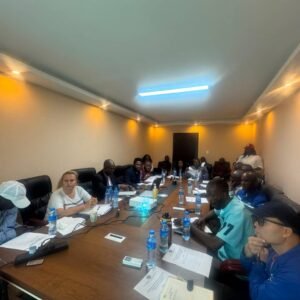
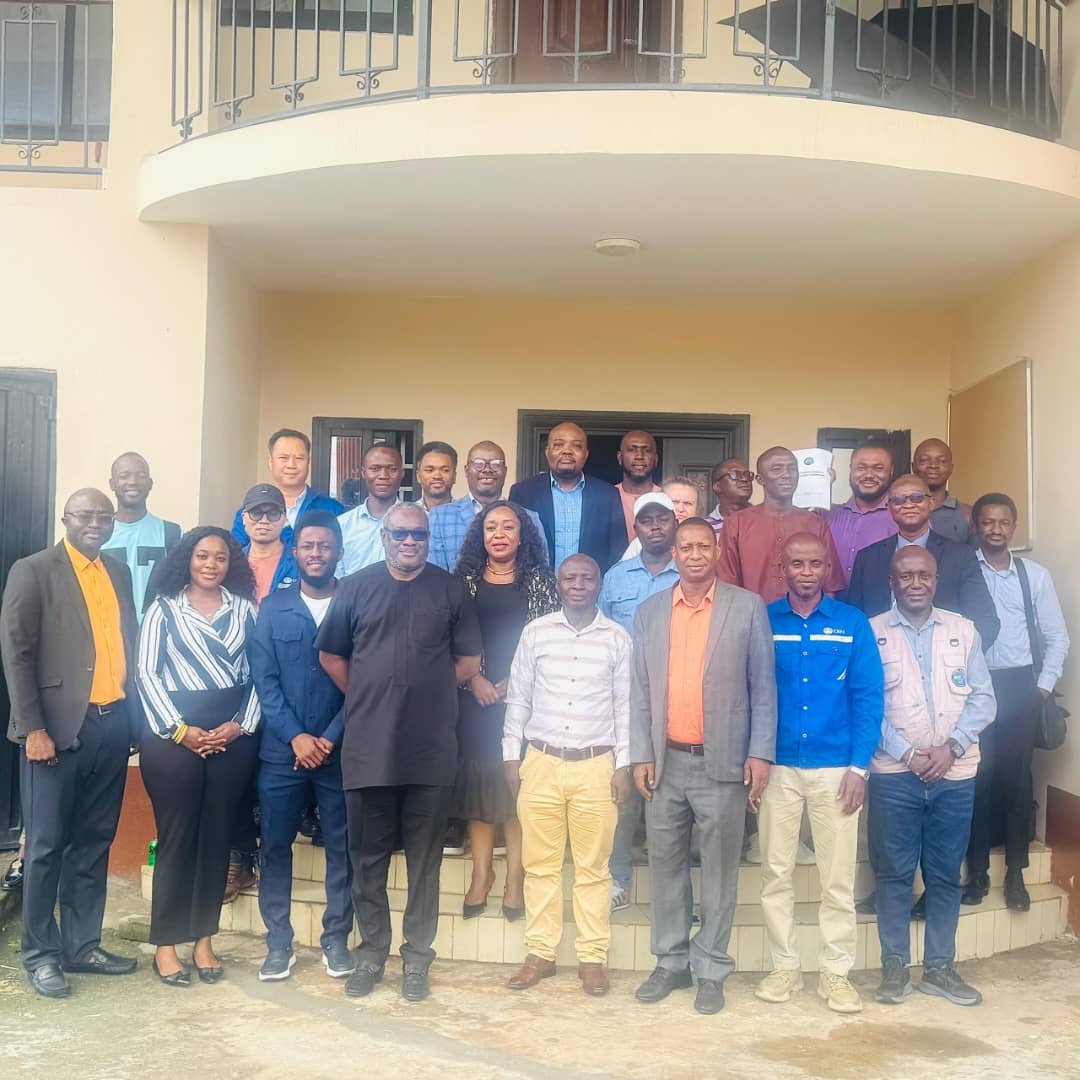
The consultative meeting, held on Thursday, 23 July 2026, brought together representatives from Government ministries, regulatory institutions, private sector operators and development partners to examine the draft framework, which is expected to provide the legal and operational foundation for Sierra Leone’s expanding railway industry.
The development comes at a time when Sierra Leone is witnessing renewed investment in railway infrastructure, including the proposed Mines–Port Railway Project linking Tonkolili North Kasafoni to Banana Island, existing mining railway concessions and other planned railway transportation systems. Officials noted that despite these developments, the sector currently lacks comprehensive subsidiary regulations governing railway licensing, operational standards, safety, planning, technical requirements and environmental compliance.
The proposed Railway Regulatory Framework is expected to address these gaps by establishing clear standards and serving as the principal regulatory guide for railway operators, concessionaires, licensees, contractors and other stakeholders operating within the sector.
Opening the meeting, the Deputy Director General of SLRDRA, Mr. George Simeon Songu, welcomed participants and thanked them for attending despite the unfavorable weather conditions. He underscored the importance of stakeholder engagement in refining the draft document before its final adoption.
Mr. Songu said the consultative process reflects the Authority’s commitment to developing a practical, inclusive and internationally compliant regulatory framework capable of supporting Sierra Leone’s railway modernization agenda.
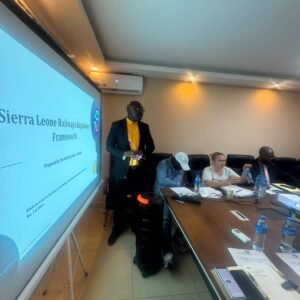
The Director of Railway Safety and Regulations, Engineer Albert Sovula, presented the first volume of the draft framework, outlining the Authority’s legal mandate, regulatory responsibilities and safety principles.
He explained that the Sierra Leone Railways Development and Regulatory Authority, established in April 2025 under the Sierra Leone Railway Development Act, is mandated to regulate railway and cable car services, issue licenses to operators, investigate railway incidents and enforce compliance with national railway regulations.
Engineer Sovula emphasized that the framework places safety at the center of railway development while promoting transparency, accountability and adherence to international best practices.
Presenting the second volume of the framework, Engineer Hassan Tamimu, Director of Railway Operations and Technical Services, highlighted the proposed technical and operational standards that will govern railway operators, infrastructure managers and contractors.
He explained that the framework adopts internationally recognized railway standards aimed at ensuring safe, efficient and reliable railway services while promoting operational excellence across the sector.
The third volume was presented by the Director of Railway Planning and Development, Engineer Handel Peacock-Sawyer, who stressed the importance of strategic planning, data-driven decision-making, licensing and institutional partnerships in developing a modern railway system.
According to him, the proposed regulations will strengthen accountability among railway operators, contractors, consultants and relevant public institutions while supporting the long-term expansion of the country’s railway infrastructure.
Also presenting during the consultative session, the Director of Environmental Compliance, Engineer Abdul Kaadiru Kallon, emphasized that environmental sustainability remains an integral component of railway development.
He noted that the framework requires mandatory Environmental Impact Assessments (EIAs) for railway projects and promotes close collaboration with the Environmental Protection Agency (EPA) to ensure compliance with environmental laws. He further highlighted provisions relating to emergency preparedness and enforcement measures against non-compliance.
Stakeholders who participated in the consultation welcomed the development of the draft framework and reaffirmed their commitment to supporting the modernization of Sierra Leone’s railway sector.
A representative of Kingho Rail and Port described the proposed framework as a significant milestone, noting that a modern and well-regulated railway industry is critical to improving freight transportation, enhancing investment confidence and strengthening Sierra Leone’s logistics network.
The representative further emphasized the need for continued collaboration between Government institutions and private sector operators to ensure safe, efficient and sustainable railway operations.
The representative from the Office of the Attorney General and Minister of Justice commended SLRDRA for developing a comprehensive regulatory framework and stressed the importance of ensuring that all provisions remain legally sound and fully aligned with the laws of Sierra Leone.
The representative assured participants that the Office of the Attorney General and Minister of Justice would continue to provide the necessary legal support to facilitate the successful implementation of the framework.
Similarly, a representative from the Ministry of Lands, Housing and Country Planning highlighted the importance of proper land administration in supporting the successful expansion of Sierra Leone’s railway network.
The Ministry reaffirmed its commitment to working closely with SLRDRA to address issues relating to land acquisition, protection of railway rights-of-way, physical planning and the prevention of encroachment along railway corridors.
Participants agreed that the proposed framework will provide the regulatory certainty required to facilitate future railway investments while strengthening safety, operational efficiency and environmental compliance throughout the sector.
Following the conclusion of the stakeholder consultations, the Authority will incorporate recommendations received during the review process before forwarding the completed Draft Railway Regulatory Framework to the Minister of Transport and Aviation.
The Minister is expected to present the document to Cabinet for approval before it is subsequently laid before Parliament for ratification.
The meeting concluded with stakeholders reaffirming their collective commitment to supporting the development of a modern, safe, efficient and internationally compliant railway system capable of driving economic growth, improving transportation connectivity and enhancing Sierra Leone’s infrastructure development agenda.