
By Amin Kef (Ranger)
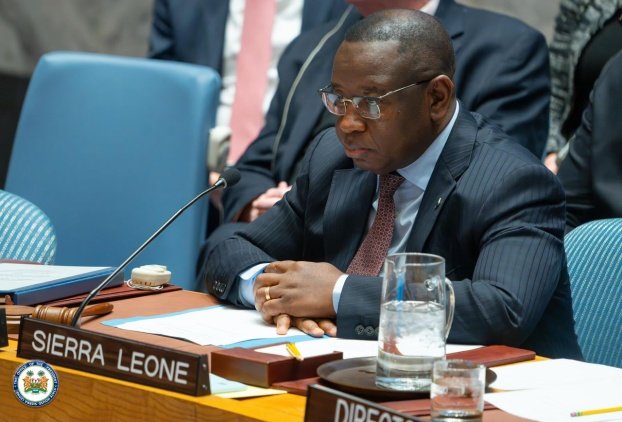
Sierra Leone’s President, Dr. Julius Maada Bio, has earned significant global recognition for his proactive leadership on international peace and security, following the country’s presidency of the United Nations Security Council in November. His interventions on two major global issues, the Gaza crisis and insecurity in the Sahel, have been widely reported across prominent international media platforms.
Global media monitoring data indicate that coverage of President Bio’s engagements reached an estimated 245 million people worldwide, generating over 219 million ad impressions, 78 million long-form reads, 34 million deep engagements and 3.4 million direct forwards. Analysts describe this level of visibility as unprecedented for Sierra Leone, signaling growing international interest in the country’s diplomatic contributions.
Major news outlets such as AP News, Bloomberg Terminal channels, MENAFN and numerous U.S. network affiliates of ABC, CBS, NBC, FOX and CW carried reports across major American cities including New York, Chicago, Los Angeles, Philadelphia, Houston, Atlanta and Washington D.C. African and global policy platforms, including Africa News Currents, African News Ledger, The Africa Gazette, World Politics Report and Government Daily Review, also amplified the developments.
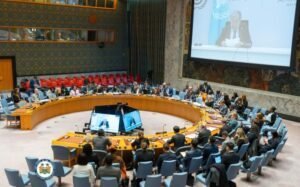
President Bio’s chairmanship of the UN Security Council session that adopted Resolution 2803 on Gaza has been highlighted globally as a principled stand for the protection of civilians and for unhindered humanitarian access to affected populations. Media commentary emphasized his diplomatic tone and his appeal for renewed multilateral commitment toward a sustainable peace process.
In a separate Council briefing on Peace Consolidation in West Africa, President Bio presented a bold proposal for an ECOWAS–UN–AU Joint Compact for Peace and Resilience in the Sahel. The initiative is designed to align security operations, governance reforms and humanitarian action under one coordinated framework, with support from predictable financing under United Nations Security Council Resolution 2719 (2023).
The proposal, unveiled on 18 November 2025 at the UN Headquarters in New York, seeks to address escalating terrorism, political instability and worsening humanitarian conditions across the Sahel and West Africa. President Bio warned that the Sahel has become “the epicentre of global terrorism,” with extremist groups affiliated with ISIL and Al-Qaida exploiting weak governance structures and fragmented regional responses.
Speaking in his dual role as President of Sierra Leone and Chair of the ECOWAS Authority of Heads of State and Government, President Bio urged the international community to strengthen cooperation and accelerate action.
“Maintaining international peace and security is a collective responsibility,” he said, noting that the threat of terrorism continues to outpace current responses. “The people of West Africa and the Sahel do not ask for pity; they ask for partnership.”
He emphasized that the proposed Compact must not only reinforce military responses but also address governance deficits, economic exclusion and community-level grievances that fuel instability.
Addressing representatives of Burkina Faso, Mali and Niger, President Bio stressed the need for constructive engagement and reintegration, stating that regional peace “cannot be built on exclusion.” He encouraged the strengthening of ECOWAS-Sahel cooperation through joint platforms, real-time coordination and capacities supported by UN entities.
The President underscored the worsening humanitarian situation in the region, marked by rising displacement, shrinking livelihoods, food insecurity and growing public frustration. He called for expanded humanitarian assistance linked to sustainable development strategies to restore dignity and resilience to affected communities.
“Africa’s peace,” he reminded the Council, “is not a favour to be granted, but a foundation of global stability.”
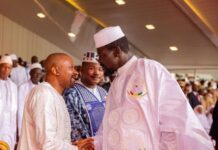
President Bio returned to Freetown on Wednesday after what officials described as one of Sierra Leone’s most impactful diplomatic engagements in recent years. He expressed optimism that the discussions held and the commitments made at the UN would catalyze strategic cooperation in addressing terrorism and instability in the Sahel and the broader West African region.
The combined impact of the Gaza resolution and the Sahel Compact proposal has strengthened Sierra Leone’s standing as a serious contributor to international dialogue on peace and security. Analysts note that President Bio’s leadership has positioned the country as a credible advocate for multilateralism, humanitarian protection and African-led solutions to continental challenges.
Global media attention keeps intensifying, and with it, Sierra Leone’s once-modest diplomatic presence is transforming into a commanding voice on the world stage; driven by President Bio’s rising influence in shaping global dialogue on peace, cooperation and collective security.