

By Alvin Lansana Kargbo
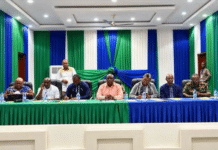
The African Diamond Producers Association (ADPA) has wrapped up its strategic Pre-Meeting in Dubai, United Arab Emirates, with member states committing to present a unified African position at the upcoming 2025 Kimberley Process (KP) Plenary. The session was chaired by Sierra Leone’s Minister of Mines and Mineral Resources, Julius Daniel Mattai, who also serves as ADPA Chairman. He emphasized that Africa’s strength in global diamond governance depends on its ability to speak with one coherent and collective voice.
Addressing delegates at the opening of the meeting, Minister Julius Daniel Mattai reaffirmed ADPA’s commitment to safeguarding the integrity of the diamond sector and strengthening Africa’s influence within the Kimberley Process. He encouraged member states to actively participate in the discussions and work collaboratively toward a harmonized position that reflects the priorities and aspirations of diamond-producing nations on the continent.
According to the Minister, unity remains a critical element in enhancing Africa’s negotiating power, ensuring that shared interests are adequately represented and boosting the credibility of African countries in international negotiations. He stressed that the 2025 KP Plenary offers a significant opportunity for Africa to advocate for reforms that better align with the realities of modern diamond production and trade.
One of the most prominent issues discussed during the Pre-Meeting was the global debate surrounding the definition of conflict diamonds. Delegates noted that the current definition no longer captures the full scope of challenges in today’s diamond value chain. They unanimously agreed that the definition should be revised and modernized to incorporate the experiences of diamond-producing communities, particularly those affected by mining operations. Such inclusion, they maintained, would promote greater transparency, protect vulnerable populations and ensure that communities benefit more equitably from the governance structures guiding the trade in rough diamonds.
The meeting also reviewed developments concerning the future leadership of the Kimberley Process. Delegates highlighted that Zimbabwe, which had initially indicated interest in assuming the Chairmanship in 2026 had formally withdrawn its application and would seek the position at a later date. Ghana, which previously expressed interest in the Vice-Chairmanship, neither attended the meeting nor participated virtually, raising concerns about clarity and continuity in the succession process following the term of the United Arab Emirates.
Given the uncertainties surrounding Africa’s internal candidate selection, some delegates suggested that ADPA remain open to supporting non-member countries that have declared their interest in the Chairmanship. It was also confirmed that Qatar, whose earlier candidacy had been blocked by another participant, has not withdrawn its bid for leadership of the KP.
At the conclusion of the meeting, ADPA reaffirmed the importance of unity, collaboration and proactive engagement among African diamond-producing countries. Delegates committed to finalizing a consolidated African position that will be presented at the 2025 Kimberley Process Plenary in Dubai. The collective objective is to ensure that Africa’s priorities, as well as the welfare of its diamond-producing communities remain at the center of global decision-making.
Minister Julius Daniel Mattai underscored that the continent’s influence within the Kimberley Process depends on its consistency and cohesion. He reiterated that Africa must continue to champion reforms that strengthen the credibility, transparency and effectiveness of the global diamond governance framework.