
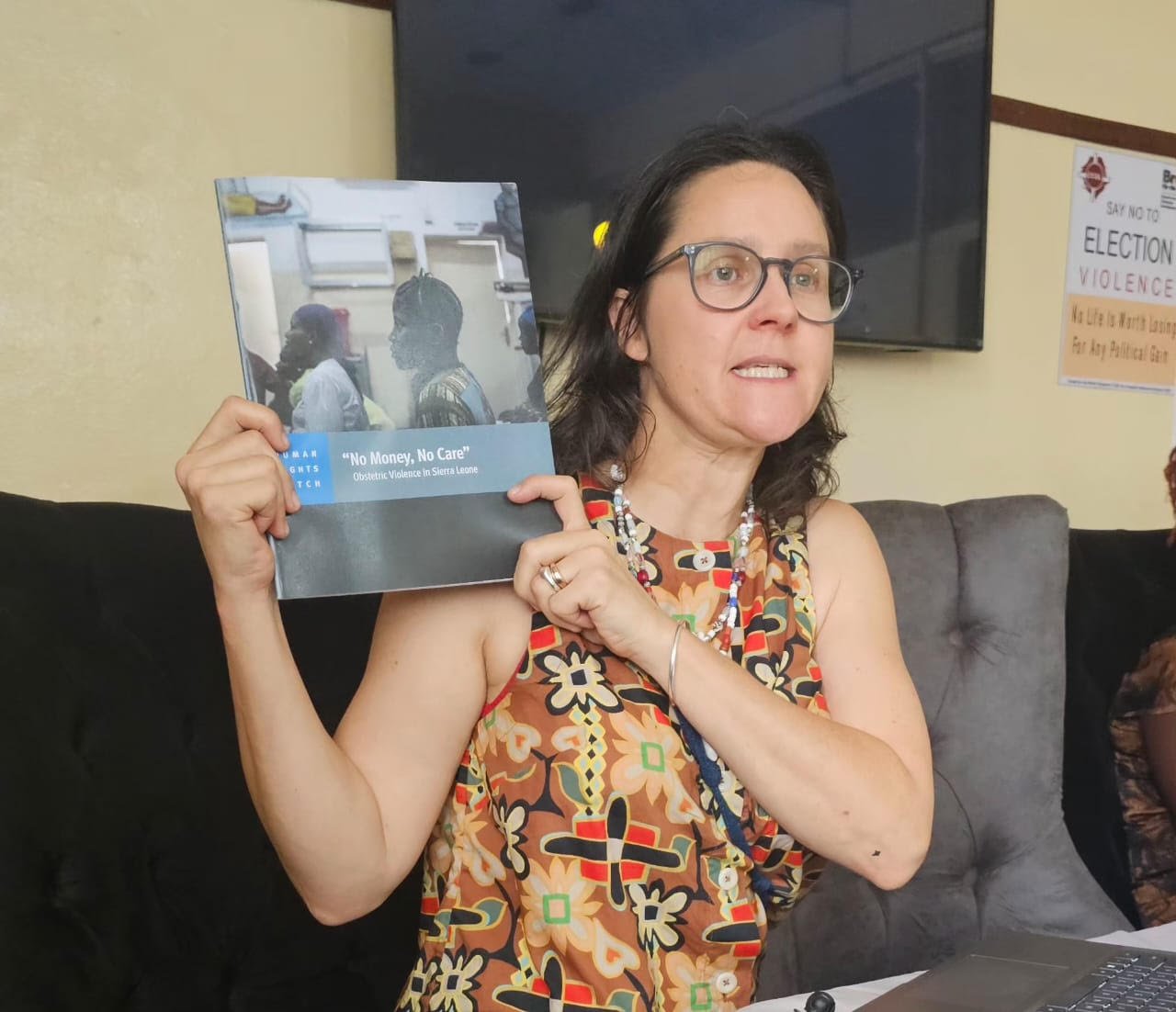
By Skye Wheeler
A new Human Rights Watch (HRW) report has drawn fresh attention to the persistent abuse faced by pregnant women and girls in Sierra Leone’s maternal health system, despite notable progress in recent years. The findings, which detail widespread neglect, informal fees and emotional and physical trauma in public hospitals, have intensified calls for urgent reform.
The report, released earlier this month, documents interviews with nearly 50 women who had recently given birth, along with healthcare providers and maternal health experts. HRW says its research uncovered a troubling pattern: women and newborns suffering, and in some cases dying, because healthcare workers demand informal fees for services that are supposed to be free.
According to HRW, the abuse is deeply rooted in chronic resource shortages across public health facilities, including inconsistent supplies of essential drugs and basic materials such as gloves and IV fluids. Many healthcare workers themselves are overstretched and unpaid, conditions that have contributed to a system in which women in labour are pressed for payment at the most vulnerable moments of their lives.
One woman recounted being left unattended for two hours while in labour because she could not afford soap and gloves. Her baby died shortly after being delivered by a midwife—a death she believes better care could have prevented. HRW described such neglect as a form of obstetric violence: gender-based abuse directed at women and girls seeking reproductive care.
Health and Sanitation Minister, Dr. Austin Demby, responding to the findings, acknowledged the gravity of the situation but criticised HRW for publishing the report outside of established Government research protocols, including ethics review processes. However, he emphasised that women and girls giving birth in Government facilities must experience “not only survival, but dignity.”
While welcoming the Minister’s acknowledgement of the issue, HRW stressed that progress has been slow and fragile. The organisation warned that improvements in maternal mortality—one of Sierra Leone’s major public health achievements over the past decade—could be undermined if systemic abuse and resource shortages persist.
HRW noted that its research followed strict ethical guidelines, securing informed consent, guaranteeing anonymity for participants and taking precautions to avoid re-traumatisation.
The report calls for decisive Government action, including ending reliance on volunteer healthcare workers and significantly boosting resources for public health facilities. It urges the State to establish a clear path toward fulfilling its Abuja Declaration commitment to allocate at least 15 percent of the national budget to health.
Equally crucial, the report argues, is transforming entrenched attitudes that normalise disrespect toward women and girls in medical settings. HRW found that many women—especially those who are poor, unable to read or write, or without social connections—feel powerless to report abuse or demand better treatment.
Feminist activists and community-level organisations have played a pivotal role in advocating for safe maternal care, yet they remain under-resourced. Their recommendations, HRW says, must be taken more seriously by policymakers.
Wheeler emphasises that women’s accounts of abuse are vital and should inform policy and reform. HRW’s report, she said, should be just one of many platforms through which Sierra Leonean women and girls can share their experiences and push for change. Hearing their voices—and acting on them—is essential, she added, for safeguarding the lives and dignity of women and newborns across the country.
Skye Wheeler is a Senior Women’s Rights Researcher at Human Rights Watch.