

By Mary Kabay
UNICEF’s 40th anniversary in Sierra Leone marks a profound milestone in a partnership that has shaped the lives of generations of children. From the early days of its work in 1985 to the current push toward a transformative 2025–2030 programme, UNICEF’s efforts have been rooted in one defining mission: ensuring that every child survives, learns and thrives.
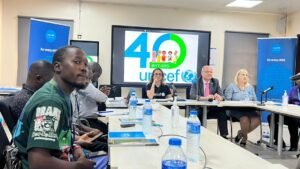
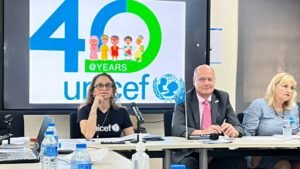
This commitment took centre stage on Tuesday, 9 December 2025, as UNICEF Sierra Leone hosted a special Media Roundtable at its Country Office in New England, Freetown. Titled: “For Every Child, A Promise Renewed,” the gathering brought together journalists, editors, development partners and UNICEF leadership to reflect on four decades of progress while charting a path forward for stronger child-focused interventions.
UNICEF’s journey in Sierra Leone has unfolded against the backdrop of some of the country’s most defining challenges; from the civil conflict to the Ebola outbreak, from devastating floods to the COVID-19 pandemic. Throughout those crises, UNICEF maintained a constant presence, safeguarding essential services and working with Government and communities to protect the most vulnerable.
“This journey has been defined by partnership, resilience and a shared commitment to the rights and well-being of every child,” said Liv Elin Indreiten, UNICEF Deputy Representative (Programme), as she highlighted the organization’s most notable achievements.
In the health sector, UNICEF’s support in expanding immunization, distributing insecticide-treated nets, strengthening neonatal care and improving primary healthcare systems contributed significantly to reducing child mortality. During emergencies, UNICEF played a crucial role in ensuring continuity of life-saving services and supporting families with the tools and information needed to stay safe.
Education has been another cornerstone of UNICEF’s work. From rebuilding schools destroyed during the civil war to supporting the implementation of Free Quality Education, UNICEF has helped broaden access, especially for girls, children with disabilities and those in hard-to-reach communities. Even during pandemics and national disruptions, UNICEF facilitated distance learning and community-based teaching initiatives to keep children engaged.
Child protection programmes have supported the demobilization and reintegration of children affected by armed conflict, strengthened national protection systems and delivered psychosocial support to thousands of vulnerable children. In the fight to end harmful practices, UNICEF continues to advocate for the elimination of female genital mutilation, child marriage and all forms of violence against children.
In Water, Sanitation and Hygiene (WASH), UNICEF’s interventions have brought safe drinking water to rural and urban communities, reducing preventable diseases and improving sanitation in schools, clinics and disaster-prone areas. Social protection initiatives, including cash transfer support and welfare services, have helped vulnerable families cushion the impact of poverty and build resilience.
“Progress has been driven not by isolated projects, but by sustained, integrated efforts; combining emergency response with long-term system strengthening,” UNICEF leadership emphasized. Each milestone, they stressed, reflects decades of partnership with Government, civil society and international partners.
As UNICEF prepares to launch its 2025–2030 Country Programme the organisation is setting its sights on delivering results at scale through innovation, evidence-based interventions and regional collaboration. The new programme will deepen its focus on early childhood development, adolescent empowerment, climate resilience and community-driven solutions; ensuring progress reaches every district, every chiefdom and every child.
A major highlight of the roundtable was the recognition of the media’s indispensable role in shaping public consciousness and driving societal change.
UNICEF’s Communications Chief described the media as “a vital force in influencing behaviour, shaping narratives and mobilizing investment for children’s well-being.”
“UNICEF brings data and a child-rights lens. You bring the platforms and storytelling that connect these issues to daily life,” she said. Plans were unveiled for closer engagement with journalists through data sharing, field access, expert briefings and collaborative storytelling initiatives designed to amplify children’s voices nationwide.
In his opening remarks, UNICEF Representative, Rudolf Schwenk, expressed deep appreciation to the media and development partners for their unwavering collaboration across four decades. He emphasized that UNICEF’s achievements in Sierra Leone are a reflection of collective effort, shared resolve and the courage of communities fighting daily to secure a better future for their children.
The event closed with a powerful call to action: for journalists to continue spotlighting stories of resilience and barriers, holding institutions accountable and championing the rights of Sierra Leone’s youngest citizens.
UNICEF steps confidently into its next chapter with a message that resonated throughout the roundtable; the promise made four decades ago still stands, renewed with even greater determination: to ensure that no child in Sierra Leone is left behind.