
By Alvin Lansana Kargbo
The National Disaster Management Agency (NDMA), in collaboration with Trocaire, has launched a nationwide after action review of flood preparedness and early warning systems aimed at improving disaster response and strengthening community resilience across Sierra Leone.
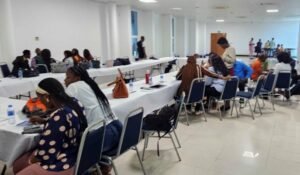
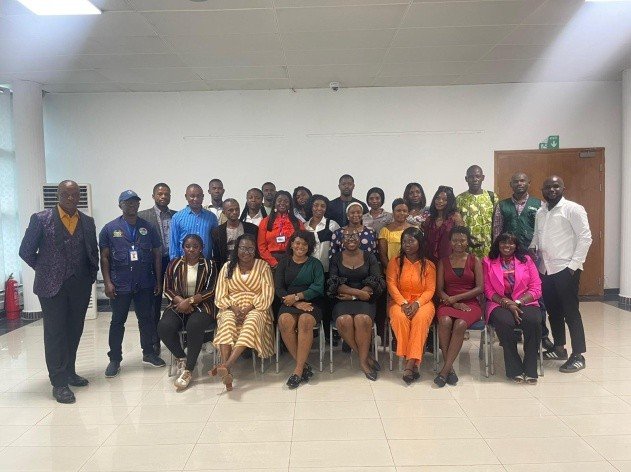
The review was held on Monday 15 December 2025 at the Freetown International Conference Centre in Aberdeen and forms part of a broader assessment of recent flood response interventions. It seeks to identify operational gaps and propose measures to reduce the impact of future flooding events as the country prepares for subsequent rainy seasons.
Key priorities identified during the review include strengthening the National Flood Protocol, ensuring the use of disaggregated data to better identify vulnerable groups and improving last mile communication to reach hard to access communities. The initiative also focuses on scaling up early warning systems, strengthening collaboration with the Meteorological Agency and improving coordination with Community and Chief Disaster Management Committees nationwide.
The exercise is intended to guide ongoing interventions, ensure that lessons learned are effectively applied and reinforce national preparedness ahead of future flooding incidents.
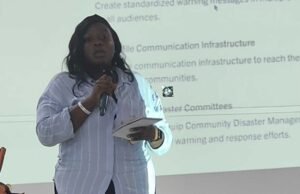
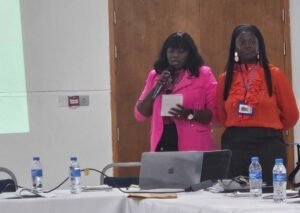
Presenting the findings the National Consultant for Trocaire, HAfrica During, described the after action review as a structured protocol rather than a routine report noting that it is designed to inform future disaster management planning. She explained that similar approaches have been successfully implemented in countries such as Namibia and India.
The National Consultant disclosed that the review covered flood prone communities in Bombali, Karene, Kambia and both urban and rural areas of the Western Area. She said the objective was to capture a nationwide picture of how communities, chiefdom authorities and district leadership structures respond to flooding and how governance systems either trigger or fail to trigger effective mitigation measures.
One of the major findings HAfrica During highlighted was the low level of awareness at community level regarding flood mitigation strategies. She noted that although radio and television awareness campaigns exist the information often fails to reach communities through local governance structures such as chiefdom administrations, Paramount Chiefs and community leaders.
According to her, the challenge lies not in the absence of information but in the lack of targeted and strategic communication capable of prompting decisive action including evacuation when risks escalate.
Addressing why many residents continue to live in flood prone areas she cited economic and social realities particularly in riverside and low lying agricultural communities. The Trocaire National Consultant explained that many residents depend on such lands for farming, fishing and are often reluctant to evacuate during the rainy season as doing so threatens their livelihoods especially in the context of extended rainfall periods driven by climate change.
She added that NDMA and its partners are exploring subsidy mechanisms and alternative livelihood options to support evacuation efforts. Cultural perceptions also influence risk behaviour with many communities viewing flooding as a normal part of agricultural and fishing cycles. HAfrica During stressed that the review aims to reframe flooding as a serious and abnormal threat to life and property.
Deputy Director for Disaster Risk Reduction and Preparedness at NDMA, Gerland King, said the review identified both strengths and weaknesses in the current flood preparedness framework. He emphasized that the agency is prioritizing capacity building across the entire disaster management cycle.
He noted that prevention remains more cost effective than response stating that every dollar invested in prevention saves an estimated seven dollars in response costs. Gerland King further highlighted the move toward impact based forecasting where alerts specify likely impacts and locations rather than issuing broad warnings that may confuse the public. According to him advances in technology now make more precise and actionable alerts possible.
National Chairperson of the Community Disaster Management Committee, Daniel Bock Jones, underscored the importance of inclusive participation particularly from provincial areas which he said remain equally vulnerable to flooding. He called on participants to take lessons learned back to their communities and integrate them into proactive and strategic intervention systems.
The after action review is expected to inform policy and operational decisions and strengthen Sierra Leone’s overall flood preparedness as climate related risks continue to intensify.