

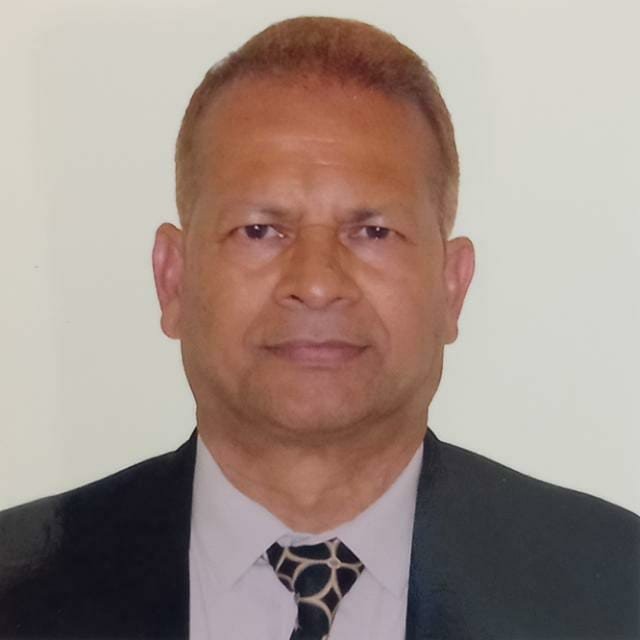
By Shri Baisnab Charan Pradhan, High Commissioner of India to Sierra Leone
Artificial Intelligence (AI) is no longer a distant or abstract concept reserved for advanced laboratories and large corporations. It is fast becoming a defining force shaping how societies grow, how economies function and how Governments deliver services to their citizens. For countries across the Global South, AI represents not just a technological shift but a historic opportunity to leapfrog traditional development pathways and build more inclusive, resilient and prosperous societies.
It is in this spirit that India will host the India–AI Impact Summit 2026 (February 19–20 in New Delhi) a landmark global gathering that places inclusion, equity and real-world impact at the centre of the global AI discourse. The Summit draws inspiration from India’s own journey in using technology for social transformation, including insights from NITI Aayog’s seminal report AI for Inclusive Societal Development (October 2025). The participation of the Government of Sierra Leone, along with its emerging technology ecosystem and international partners, will be of particular importance; not only for strengthening India–Sierra Leone cooperation but also for advancing Sierra Leone’s own development and prosperity in the digital age.
Technology That Empowers, Not Replaces
At the heart of NITI Aayog’s report lies a powerful and human question: how can the world’s most advanced technologies reach the most overlooked workers and empower them to claim their rightful place in national growth stories? In India, this question is especially relevant to the nearly 490 million people who form the informal workforce; workers whose skills sustain economies but who often remain outside formal systems of training, finance and social protection.
The report is grounded in the lived experiences of people such as home healthcare aides, carpenters, farmers and daily wage workers. Their stories reflect challenges that resonate strongly with many communities in Sierra Leone: low literacy, language barriers, income insecurity and limited access to formal skilling and markets. Yet, the report makes a crucial point; technology should not replace human skills, it should amplify them.
This philosophy holds deep relevance for Sierra Leone. Like India, Sierra Leone has a youthful population, a large informal sector and immense human potential. AI, when deployed thoughtfully, can help unlock this potential by expanding access to skills, markets, finance and public services.
A Vision for Inclusive AI by 2035
The roadmap outlined in AI for Inclusive Societal Development envisions a future where frontier technologies, Artificial Intelligence, the Internet of Things (IoT), blockchain, robotics and immersive learning, work together to remove systemic barriers faced by informal workers.
By 2035, the report envisages voice-first AI interfaces that overcome literacy and language barriers, enabling workers to access information, training and Government services simply by speaking in their local languages. For Sierra Leone, where linguistic diversity and literacy gaps remain development challenges, such solutions could be transformative, particularly in rural communities.
The report also highlights the role of smart contracts and blockchain-based systems in ensuring transparent, timely payments and reducing exploitation. This has clear relevance for sectors such as agriculture, construction and small-scale services, areas where Sierra Leone’s economy is deeply rooted. Secure and transparent digital systems can strengthen trust, formalize economic activity and improve livelihoods.
Equally important is the emphasis on micro-credentials and on-demand learning, allowing workers to upskill continuously, at their own pace. This model aligns well with Sierra Leone’s aspiration to equip its youth and workforce with future-ready skills without disrupting livelihoods.
From Digital Public Infrastructure to Global Cooperation
India’s confidence in inclusive, at-scale digital transformation is rooted in its proven success with digital public infrastructure (DPI) platforms such as Aadhaar, UPI and Jan Dhan. These initiatives demonstrate that when technology is designed with inclusion at its core, it can reach hundreds of millions of people, reduce inefficiencies and unlock economic opportunity.
For Sierra Leone, the AI Summit provides a platform to explore how DPI-inspired approaches, adapted to local contexts, can support Sierra Leone’s goals in digital identity, payments, service delivery and data-driven governance.
By engaging at the Summit, Sierra Leone can:
- Exchange best practices on inclusive AI deployment in agriculture, healthcare, education and governance
- Explore partnerships with Indian and global technology companies working on affordable, scalable AI solutions
- Strengthen capacity-building efforts, including skilling, research collaboration and institutional development
- Position itself as an active voice of the Global South, contributing perspectives shaped by African realities
The participation of hi-tech companies and startups from Sierra Leone, alongside international technology firms, will further enrich this engagement. Exposure to India’s vibrant AI ecosystem, spanning startups, research institutions and public platforms, can help Sierra Leonean innovators identify new opportunities, business models and collaborative ventures.
AI as a Driver of Sierra Leone’s Progress and Prosperity
The relevance of AI for Sierra Leone’s development is already evident. In agriculture, AI-powered tools can support crop planning, weather prediction, pest management and market access. In healthcare, AI can help bridge shortages of specialists through telemedicine, diagnostics and data-driven planning. In education, personalized learning platforms can improve outcomes and expand access, particularly in underserved communities.
Governance stands to benefit significantly as well. AI-enabled systems can enhance transparency, improve service delivery, strengthen public financial management and support evidence-based policymaking. When aligned with strong institutions and ethical frameworks, AI can deepen trust between citizens and the state.
The India–AI Impact Summit offers Sierra Leone a unique opportunity to shape how these technologies are adopted; ensuring they are people-centric, inclusive and aligned with national development priorities.
Building a Shared Future
The global conversation on Artificial Intelligence is at a critical juncture. While AI capabilities are advancing rapidly, the risk of a widening global AI divide remains real. Without deliberate action, technological benefits could remain concentrated in a few regions, leaving much of the Global South behind.
India’s approach, reflected in NITI Aayog’s AI for Inclusive Societal Development report and embodied in the India–AI Impact Summit, offers an alternative vision. It emphasizes cooperation over competition, inclusion over exclusion and impact over rhetoric.
For Sierra Leone, engaging with this vision is not just about adopting new technologies; it is about shaping a future where innovation serves development goals, empowers citizens and strengthens sovereignty in the digital age.
Conclusion
The India–AI Impact Summit 2026 comes at a moment of profound opportunity for the Global South. It reflects India’s belief that Artificial Intelligence, when guided by shared values and collective action, can become a powerful force for inclusive growth and shared prosperity.
Sierra Leone’s participation, through Government leadership, private sector engagement and institutional collaboration, will help ensure that this global conversation translates into real benefits at home. By learning from India’s experiences, sharing its own perspectives and forging new partnerships, Sierra Leone can harness AI to accelerate progress, empower its people and build a more prosperous and resilient future.
The growing bilateral partnership between India and Sierra Leone places emerging technologies such as artificial intelligence at the center of future cooperation. Through joint efforts, both countries can show that the future of AI should be inclusive and widely shared; powered by innovation, shaped by equity and rooted in collective progress.
********