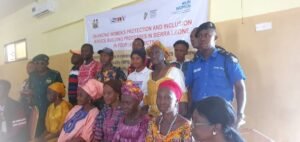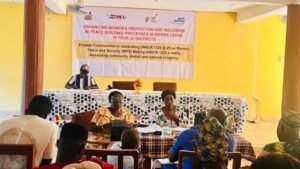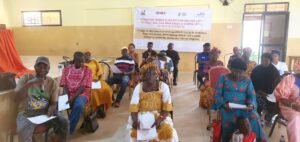

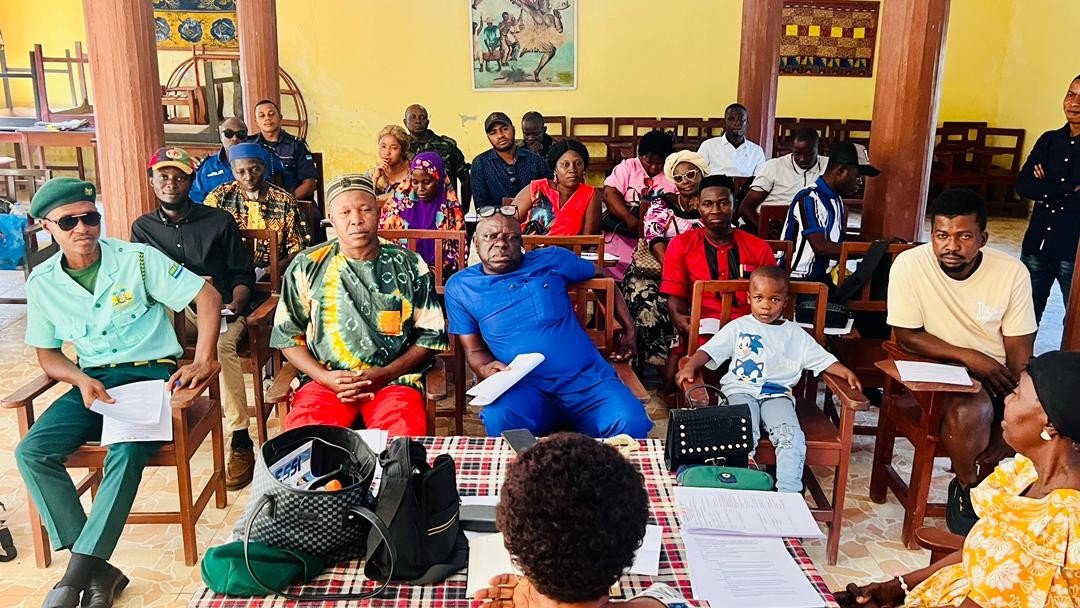
The Mano River Women Peace Network (MARWOPNET), in partnership with UN Women and with support from the Embassy of Ireland, has joined communities in Kailahun, Kambia and Karene districts to commemorate the 25th anniversary of United Nations Security Council Resolution 1325 on Women, Peace and Security (UNSCR 1325).
Adopted in October 2000, UNSCR 1325 recognizes the disproportionate impact of armed conflict on women and children, while affirming the critical role women play in conflict prevention, peacebuilding and post-conflict recovery. The 25-year milestone, marked in October 2025, provided an opportunity for reflection on progress made, persistent gaps and emerging priorities shaping the Women, Peace and Security (WPS) agenda globally and in Sierra Leone.
Through structured community dialogues, MARWOPNET and its partners facilitated discussions on lessons learned and innovations across the four pillars of UNSCR 1325—Prevention, Participation, Protection and Relief and Recovery. Participants examined trends in women’s roles in peace and governance, levels of institutional awareness and the effectiveness of national policies and action plans developed over the past two decades.
The engagements also served as a platform for strategic reflection on Sierra Leone’s implementation of the resolution, highlighting notable gains in policy and legal reforms aimed at protecting women and girls, while acknowledging challenges in financing, coordination, sustainability and monitoring. Participants identified priority actions for the next decade, focusing on strengthening implementation and deepening community ownership of the WPS agenda.
Among the key recommendations emerging from the discussions were calls for sustained community engagement, including outreach in schools and intensified public sensitization on UNSCR 1325 and related laws through mass communication and community dialogue forums. Participants urged duty bearers to fully enforce existing laws protecting women and girls, ensuring that policies extend beyond urban centres to reach rural and hard-to-access communities.
Concerns were also raised about the need for improved safety and protection for survivors of Sexual and Gender-Based Violence (SGBV), with strong emphasis on reporting all forms of violence to appropriate authorities without interference. Stakeholders called for the development and funding of women-friendly policies aligned with the four pillars of UNSCR 1325, including adequate resourcing and popularization of the third National Action Plan on the resolution.
Additional recommendations focused on the inclusion of persons with disabilities in WPS initiatives, strengthened collaboration among Civil Society Organisations and the engagement of traditional leaders in promoting women’s empowerment and participation in governance. Participants also underscored the importance of involving women at all levels of decision-making and enhancing collaboration between MARWOPNET Sierra Leone and local councils to improve implementation at the grassroots.
Cross-border and protection concerns were highlighted, including calls for urgent attention to the presence of Guinean military personnel in Yenga and surrounding areas, the situation of displaced women in Koindu and the need for all parties to conflicts to combat impunity for sexual violence while ensuring effective protection of civilians.
The Ministry of Gender and Children’s Affairs reiterated the need for collective action in the fight against SGBV, stressing that effective implementation of UNSCR 1325 requires coordinated efforts by Government, security institutions, Civil Society and communities.
In concluding the commemoration, participants described UNSCR 1325 as a form of affirmative action that legitimizes and strengthens women’s contributions to peace and security. They emphasized the need for broader sensitization on the resolution, stronger involvement of local authorities in its popularization and sustained commitment by the state to translate policy gains into tangible change on the ground.
The event brought together women, youth, traditional leaders, security sector institutions including the Office of National Security, Sierra Leone Police and Republic of Sierra Leone Armed Forces, religious leaders, Ministries, Departments and Agencies, as well as media practitioners. While acknowledging progress in policy and law-making, stakeholders agreed that gaps remain in implementation, knowledge-building and accountability, underscoring the need for renewed momentum in advancing the Women, Peace and Security agenda in Sierra Leone.