
By Alvin Lansana Kargbo
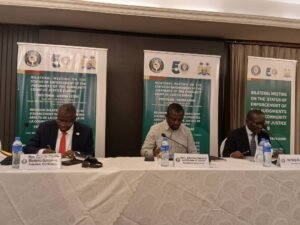
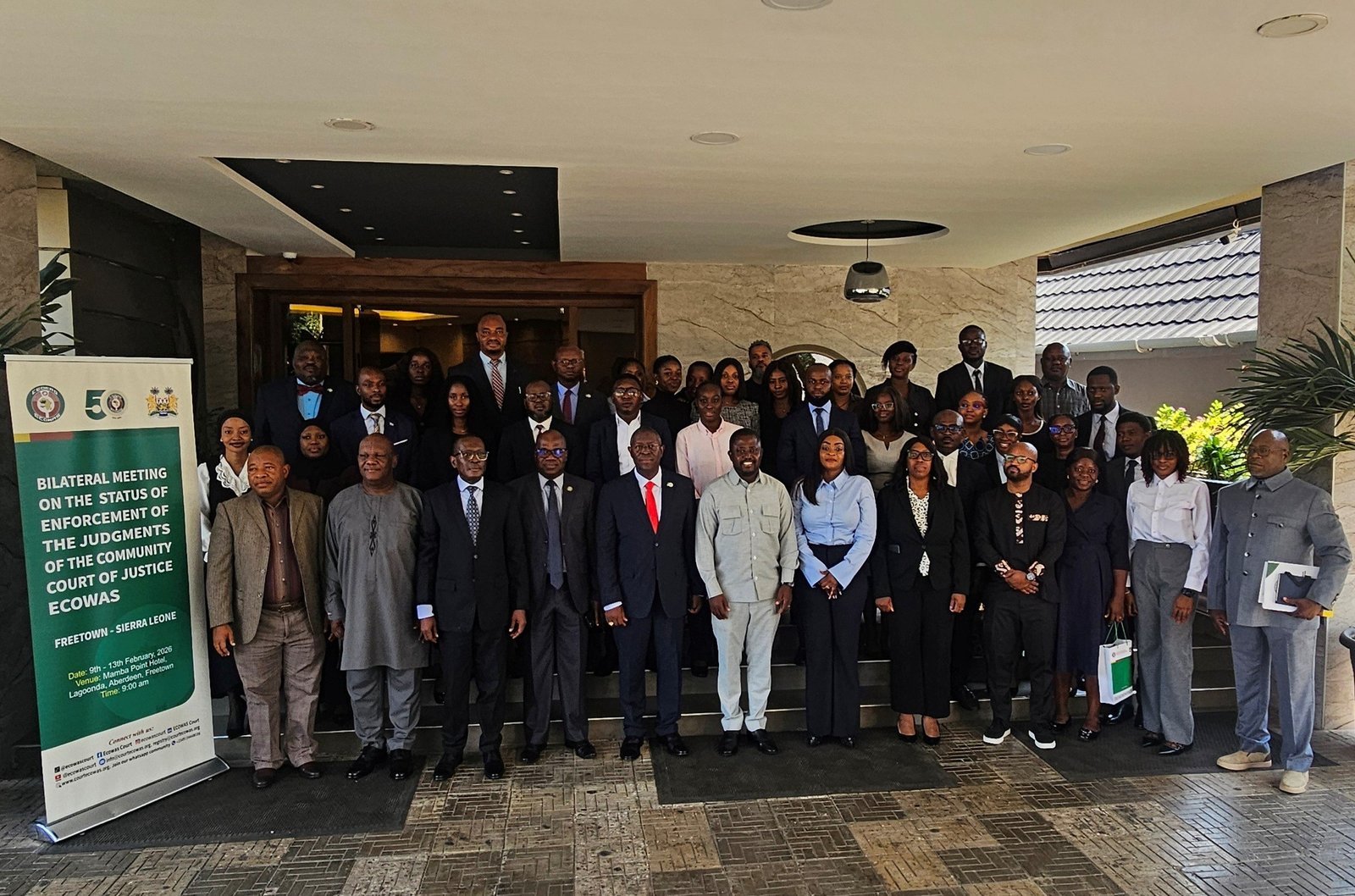
The Community Court of Justice of the Economic Community of West African States (ECOWAS) and the Government of Sierra Leone on Tuesday 10th February 2026 opened a bilateral meeting on the status of enforcement of judgments of the ECOWAS Community Court of Justice at the Mamba Point Hotel, Lagoonda, Aberdeen, in Freetown, as part of activities marking the 50th anniversary of ECOWAS.
The meeting is aimed at strengthening the enforcement of judgments of the ECOWAS Court and reinforcing the rule of law within the regional legal framework. Its objectives include enhancing Member State compliance with binding Court judgments, harmonizing enforcement procedures across national jurisdictions, building the technical and institutional capacity of national authorities responsible for implementation, identifying and addressing legal, administrative, political and institutional challenges that hinder effective enforcement.
It also seeks to establish a collaborative framework between the Court, competent national authorities and relevant stakeholders, promote the sharing of best practices, develop policy recommendations and propose practical mechanisms to improve enforcement outcomes and consistency across Member States.
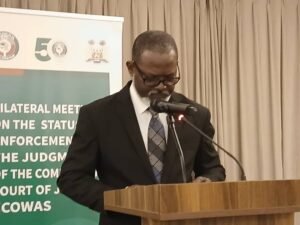
In the welcome address, the Chief Registrar of the ECOWAS Court of Justice, Dr. Yaouza Ouro-Sama, said the meeting reflects a shared recognition that justice does not end with the delivery of a judgment but is only realized when judgments are effectively enforced and their outcomes made tangible for beneficiaries and the Community. He described the ECOWAS Court as a central pillar of the Community’s legal and institutional architecture and a key instrument for protecting human rights and strengthening the rule of law across the region.
Dr. Yaouza Ouro-Sama said the authority and credibility of any court depend not only on the quality of its decisions but on the degree of compliance with those decisions. He stressed that enforcement of judgments is a legal obligation arising from the ECOWAS Revised Treaty and a political and moral commitment undertaken by Member States. He noted that non enforcement and delayed enforcement remain significant challenges that undermine citizens’ confidence in Community justice, weaken the coherence of the ECOWAS legal order and affect the effectiveness of regional integration.
He highlighted Article 24 of the Supplementary Act relating to the Community Court of Justice, which establishes the binding and final nature of the Court’s judgments and obliges Member States to enforce them in accordance with their national procedures without additional validation. He said compliance with this provision affirms the supremacy and effectiveness of Community law and failure to enforce judgments undermines the rule of law at the regional level. Dr. Yaouza Ouro-Sama added that the meeting aims to diagnose challenges and identify concrete and legally sound solutions, including clearer procedures, improved reporting mechanisms and stronger institutional synergies, while fostering cooperation and mutual respect among Member States.
In his address, the President of the Community Court of Justice, Honourable Justice Ricardo C. M. Gonçalves, said the bilateral engagement provides a platform for dialogue between the Court and national authorities, including the Attorney General, the Ministry of Justice, the Judiciary and other institutions, to assess the status of enforcement of Court judgments and strengthen collaboration. He said the meeting also aims to identify challenges hindering effective implementation and propose practical solutions to enhance compliance.
Justice Ricardo C. M. Gonçalves disclosed that since the establishment of the Court, 18 judgments have been delivered in cases involving Sierra Leone, with only one enforced, six dismissed, and 11 remaining unenforced. He said the existence of a significant number of unenforced judgments underscores the urgent need for sustained engagement and cooperation to fulfil the Court’s legal mandates. Justice Ricardo C. M. Gonçalves described enforcement as the cornerstone of justice, the rule of law and regional integration, noting that compliance demonstrates political will and institutional capacity and reinforces the credibility of the Court as a guardian of justice and human rights.
The President of the Community Court of Justice explained that the enforcement process involves communication of judgments to national authorities, coordination with national courts and administrative agencies, and the allocation of resources for implementation, particularly in cases involving compensation or restitution. He identified limited institutional coordination, absence of clear implementation timelines, administrative bottlenecks and political sensitivities as factors contributing to delays in enforcement. According to him the meeting seeks to develop a framework for regular communication between the Court and national authorities, clarify responsibilities, establish timelines for enforcement and consider the role of Civil Society Organisations in monitoring compliance and promoting public awareness of Court decisions.
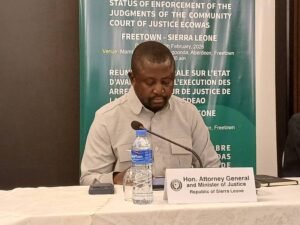
Delivering the keynote address, the Attorney General and Minister of Justice of Sierra Leone, Alpha Sesay, described the meeting as a critical act of commitment to regional integration, justice and the rule of law. He said the ECOWAS Court has become a vital forum for the peaceful resolution of disputes and for ensuring that Community law is effective, particularly following the expansion of its jurisdiction to include human rights protection.
The Attorney General said judgments of the ECOWAS Court are final and binding on Member States and their enforcement is a legal obligation flowing from the ECOWAS Treaty and Supplementary Protocols. He noted that Court decisions involving Sierra Leone have contributed to redress for individual applicants and the development of regional human rights standards guiding national institutions across West Africa. Alpha Sesay acknowledged that enforcement remains uneven across the region due to domestic legal and procedural constraints, budgetary limitations, insufficient coordination among national institutions and limited awareness of Community law obligations.
He said Sierra Leone recognizes the importance of complying with international and regional obligations and is strengthening internal coordination among the Office of the Attorney General, the Ministry of Finance, sector Ministries and other stakeholders to ensure judgments are processed, budgeted for and implemented in a timely and transparent manner. The Minister emphasized that enforcement is not solely a legal act but an administrative, financial and political process requiring deliberate institutional alignment. He proposed the establishment of national enforcement frameworks and focal points, enhanced engagement between the Court and Member States, fiscal planning for monetary awards, sustained political commitment and stronger monitoring and technical support by ECOWAS institutions.
The opening day concluded with the formal commencement of technical deliberations, setting the tone for in depth engagements among the ECOWAS Court delegation, Sierra Leonean authorities and other stakeholders on practical steps to improve enforcement of regional court judgments.
The bilateral meeting continues over the coming days with structured sessions, stakeholder consultations and the development of an action framework and timelines aimed at strengthening compliance, institutional coordination and accountability in the implementation of judgments of the ECOWAS Community Court of Justice within Sierra Leone and across the ECOWAS region.