
By Amin Kef (Ranger)
Public debate has intensified in Sierra Leone following reports surrounding the offloading of a large consignment of cement by a foreign vessel at Kent Village along the Western Area Peninsula, a location not widely recognized as a major commercial cargo discharge point. The incident, which reportedly involved more than 30,000 metric tons of imported bagged cement, has triggered widespread discussions about maritime clearance procedures, regulatory oversight and the actions taken by security authorities.
The controversy first gained prominence after social media commentator Amidu Kamara raised allegations that a vessel reportedly brought into Sierra Leone by SOL CO (SL) Ltd, a company operating a cement factory in Benguema, had entered the country’s waters without proper authorization and discharged cargo without clearance from relevant state institutions. According to the claims circulating online, the vessel allegedly offloaded cement at Kent instead of the country’s principal port facilities at Cline Town in Freetown.
The allegations quickly spread across various social media platforms, drawing the attention of the public and prompting calls for clarification from Government agencies responsible for port management, maritime regulation and customs administration.
Additional reports also referenced an audio message attributed to a resident identified as Isatu, who claimed that the vessel had entered Sierra Leonean waters and discharged cement without notifying authorities such as the Sierra Leone Ports Authority, the National Revenue Authority and the Republic of Sierra Leone Navy. According to the circulating claims, the offloading process allegedly continued for nearly two weeks before security agencies intervened.
Sources familiar with the matter indicated that the vessel was allegedly brought into the country by SOL CO (SL) Ltd, which is said to operate a private jetty facility at Kent. Some observers have raised questions about the status of that jetty, noting that it is not widely known to be part of any publicly recognized government port concession arrangement.
Reports suggest that officers from the Office of National Security (ONS), accompanied by personnel of the Sierra Leone Police, later visited the jetty after concerns about the shipment began circulating publicly. Security officials are said to have temporarily barricaded the area and escorted several individuals for questioning at the Criminal Investigation Department (CID).
Community sources indicated that the individuals who were initially detained were subsequently released. However, the development has fueled further public debate regarding enforcement consistency and the seriousness with which maritime compliance matters are handled.
Under Sierra Leone’s maritime and customs regulations, vessels entering the country’s territorial waters are expected to declare their cargo, obtain port clearance and complete all necessary customs documentation and duty payments before offloading goods. Any deviation from these requirements may constitute a breach of national law and potentially lead to revenue losses for the state.
The matter has also sparked broader conversations about economic and security implications. Cement imports are an essential component of the construction sector, and irregular importation procedures could potentially distort market competition while depriving the state of vital customs revenue needed for national development.
However, individuals familiar with the situation have provided an alternative explanation of the events. According to those accounts, the vessel in question reportedly arrived legitimately at the Port of Freetown on 16 January 2026 at approximately 16:00 GMT before proceeding to anchorage in line with established maritime procedures.
Sources indicated that a multi-agency boarding team visited the vessel the same evening to conduct routine inspections required for vessels entering Sierra Leone’s maritime jurisdiction. Officials from the Sierra Leone Ports Authority, Customs, Immigration, the Maritime Administration, the International Ship and Port Facility Security (ISPS) unit and Port Health were reportedly part of the team responsible for verifying documentation and ensuring compliance with port regulations.
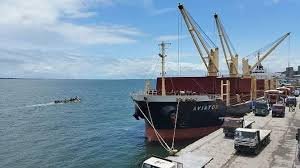
Following the completion of those inspections, the vessel is said to have proceeded to the Kent Jetty with a certified Ports Authority pilot and Customs officials onboard. According to the same sources, the cargo discharge operation reportedly commenced on 18 January and continued until 6 February 2026.
The shipment was said to consist of more than 30,000 metric tons of bagged cement, alongside approximately 300 metric tons of additional cargo intended for jetty and factory construction works. After completing the discharge process, the vessel reportedly departed Sierra Leonean waters on the same day.
Despite these explanations, the incident continues to generate public curiosity and scrutiny. Observers argue that if the vessel indeed entered the country legally and all relevant procedures were properly followed, several issues still require clarification.
One key question relates to the reported swift intervention by the Sierra Leone Police after concerns were raised about the shipment. Reports indicate that law enforcement authorities moved quickly to barricade the warehouse or location where the cement was allegedly stored and detained several Chinese nationals believed to be associated with the vessel before transporting them to the CID for questioning.
Another issue attracting attention is the decision to offload such a significant quantity of cement at Kent rather than at the established port infrastructure at Cline Town, where customs monitoring systems and cargo-handling facilities are traditionally concentrated.
Some analysts have therefore suggested that if the Sierra Leone Ports Authority and other regulatory agencies were fully aware of the operation and had approved the arrangements beforehand, making the supporting documentation publicly available could help address lingering concerns and strengthen confidence in the country’s maritime regulatory framework.
A social commentator who has been following the issue expressed skepticism about the circumstances surrounding the shipment. “I sense a huge cover-up here. Let’s drill down to uncover the real truth. Someone, somewhere is hiding something. The story does not add up,” the commentator said.
The commentator further alleged that SOL CO is linked to a broader corporate structure associated with the Wenpeng Group of Companies in China, suggesting that the business relationships behind the shipment may warrant further examination.
Officials within Sierra Leone’s maritime sector have maintained that vessels entering the country’s territorial waters are subject to strict inter-agency inspection procedures before cargo operations are allowed to proceed.
Nevertheless, many observers argue that transparency remains essential in matters involving national ports and large-scale commercial shipments. Providing clear explanations and verifiable documentation, they say, would help resolve the ongoing debate and reassure the public that Sierra Leone’s maritime regulatory systems are functioning effectively.
As discussions continue, the incident at Kent has renewed calls for stronger maritime surveillance, improved coordination among regulatory institutions and greater transparency in port operations.
Efforts by this medium to obtain comments from SOL CO (SL) Ltd were unsuccessful as of Press time. However, the company’s position remains welcome and its response will be published should it choose to address the matter.