
By Ibrahim Sesay
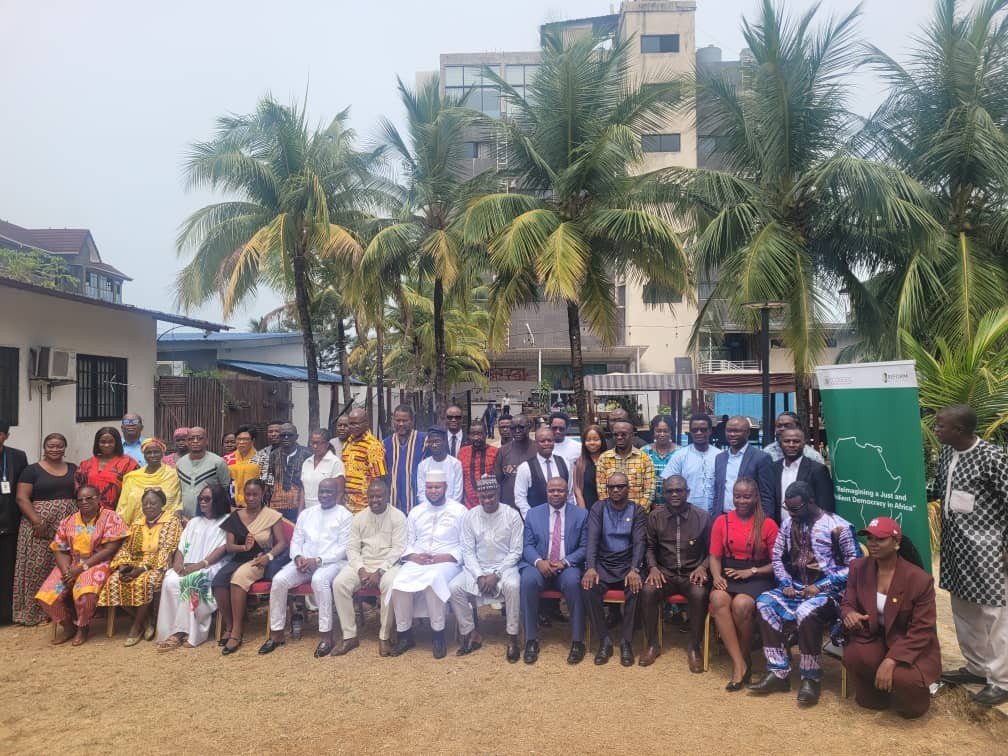
The African Union Economic, Social and Cultural Council (AU-ECOSOCC) convened a multi-stakeholder dialogue in Freetown aimed at strengthening democratic governance and promoting inclusive political participation in Sierra Leone.
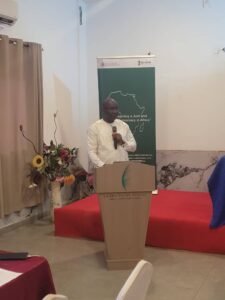
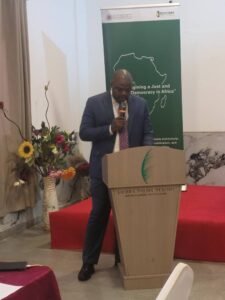
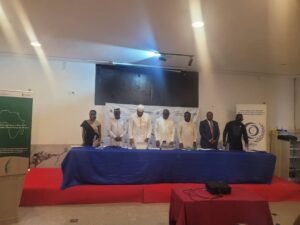
The engagement, held on April 24, 2026, at Sierra Palms Hotel in Lumley, brought together Government officials, Civil Society actors, youth representatives, media practitioners and development partners under the theme: “Reimagining a Just and Resilient Democracy in Sierra Leone.” The dialogue was organized in collaboration with Reform Initiatives, the ECOSOCC Sierra Leone National Chapter and the Campaign for Human Rights and Development International.
Opening the session, Head of Secretariat of ECOSOCC, William Carew, described the engagement as both personal and professional, citing a longstanding connection to Sierra Leone. Reflections on the country’s difficult past, including civil conflict and post-war reconstruction, were balanced with commendation for the resilience of citizens in sustaining democratic progress.
Democracy, according to William Carew, has been shaped not only by institutions but by ordinary citizens, including teachers, journalists, lawyers and community actors who continue to contribute to national development. Emphasis was also placed on the importance of civic space in shaping future leadership and democratic culture.
The Presiding Officer of ECOSOCC, Louis Cheick Sissoko, cautioned that democratic institutions across Africa are facing increasing pressure, including declining public trust and shrinking civic space. Democracy, Louis Cheick Sissoko noted, should not be limited to periodic elections but must be grounded in justice, accountability, inclusion and active citizen participation. The dialogue, according to the Presiding Officer, is intended to move beyond discussion and generate practical solutions to governance challenges.
From the Government side, Minister of Public Administration and Political Affairs, Amara Kallon, stated that the engagement aligns with ongoing reforms to strengthen Sierra Leone’s public service system. Effective public administration, Amara Kallon explained, remains critical for translating democratic aspirations into tangible service delivery, adding that reforms under President Julius Maada Bio are focused on improving accountability, efficiency and citizen-centred governance.
Attorney General and Minister of Justice, Alpha Sesay, described democracy as a “living promise” that must be continuously renewed through institutional reform and citizen engagement. He made reference to the African Charter on Democracy, Elections and Governance as both a legal and moral framework guiding democratic values such as integrity, participation and human rights. The ongoing constitutional review process was also highlighted ,by the Minister, as a key opportunity to strengthen democratic safeguards and address institutional weaknesses.
Speaking on behalf of Civil Society, Chief Executive Officer of Campaign for Human Rights and Development International (CHRDI), Abdul Fatoma, noted that the dialogue builds on earlier engagements, including pre-election conflict prevention initiatives ahead of the 2023 elections. A strong call was made for practical solutions to governance challenges, with democracy described as a “daily contract” between leaders and citizens that requires honesty, accountability and sustained commitment.
Representing the youth, ECOSOCC Young African Writing Contest 2022 Laureate, Samantha Strong, urged greater inclusion of young people in democratic processes. Justice, Samantha Strong stressed, must be reflected in everyday realities such as access to voting, freedom of expression and equal opportunity, while also highlighting the role of young people, storytellers and creatives in shaping democratic narratives and holding institutions accountable.
The dialogue further focused on strengthening understanding and implementation of the African Charter on Democracy, Elections and Governance, while promoting collaboration between state and non-state actors. Panel discussions examined key topics including: “The ACDEG in Action: Sierra Leone’s Democratic Progress and Gaps,” “Civil Society, Media and Citizen Engagement: Rebuilding Democratic Trust,” and “Security, Rule of Law and the Architecture of a Resilient Democracy.”
Participants expressed optimism that the engagement would generate actionable recommendations to improve governance, strengthen institutions and enhance democratic resilience in Sierra Leone.