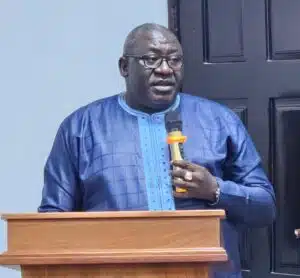

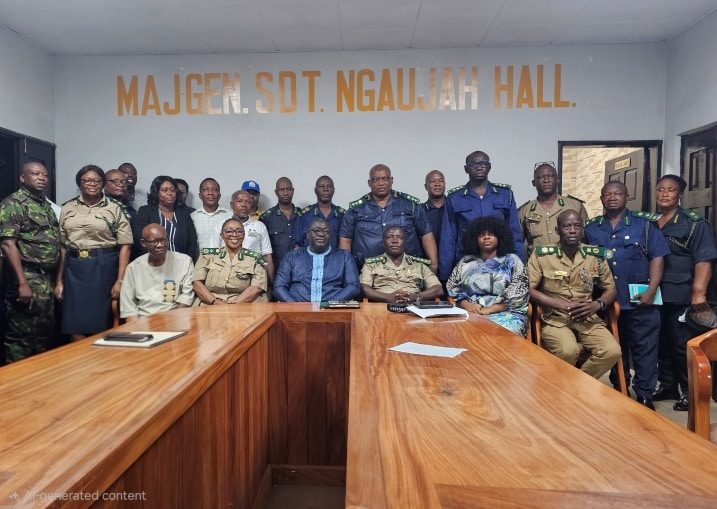
The National Civil Registration Authority (NCRA) has commemorated International Identity Day with a targeted identity registration outreach programme at the Freetown Correctional Facility, aimed at extending formal identification services to persons in correctional custody.
The initiative, undertaken in collaboration with the Sierra Leone Correctional Service (SLCS), resulted in the registration of 100 inmates for National Identification Numbers (NINs) and National ID cards as part of broader efforts to strengthen legal identity and support the successful reintegration of persons in custody into society.
The registration exercise was conducted on Thursday, 17 September 2026, at the Sierra Leone Correctional Service Headquarters in Freetown, bringing inmates into the national identity system while addressing documentation challenges that could affect their access to essential services following their release.
Director General of the Sierra Leone Correctional Service, Joseph J. Senesie, described the initiative as an important development in the country’s correctional reform process, particularly in addressing the identity and reintegration needs of inmates.
Joseph J. Senesie explained that the exercise would enable the biometric registration of inmates and provide them with National Identification Numbers, noting that the initiative reflects the transformation of the Sierra Leone Correctional Service since 2014 from a predominantly custodial institution into a service increasingly focused on custody, rehabilitation and reintegration.
He said the Correctional Service has a responsibility not only to maintain safe and secure correctional facilities but also to help inmates address factors that contributed to their offending and prepare them for responsible lives after their release.
Joseph J. Senesie stressed that a National ID card is a right of citizenship rather than a privilege, noting that incarceration does not erase an individual’s legal identity. He said the absence of recognized identification could create serious difficulties for former inmates seeking employment, accessing banking services, pursuing education and vocational training, and obtaining other essential services after their release.
According to him, providing inmates with National Identification Numbers would remove one of the barriers to successful reintegration by giving them the documentation required to rebuild their lives and participate fully in society.
The Director General said the current exercise builds on earlier efforts to modernize inmate records, recalling that biometric registration systems and the National Inmates Identity Management System had been piloted in correctional centres in 2018 and 2020.
He said the partnership with the National Civil Registration Authority would further align inmate records with the national identity system, improving efficiency and security while ensuring that persons in custody remain properly identified.
Director General of the National Civil Registration Authority, Mohamed Mubashir Massaquoi, said the exercise would ensure that inmates have recognized legal identities that remain with them beyond their time in correctional facilities.
Mohamed Mubashir Massaquoi noted that the National Civil Registration Authority had previously undertaken pilot initiatives with relevant institutions to support biometric registration and the maintenance of reliable identity records. He said permanent identity records could help address identity-related challenges, including situations where individuals are known by different names or identities.
He maintained that identity is a fundamental right and that every person should be identified regardless of their circumstances. Mohamed Mubashir Massaquoi said Government has also made civil registration and national identification more accessible through the decentralization of National Civil Registration Authority services and the deployment of mobile registration teams to underserved communities.
He disclosed that National ID cards were being issued to inmates free of charge, with the cost covered by Government.
Mohamed Mubashir Massaquoi explained that legal identification would help inmates access essential services, pursue education, seek employment, open bank accounts and conduct legitimate financial transactions after their release.
He also referred to Sierra Leone’s experience in reintegrating former combatants, saying the country’s experience had demonstrated the importance of providing people emerging from difficult circumstances with the support and opportunities needed to rebuild their lives.
He stressed that inmates should not be excluded from essential services because of their circumstances and should be able to access services like other citizens and residents after completing their sentences.
Deputy Director General of the Sierra Leone Correctional Service, Susan B. Koker, said National ID registration would make it easier for inmates to establish their identities and prepare for reintegration into society.
Susan B. Koker explained that some inmates face identity challenges because they are known by different names or do not possess formal identification. She said the National ID would provide them with a recognized identity that could be used to establish who they are when accessing services and opportunities.
She said the Sierra Leone Correctional Service has moved beyond the traditional concept of prisons and is now focused on rehabilitation and reintegration, making legal identification an important part of preparing inmates to return to society, find employment and rebuild their lives.
Susan B. Koker also highlighted the importance of National ID cards in accessing financial services, noting that inmates without recognized identification could face difficulties opening bank accounts.
She explained that the Sierra Leone Correctional Service has, over the years, operated an earning scheme that provides inmates with opportunities to work and earn money as part of their rehabilitation. With National ID cards, she said, inmates would have greater opportunities to open bank accounts where money earned through their work could be safely kept until they complete their sentences.
According to Susan B. Koker, the funds could then be made available to inmates upon their release, providing them with financial support as they begin the process of returning to society.
She disclosed that the 100 inmates covered by the exercise were drawn from the Male Reintegration Centre, Female Correctional Centre and Pademba Road Correctional Centre. The selection included inmates nearing the end of their sentences, those who had never been registered and those whose previous registration efforts had not resulted in them obtaining the required identification.
Susan B. Koker said National ID cards would complement the Correctional Service’s rehabilitation efforts by ensuring that inmates leaving correctional facilities have the documentation needed to access services, pursue opportunities and participate meaningfully in society.
The International Identity Day outreach therefore underscored the importance of ensuring that legal identity remains accessible to all sections of society, including persons in correctional custody. The exercise forms part of broader efforts by the National Civil Registration Authority and the Sierra Leone Correctional Service to ensure that persons in custody remain included in Sierra Leone’s national identity system and are better prepared to transition back into their communities after completing their sentences.