
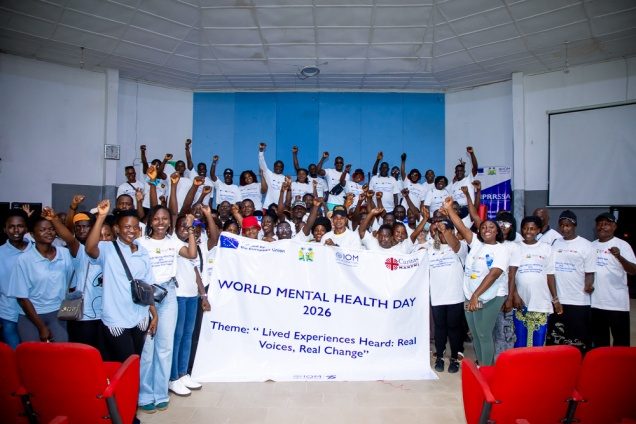
SUCCEED Sierra Leone commemorated World Mental Health Day in Makeni on Saturday, 10 October 2026, bringing together partner institutions, health professionals and people with lived experience of mental health challenges to promote dignity, inclusion and stronger community support.
Held under the theme, “Lived Experiences Heard: Real Voices, Real Change,” the event highlighted the importance of listening to people affected by mental health conditions and involving them in decisions that shape mental healthcare and policies.
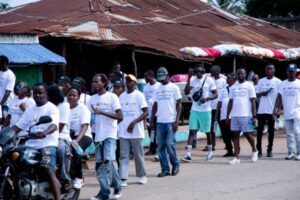
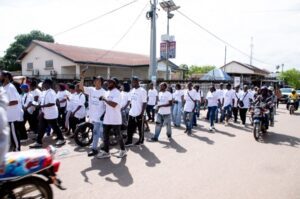
The commemoration brought together the Justice and Peace and Human Rights Commission, the Bombali District Health Management Team (DHMT), Caritas Makeni and the International Organization for Migration (IOM). Activities began with a public awareness march through the streets of Makeni, followed by a programme at the University of Makeni (UniMak) Auditorium.
Participants called for greater public understanding of mental health, an end to discrimination and sustained support for individuals seeking treatment and recovery.
SUCCEED Sierra Leone is part of a six-year research project running from 2020 to 2026. The project involves a consortium spanning five African countries and the London School of Hygiene and Tropical Medicine, with support from the United Kingdom’s Foreign, Commonwealth and Development Office (FCDO). It is scheduled to conclude this year.
Speaking during the programme, Peer Researcher, Esther Moses Kamara, shared her personal journey of living with mental health challenges and working towards recovery. Her account highlighted the importance of community support and demonstrated how people with lived experience can overcome adversity and make meaningful contributions to society.
The Director of the Justice and Peace and Human Rights Commission, Fr. Aloysius Kamara, commended SUCCEED Sierra Leone for its contributions to mental health awareness and support. He encouraged people experiencing mental health challenges to seek assistance, reminding participants that it is never too late to seek help or rebuild their lives.
Bombali DHMT Mental Health Focal Person, Fatmata Nata Kamara, emphasized that mental health is a basic human right, rather than a privilege. She underscored the need to respect the dignity of people affected by mental health conditions and ensure that they receive appropriate care and support.
Representatives of IOM identified stigma as a major barrier to effective mental healthcare, noting that discrimination in workplaces and communities can discourage people from seeking help and undermine their recovery.
Dr. Emmanuel Kallon, IOM Data Management Officer, stressed the need for continued counselling, public education and community-level interventions to address these barriers and improve access to support.
IOM’s Cecilia Coker highlighted the particular mental health needs of migrants. Migrants participating in the event also shared their recovery stories and acknowledged the Agency’s assistance, drawing attention to the value of sustained psychosocial support.
SUCCEED Sierra Leone Principal Investigator, Dr. Rebecca Esliker, said this year’s theme highlighted the rights of Sierra Leoneans living with mental health challenges. She emphasized the importance of recognizing their experiences and ensuring that their voices inform discussions about care, support and inclusion.
The commemoration ended with a call for participants to become mental health ambassadors in their communities. Speakers urged stronger cooperation among health institutions, civil society organisations, development partners and communities to build a safer, more supportive and stigma-free Sierra Leone.