

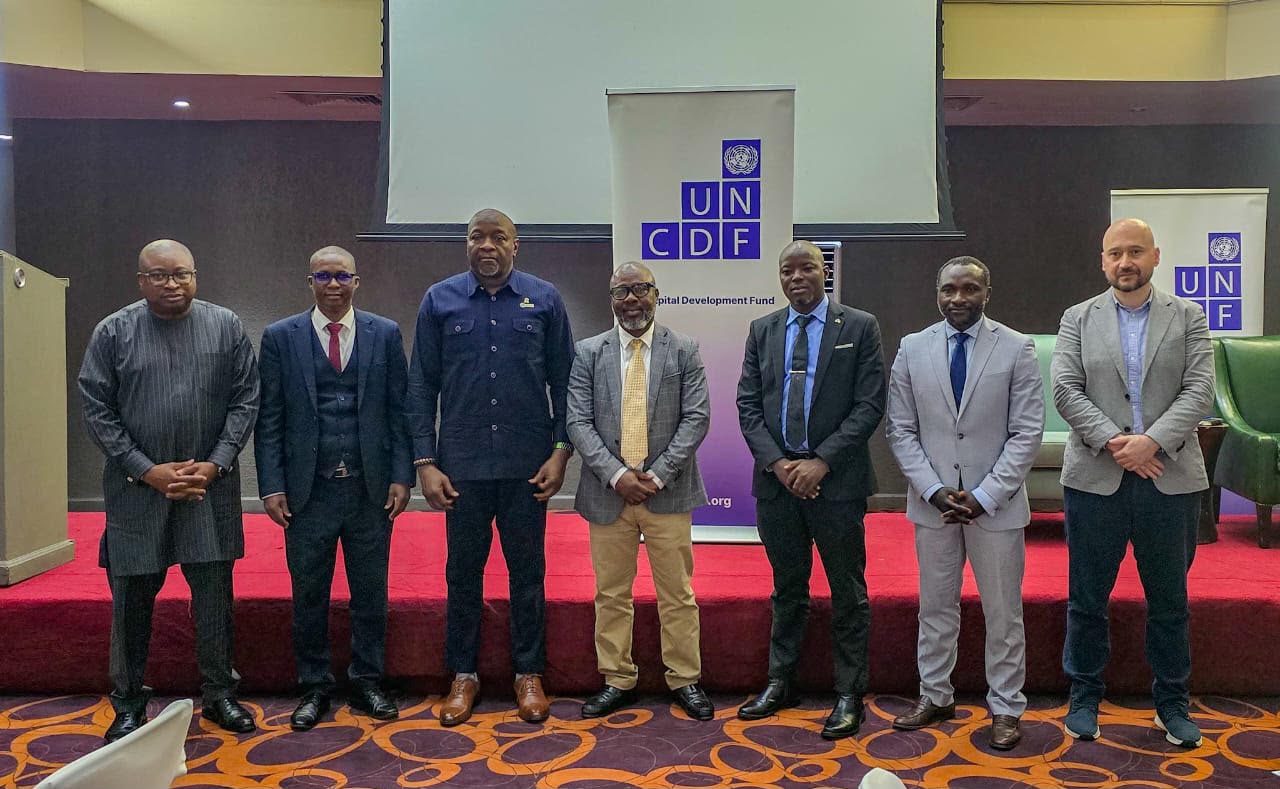
The Ministry of Agriculture and Food Security (MAFS), in collaboration with the Bank of Sierra Leone (BSL) and the United Nations Capital Development Fund (UNCDF), has engaged senior banking executives and development partners in high-level discussions aimed at expanding access to agricultural financing and encouraging greater private-sector investment in Sierra Leone’s agricultural sector.Bank of Sierra Leone (BSL)
The engagement, held at the Radisson Blu Hotel in Freetown, brought together representatives of commercial banks, microfinance institutions and international development partners, including the European Union, to examine practical financing solutions that could support agricultural production, strengthen agribusinesses and accelerate the implementation of the Government’s flagship Feed Salone initiative.
Discussions centred on the commercial opportunities available within Sierra Leone’s agricultural sector, particularly in the rice, poultry and onion value chains. Participants explored financing needs across various stages of agricultural production, including access to farming inputs, cultivation, processing, storage, transportation and marketing.
The roundtable also provided an opportunity for financial institutions to examine existing challenges affecting agricultural lending and identify measures that could make the sector more attractive to commercial investors.
A major highlight of the engagement was the €6 million Matching Grant Facility established under the European Union-funded Salone Access to Finance programme. The facility is designed to improve financing opportunities for eligible businesses by combining commercial loans with grants, thereby reducing borrowing costs and addressing some of the financial barriers that have traditionally limited investment in agriculture.
The initiative is expected to create opportunities for farmers, agricultural entrepreneurs and established agribusinesses seeking financial support to expand their operations, improve productivity and strengthen their participation in domestic agricultural value chains.
During the discussions, representatives of participating financial institutions, including Vista Bank and Safe Capital Microfinance, shared their experiences in implementing the Matching Grant Facility.
They highlighted the importance of maintaining proper financial records, developing credible business plans and establishing reliable business operations as essential requirements for accessing commercial financing.
Their contributions underscored the need for agricultural enterprises to strengthen their financial management practices and demonstrate commercial viability to attract greater investment from banks and other lending institutions.
Addressing the gathering, the Minister of Agriculture and Food Security, Dr. Henry Musa Kpaka, encouraged banking executives to identify practical incentives, financing arrangements and policy interventions that could stimulate increased lending to the agricultural sector.
Dr. Henry Musa Kpaka emphasized the importance of closer cooperation between financial institutions and agricultural stakeholders in creating sustainable financing opportunities capable of supporting the Government’s drive towards increased domestic food production.
The Minister’s engagement with banking executives formed part of broader efforts to encourage the financial sector to recognize agriculture as an important area for commercial investment and national economic development.
Similarly, the Governor of the Bank of Sierra Leone, Dr. Ibrahim Stevens, reaffirmed the Central Bank’s commitment to supporting a financial environment that encourages responsible lending, private-sector participation and increased investment in agriculture.
Dr. Ibrahim Stevens stressed the importance of strengthening the relationship between the banking industry and agricultural businesses to ensure that financing opportunities contribute meaningfully to economic growth and food security.
The discussions further highlighted the importance of sustained collaboration among Government institutions, commercial banks, microfinance providers and development partners in addressing the financing constraints confronting farmers and agribusiness operators.
Through the Feed Salone initiative, the Government continues to prioritize increased agricultural production, improved food security, job creation and reduced dependence on imported food products.
However, achieving those objectives requires substantial investment in agricultural infrastructure, modern farming technologies, processing facilities and reliable market systems, making access to affordable financing an important component of the country’s agricultural transformation agenda.
The Banking Executives’ Roundtable therefore provided a platform for strengthening cooperation between policymakers and financial institutions while identifying opportunities to channel additional private capital into productive agricultural activities.
The engagement also reinforced the importance of innovative financing arrangements, including blended finance mechanisms that combine development assistance with commercial lending to support viable agricultural enterprises.
By bringing together key players from the agricultural and financial sectors, the Ministry of Agriculture and Food Security, Bank of Sierra Leone and UNCDF are seeking to establish stronger partnerships that will improve access to investment capital and support the growth of commercially sustainable agribusinesses.
The roundtable represents another step towards translating the objectives of Feed Salone into practical investment opportunities, with the broader goal of increasing domestic food production, strengthening agricultural value chains and positioning agriculture as a major contributor to Sierra Leone’s economic development.