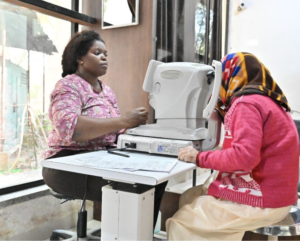

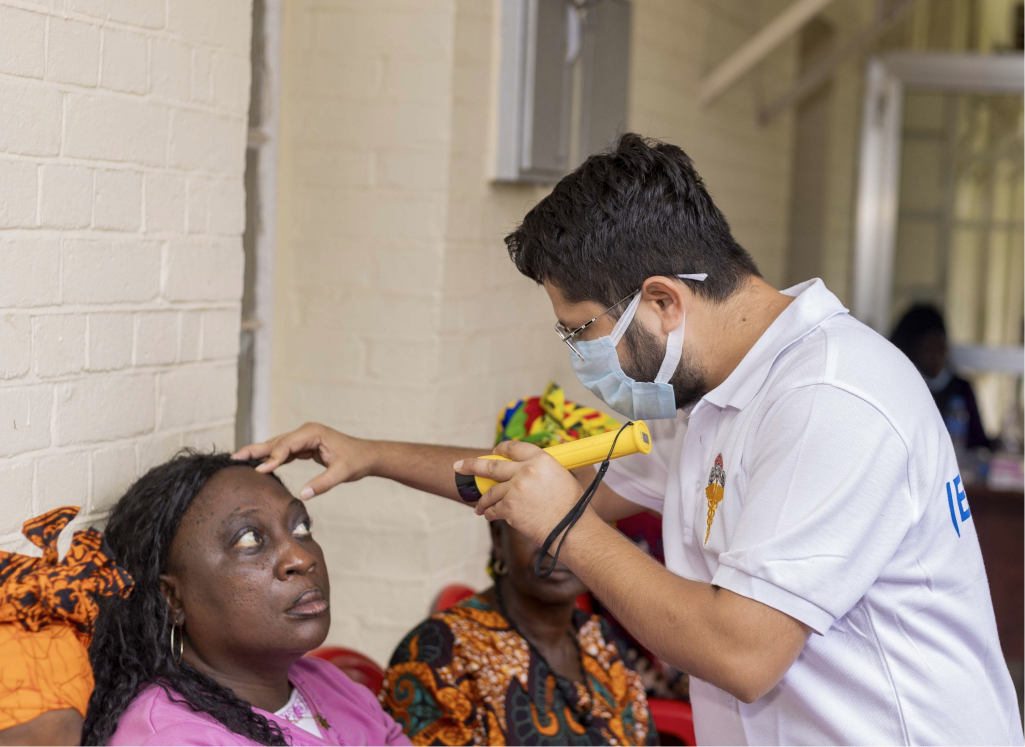
A major initiative aimed at reducing avoidable blindness in Sierra Leone has recorded significant progress, with 1,522 cataract surgeries performed during the second year of a nationwide eye care programme implemented by Choithram International Foundation in partnership with Noor Dubai Foundation, the Ministry of Health and Choithram Memorial Hospital.
The programme, which has continued to expand access to free eye care services, has also received international academic recognition following the publication of a peer-reviewed study in BMJ Open, a journal of the British Medical Journal (BMJ) Group, highlighting improvements in patients’ vision-related quality of life and identifying important lessons for strengthening cataract treatment in countries with limited healthcare resources.
According to information released on 21 October 2026, the second phase of the initiative, conducted between March and August 2026, represented a major advancement in the campaign against preventable blindness, particularly among vulnerable communities with limited access to specialist medical services.
During the period, more than 5,768 adults were screened or received consultations, 2,460 patients benefited from medical treatment, while 1,522 cataract surgeries were successfully performed. Additional surgical procedures and referrals were also undertaken to address other eye conditions requiring specialist attention.
The figures place the second-year campaign among Sierra Leone’s largest eye care outreach interventions, attracting patients from different parts of the country as well as neighbouring Guinea and Liberia.
Established in 2024, the multi-year initiative seeks to address the growing burden of cataract-related blindness through free surgical treatment, community screening, professional training and improvements in the country’s long-term eye care capacity.
The programme is being implemented by Choithram International Foundation in association with Noor Dubai Foundation, led by its Chief Executive Officer, Dr. Manal Taryam, under the Mohammed bin Rashid Al Maktoum Global Initiatives, alongside Sierra Leone’s Ministry of Health and Choithram Memorial Hospital.
Its importance is reflected in findings from the 2021 Rapid Assessment of Avoidable Blindness (RAAB), which established that approximately 5.4 percent of Sierra Leoneans aged 50 years and above were blind, with cataracts accounting for nearly 60 percent of blindness cases.
The findings underscore the need for sustained interventions to improve access to affordable eye care, particularly in rural communities where specialist services remain limited.
A major achievement during the second year was the expansion of local medical expertise. Seventeen ophthalmic professionals received training in different clinical and surgical disciplines, including cataract surgery, ophthalmic nursing, operating theatre nursing and specialist medical practice.
The training forms part of a broader strategy to strengthen Sierra Leone’s healthcare workforce and gradually reduce dependence on visiting international specialists.
At Choithram Memorial Hospital in Freetown, two operating theatres functioned simultaneously to accommodate the increasing number of patients requiring surgery. The procedures were supported by Sierra Leonean medical personnel who benefited from monthly professional exchanges and technical mentorship provided by Choithram Netralaya, an established eye hospital in India.
Under the arrangement, beneficiaries received cataract surgery, medication, transportation, accommodation and postoperative care without paying any fees.
The initiative has therefore removed several financial and logistical barriers that previously prevented vulnerable patients from seeking treatment.
Beyond restoring vision, the programme has also helped beneficiaries regain their independence and improve their participation in everyday activities.
One beneficiary, Isatu Kamara, expressed satisfaction following her successful operation, saying: “My right eye is now very bright. I am happy with the result and I look forward to coming back next year for the left eye.”
Her experience reflects the wider impact of cataract treatment on individuals who had previously struggled with limited vision, including farmers, caregivers and elderly people whose daily activities had been affected by deteriorating eyesight.
The programme’s achievements have also attracted academic attention through an independent evaluation undertaken by researchers from Queen’s University Belfast in the United Kingdom and Noor Dubai Foundation.
The research, led by Dr. Gabriel Osei-Anokye and Dr. Ving Fai Chan of Queen’s University Belfast, together with Dr. M. Mansur Rabiu of Noor Dubai Foundation, examines the effectiveness of the intervention, patient satisfaction, clinical outcomes and improvements in quality of life following surgery.
A peer-reviewed study published in BMJ Open on 9 October 2026 assessed the programme’s first implementation cycle, conducted between February and August 2025.
The study reported that 9,117 individuals were screened and 1,433 cataract surgeries performed during that period.
Among 271 patients who completed follow-up assessments, researchers recorded an average improvement of 17 points in vision-related quality-of-life scores, with notable progress in mental health, near-vision activities and distance-vision activities.
However, the research also identified challenges affecting the delivery of cataract services, including shortages of trained personnel, transportation difficulties, incomplete clinical documentation and limited attendance at postoperative appointments.
Only 19 percent of patients returned for their one-month follow-up assessment, highlighting the need for stronger patient monitoring, referral arrangements and continuity of care.
The findings have provided valuable lessons for improving subsequent phases of the initiative, particularly in strengthening operational efficiency and ensuring that patients receive appropriate care after surgery.
Chairman of Choithrams Group, Mr. L.T. Pagarani, welcomed the progress achieved during the second year, describing the initiative as a demonstration of the positive results that can emerge through sustained humanitarian partnerships.
“Goodness inspires more goodness and this second year of our cataract outreach shows exactly that. After restoring sight for hundreds of people in our first cycle, we returned with even greater resolve to deepen our collaborative action,” Mr. L.T. Pagarani stated.
He expressed appreciation to the Government of Sierra Leone, particularly the Ministry of Health, for its cooperation, while acknowledging the leadership of Noor Dubai Foundation and the dedication of medical professionals involved in the programme.
Mr. L.T. Pagarani further emphasized that the achievements belonged not only to the implementing organisations but also to the beneficiaries whose lives had been positively transformed through restored vision.
Commenting on the research findings, Dr. Gabriel Osei-Anokye and Dr. Ving Fai Chan of Queen’s University Belfast stressed that the programme demonstrated the importance of combining medical interventions with continuous evaluation and improvements in service delivery.
According to the researchers, restoring eyesight produces benefits extending beyond clinical improvements, enabling individuals to regain mobility, confidence, independence and greater participation in family and community life.
They maintained that Sierra Leone’s experience illustrates how effective leadership, evidence-based planning and collaboration between healthcare institutions can produce meaningful results even in resource-constrained environments.
Attention is now turning towards the third phase of the programme, scheduled to take place between January and April 2027.
The next cycle is expected to be the most ambitious since the initiative began, with partners targeting between 2,500 and 3,000 cataract surgeries over approximately 80 working days.
Preparatory activities have already commenced, with preliminary screenings beginning on 1 September 2026, particularly in rural provinces where access to specialist eye care remains a challenge.
The implementing partners intend to strengthen cooperation with district health authorities to improve patient identification, referrals and access to surgical services.
The third phase will also benefit from the growing number of Sierra Leonean ophthalmic professionals trained during the previous two cycles, supported by continued technical guidance from Choithram Netralaya in India.
With an operational target averaging approximately 40 surgeries daily, the programme aims to expand treatment capacity while maintaining high standards of patient safety and clinical care.
The initiative also supports the World Health Organization’s global eye care objectives for 2030, which emphasize improved access to cataract surgery, stronger healthcare systems and greater investment in services capable of preventing avoidable vision impairment.
Noor Dubai Foundation, established following an initiative launched in 2008 by His Highness Sheikh Mohammed bin Rashid Al Maktoum, Vice-President and Prime Minister of the United Arab Emirates and Ruler of Dubai, has continued to support international programmes focused on preventing blindness and improving access to eye care.
Its collaboration with Choithram International Foundation builds on the medical infrastructure and expertise of Choithram Memorial Hospital, which has served Sierra Leone’s healthcare sector since 1993.
Through its partnership with Choithram Netralaya and Queen’s University Belfast, the initiative combines humanitarian assistance, specialist medical training and academic research to support sustainable improvements in eye care delivery.
As preparations intensify for the 2027 surgical campaign, the achievements recorded during the first two years have strengthened expectations that the programme will continue to transform lives while helping Sierra Leone build a more accessible and sustainable national eye care system.
For thousands of beneficiaries, the initiative represents more than the restoration of eyesight. It offers renewed independence, improved livelihoods and the opportunity to participate fully in family and community life.