

Poverty reduction remains one of the most important challenges confronting developing countries. It is not simply a question of income; it is about human dignity, access to education, healthcare, food, clean water, electricity and opportunities for people to improve their lives.
Few development stories of our time match the scale of what India has achieved in the fight against poverty. According to the World Bank’s latest Poverty and Equity Brief for India, published in October 2026, the share of Indians living below the World Bank’s poverty line for lower-middle-income countries, $4.20 a day, fell from 57.7 percent in 2011 to 16.1 percent in 2023. That decline lifted an estimated 496 million people out of poverty, one of the fastest reductions recorded anywhere in the world.
The progress against the most severe deprivation has been even more striking. Over the same period, extreme poverty, measured at $3.00 a day, declined from 27.1 percent to just 2.6 percent. Behind those percentages are families who now eat better, children who stay longer in school and households that can plan for the future rather than simply survive the present.
Income is only one measure of a good life and here too the picture is encouraging. Multidimensional poverty, which looks at health, education and living standards together, fell sharply from 53.8 percent in 2005–06 to 16.4 percent in 2019–21. The World Bank’s own multidimensional measure stood at 15.5 percent in 2022–23.
Those figures represent far more than statistical achievements. Behind them are hundreds of millions of people whose living conditions have improved, whose families have gained greater economic security and whose prospects for a better future have expanded.
India’s experience demonstrates the importance of addressing several dimensions of deprivation simultaneously, including food security, education, sanitation, drinking water and electricity.
Economic Growth, Employment and Women’s Participation
The World Bank identifies strong consumption growth, rising employment and expanded social transfers, including food subsidies, as major contributors to India’s poverty reduction.
Employment generation has been particularly significant. Between 2017 and 2023, the number of employed people in India increased by approximately 134 million, nearly twice the growth of the working-age population during that period.
An especially encouraging feature has been the increasing participation of rural women in paid employment. Their contribution has increased the number of income earners within households, strengthening family incomes and improving economic resilience.
Women’s economic participation is essential to inclusive development. When women have greater access to employment and economic opportunities, the benefits extend beyond individual households to communities and the wider national economy.
India’s experience reinforces the importance of ensuring that women are not merely beneficiaries of development programmes but active participants in economic growth and national transformation.
Social Protection as an Instrument of Inclusive Development
Another important lesson from India’s progress is the role of social protection in reducing vulnerability and improving household welfare.
The expansion of social transfers, including food subsidies, has helped support household consumption and protect vulnerable populations. Such interventions are particularly important for low-income families, who are often disproportionately affected by economic shocks, food price increases and other external pressures.
India’s progress illustrates how economic expansion can be complemented by measures that ensure the benefits of development reach a wider section of society.
The objective must be to create an environment in which economic opportunities expand while those facing the greatest disadvantages receive the support necessary to participate in and benefit from national development.
The Unfinished Agenda
India’s achievements are substantial, but India does not regard the job as finished. The World Bank report identifies that poverty is increasingly concentrated among households with lower levels of education, fewer assets and limited access to stable employment. Rural communities continue to account for a significant share of those experiencing poverty, while disparities in wages remain pronounced. Creating good jobs for young people remains a priority.
Those challenges underline India’s continuing commitment to inclusive and broad-based development. Poverty reduction is not a destination but an ongoing process requiring sustained policy attention, investment in human capital and the creation of opportunities for all sections of society.
Lessons and Relevance for Sierra Leone
For Sierra Leone and other developing countries, India’s experience offers important perspectives on the relationship between economic growth, human development and poverty reduction.
Countries may have different economic structures, demographic circumstances and development priorities. Nevertheless, the fundamental aspirations of their people are remarkably similar: decent employment, affordable food, quality education, accessible healthcare, reliable infrastructure and opportunities for a better life.
India’s development experience highlights the importance of pursuing economic growth alongside investments in people, expanding employment opportunities, strengthening social protection and addressing inequalities that prevent vulnerable communities from sharing in national prosperity.
There is considerable scope for India and Sierra Leone to continue sharing experiences and strengthening cooperation in areas of mutual interest, including agriculture, education, healthcare, skills development, technology and capacity-building.
India remains committed to its partnership with Sierra Leone, guided by the principles of South-South Cooperation, mutual respect and shared development aspirations. Our cooperation is rooted in the conviction that developing countries can learn from one another, exchange practical solutions and work together to address common challenges.
A Shared Aspiration for a Better Future
The story reflected in the World Bank’s October 2026 assessment is ultimately a story about the transformative possibilities of sustained development. Lifting an estimated 496 million people out of poverty in just over a decade is an extraordinary achievement, but it also demonstrates what can be accomplished when economic growth, employment and social development reinforce one another.
For India, the journey continues. The ambition is not only to reduce poverty further but also to ensure that the benefits of development are increasingly accessible to every citizen, irrespective of gender, geography or socioeconomic background.
As India and Sierra Leone continue to pursue their respective development aspirations, the central lesson is clear: development must be measured not only by the growth of national economies but also by the improvement in the lives, opportunities and dignity of ordinary people.
The World Bank’s findings are a reminder that poverty is not destiny. With sound policies, sustained effort and partners who work together as equals, nations of the Global South can write their own stories of transformation. India is proud of its progress and prouder still to walk that path alongside friends like Sierra Leone.
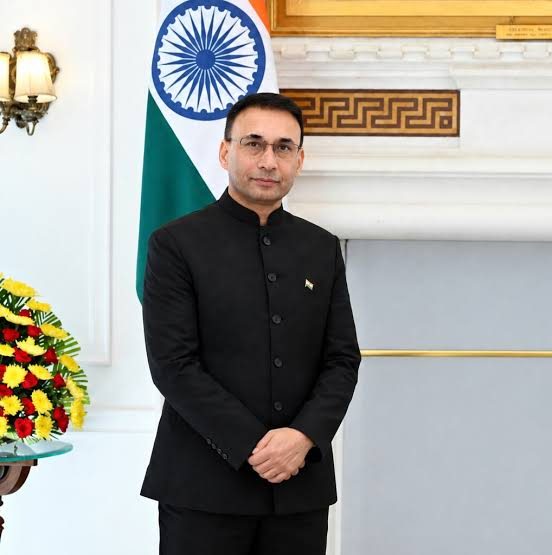
The author is the High Commissioner of India to the Republic of Sierra Leone. Figures are from the World Bank’s Poverty and Equity Brief for India, October 2026.