By Amin Kef (Ranger)
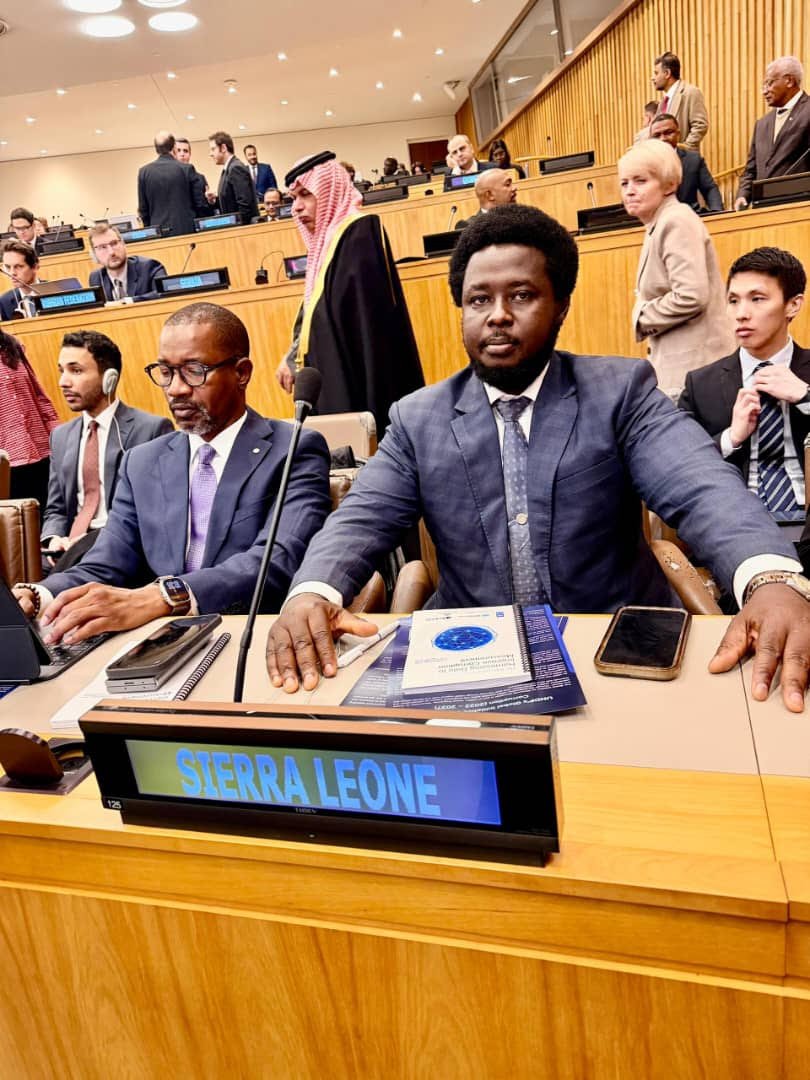
The Commissioner of the Anti-Corruption Commission (ACC) of Sierra Leone, Francis Ben Kaifala Esq., has called for a comprehensive rethink of global corruption measurement methodologies, stressing the need for fairness, transparency and data-driven accuracy. He delivered the remarks on Tuesday, 2 December 2025, at the 2nd Global Conference on Harnessing Data to Improve Corruption Measurement held at the United Nations Headquarters in New York, United States of America.

Commissioner Francis Ben Kaifala began by conveying warm greetings from the President and people of Sierra Leone, stating that the nation welcomes ongoing global efforts to “re-imagine and redefine” how corruption is assessed. He noted that current measurement tools, especially Transparency International’s Corruption Perception Index (CPI), have remained controversial for years, particularly among developing countries which repeatedly receive low rankings despite making visible progress.
Drawing from his experience as a former Board Member of the African Union Advisory Board on Corruption (AUABC) and former President of the Network of Anti-Corruption Institutions in West Africa (NACIWA), he observed that discussions about the CPI often generated “disapproval to outrage.” Many African Governments and anti-corruption advocates, he said, view the index and its commentaries as unfair and, at times, part of a “purpose-driven smear campaign.”
Commissioner Francis Ben Kaifala highlighted several limitations inherent in perception-based indexes. He argued that measuring perception rather than actual prevalence of corruption makes the CPI vulnerable to subjective opinion and unreliable judgments, especially when the identities and qualifications of contributing “experts” remain unclear. Moreover, he noted that major indices often fail to capture critical dimensions of corruption, such as illicit financial flows, tax fraud, money laundering and other sophisticated practices that significantly impact developing economies.
“These gaps result in inaccurate or unfair representations of the efforts anti-corruption agencies are making; especially in Africa,” he said. “It is discouraging for institutions that work tirelessly when their successes are overshadowed or discounted by perception-driven metrics.”
He stressed that this global initiative to improve corruption measurement is timely and invaluable to nations like Sierra Leone. A more robust and objective measurement framework, he said, would help countries learn from others performing better, replicate effective strategies and identify areas requiring improvement using reliable, country-specific data.
Commissioner Francis Ben Kaifala emphasized the need for constructive engagement with credible global assessment bodies and domestic civil society. Such collaboration, he argued, would help ensure that corruption measurements more accurately reflect realities on the ground while supporting continuous institutional improvement.
He also underscored that despite their flaws, indices remain important accountability tools. They enable anti-corruption agencies, civil society organizations and international partners to highlight persistent governance issues and advocate for stronger reforms.
“What we need now is a new methodology; one that captures real prevalence, incorporates genuine effort and moves beyond perception alone,” he stated. “Complaining about flawed methodologies will not change the negative outcomes they sometimes produce. Instead, we must work together to build a more balanced and acceptable system.”
The ACC Commissioner concluded by reaffirming Sierra Leone’s support for the ongoing global review. He expressed optimism that the outcomes of the conference would contribute to a more credible, equitable and evidence-based approach to assessing corruption worldwide.
“We welcome this process,” he declared, “and look forward to new measurement tools that strengthen global integrity and support the fight against corruption in all its forms.”