By Alvin Lansana Kargbo
Amnesty International Sierra Leone commemorated the International Day of Zero Tolerance for Female Genital Mutilation (FGM) with a Press Conference on Friday, 6 February 2026 at the Sierra Leone Scout Hall, New England Ville in Freetown.

Held under the theme: “Zero Tolerance for FGM: Upholding the Dignity, Freedom and Rights of Women and Girls,” the event brought together Civil Society Organisations, the Human Rights Commission of Sierra Leone, advocacy groups, pupils, journalists and community representatives.
The commemoration highlighted the continued prevalence of FGM in Sierra Leone and renewed calls for urgent legislative action to criminalize the practice, particularly for girls under the age of 18. Amnesty International Sierra Leone, in their Press Statement, stated that the day served as a reminder of the urgent need to eradicate harmful practices that violate the bodily integrity, health and dignity of women and girls.
According to the organization, Female Genital Mutilation remains widespread despite sustained advocacy, with demographic data indicating that more than 80 percent of women aged 15 to 49 have undergone the practice. The organisation further warned that FGM perpetuates cycles of gender-based violence, inequality and long-term health complications, undermining national efforts to promote women’s empowerment and protect children’s rights.
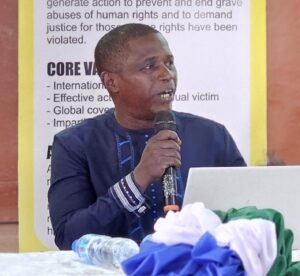
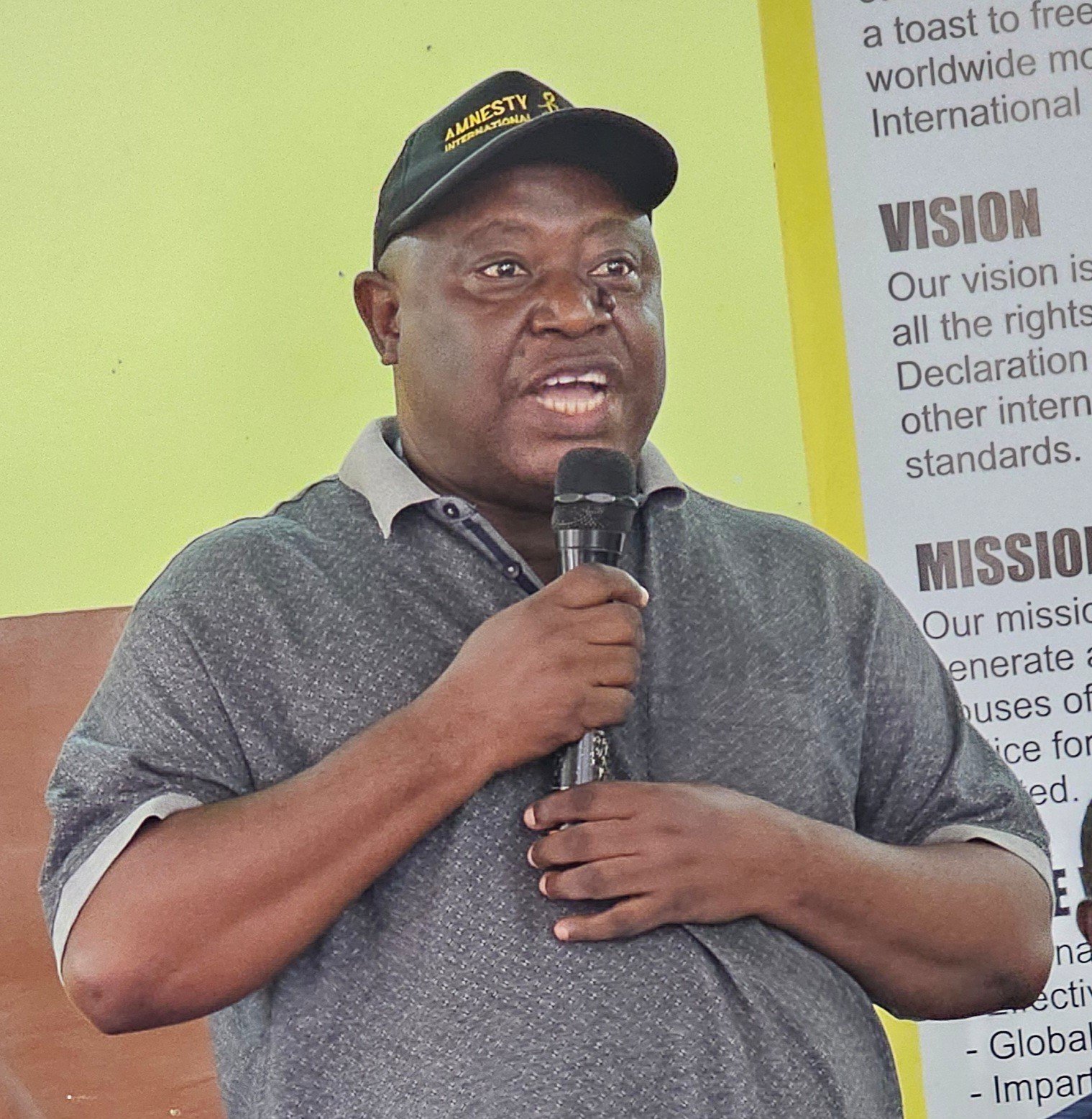
Speaking at the event, Solomon Sogbandi, Section Director of Amnesty International Sierra Leone, said FGM causes serious physical, psychological and emotional harm and that children cannot consent to such irreversible practices. He noted that although traditional ‘Bondo Bush’ historically provided socialization and cultural education, the continuation of FGM within those structures has resulted in injuries and deaths.
He said Amnesty International has long engaged communities and religious leaders across the country, many of whom oppose FGM for minors and expressed concern that legal reforms have failed to explicitly protect girls under 18.
He referenced a recent ECOWAS Court ruling describing FGM as torture and urged the Government of Sierra Leone to act on the decision by enacting legislation criminalizing the practice for minors. He also stressed that ending FGM is critical to keeping girls in school and improving their educational outcomes.
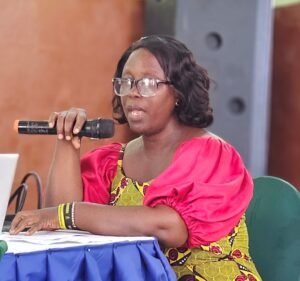
A representative of the Human Rights Commission of Sierra Leone reaffirmed that FGM violates multiple fundamental rights, including the rights to dignity, health, education and freedom from cruel, inhuman or degrading treatment. She stated that the Commission has documented cases involving forced initiation and exclusion of girls from school and expressed disappointment that the Child Rights Act 2025 was enacted without explicitly prohibiting FGM for children.
She called for urgent legislative amendments, stronger protection mechanisms for girls at risk and sustained public education, noting that culture should not be used to justify harm.
Speaking at the event also, Brima Conteh, Chief Executive Officer of the Advocacy Movement Network, described FGM as a severe form of gender-based violence that causes lifelong physical and psychological harm and provides no health benefits. He cited Sierra Leone’s high prevalence rate and criticized the removal of anti-FGM provisions from child protection laws.
He called for sustained political commitment, adequate investment and nationwide action to eliminate FGM, urging Government, civil society, development partners and the media to play active roles in ending the practice.
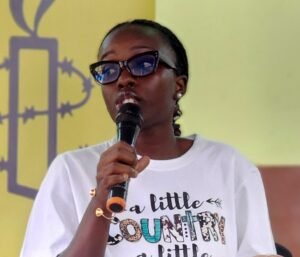
Representing the Children’s Forum Network, the Presidential Spokesperson, Blessing K. J. Kutubu said the continued tolerance of FGM reflects a failure to fully protect children’s rights. She argued that traditions that harm children should not be preserved and called for accountability from political leaders. Blessing Kutubu urged parents and communities to prioritize the safety and education of girls and encouraged children and young people to be part of efforts to end FGM, stressing that meaningful change requires immediate action rather than repeated commitments.
Amnesty International Sierra Leone concluded the commemoration by reaffirming its commitment to advocacy, community engagement and collaboration with stakeholders to end Female Genital Mutilation. The organisation called on the Government to criminalize FGM for all persons under 18 and to ensure that girls can grow up safe, protected and able to complete their education without harmful interruptions.