

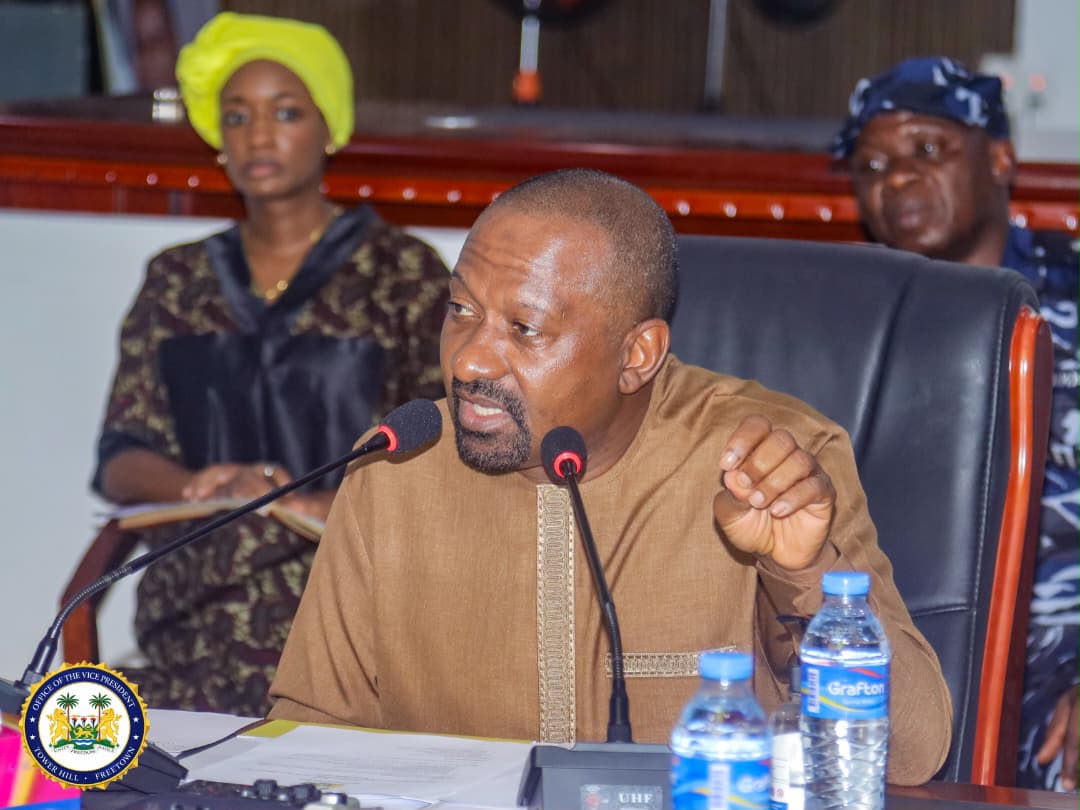
Vice President Dr. Mohamed Juldeh Jalloh has taken the Government’s nationwide consultations on local governance and decentralisation to Kenema and Bo, engaging traditional leaders, local councils, Government officials and other stakeholders as part of efforts to strengthen grassroots governance and improve public service delivery across Sierra Leone.
The regional phase of the exercise commenced in Kenema on Friday, 14 August 2026, before moving to Bo City on Saturday, 15 August 2026, placing the Eastern and Southern regions at the centre of discussions on challenges affecting decentralisation and the reforms required to make local governance more effective and responsive to citizens.
The consultations bring together Paramount Chiefs, local councils, Ministers, Ministries, Departments and Agencies, development partners and representatives from key sectors to identify challenges facing local institutions and develop practical solutions.
Chairing the engagements, Vice President Dr. Mohamed Juldeh Jalloh said the Government had deliberately taken the consultations beyond Freetown to hear directly from people working within local governance structures and communities.
“This is not a meeting where we come to tell you what to do. It is a learning process. We are here to listen to the challenges of local governance,” Vice President Dr. Mohamed Juldeh Jalloh said.
He stressed that the exercise is intended to provide stakeholders with an opportunity to openly discuss their experiences, concerns and recommendations, which could subsequently inform Government policies, Cabinet decisions and, where necessary, legislative reforms.
During the Kenema consultation, Vice President Dr. Mohamed Juldeh Jalloh emphasised the important role of local councils in translating national development priorities into tangible improvements in communities.
He said strong, adequately resourced and accountable local institutions are essential to improving service delivery in health, education, agriculture, land administration, social welfare, infrastructure and local economic development.
“We are here to listen to your concerns and questions,” Vice President Dr. Mohamed Juldeh Jalloh told participants in Kenema, adding that the Government wants to identify the major challenges affecting local governance and develop practical solutions.
He highlighted the need for stronger coordination between Central Government and local authorities, improved participatory planning, adequate fiscal support, resource mobilisation and institutional capacity-building.
“This initiative is to bring together relevant stakeholders in the areas of health, lands, education, agriculture, amongst other essential sectors, to develop innovative approaches that will deliver tangible outcomes,” he stated.
A major development during the Kenema engagement was the inauguration of a Regional Coordination Committee designed to strengthen cooperation among institutions involved in local governance and provide a structured mechanism for identifying and addressing challenges affecting decentralisation.
Deputy Minister of Local Government and Community Affairs, Alfred Moi Jamiru, called for increased investment in local councils and stronger institutional capacity to enable them to effectively discharge their responsibilities.
“We must strengthen the capacity of our councils,” Alfred Moi Jamiru said, stressing that functional local institutions remain critical to delivering timely and quality services to citizens.
Chairman of the Local Government Service Commission, Dr. Falla D. Lamin, also underscored the importance of capable personnel, effective coordination and stronger institutions within the local government system.
Ahead of the formal Kenema consultation, Vice President Dr. Mohamed Juldeh Jalloh held a dinner and listening session with Paramount Chiefs in Kenema District on Thursday, 13 August 2026.
The engagement provided an informal platform for discussions on relations between chiefdom authorities and local councils, the operations of Chiefdom Development Committees and emerging concerns relating to social stability and community development.
Vice President Dr. Mohamed Juldeh Jalloh, who chairs the Inter-Ministerial Committee on Decentralisation, said the interaction was intended to provide traditional leaders with an opportunity to candidly explain the realities confronting their communities.
Following the Kenema engagement, the consultation moved to Bo City on Saturday, 15 August 2026, where the Vice President continued discussions with Paramount Chiefs, local councils, Ministers and other stakeholders from the Southern Region.
The Bo consultation focused on major national reforms and their implications for local governance, while providing participants with an opportunity to identify institutional challenges and recommend practical solutions based on their experiences.
Vice President Dr. Mohamed Juldeh Jalloh explained that decentralising the consultations from Freetown to the regions was necessary to strengthen Government’s engagement with local institutions and ensure national policies take into account realities at community level.
He highlighted ongoing reforms in land governance and administration, health, social welfare and other sectors, stressing that traditional authorities and local councils must understand and actively participate in their implementation.
Another major component of the Bo engagement was the inauguration of the Regional Coordination Committee for the Southern Region, which is expected to improve coordination among local governance institutions and strengthen collaboration on development priorities.
Vice President Dr. Mohamed Juldeh Jalloh also acknowledged the World Bank’s support for Sierra Leone’s decentralisation agenda and its willingness to provide further assistance to efforts aimed at strengthening local governance.
He said the Inter-Ministerial Committee on Decentralisation remains committed to extending the consultation process across the country, with engagements expected to continue in the Northern and North-Eastern regions.
The Vice President further announced plans to deepen the exercise at district level by spending two days in each district to engage stakeholders more extensively on challenges affecting local governance, including relations between chiefdom authorities and local councils.
Stakeholders in both Kenema and Bo welcomed the initiative, describing the consultations as an important opportunity for people directly involved in local governance to contribute to decisions affecting their communities.
The Kenema and Bo engagements form part of a broader Government effort to strengthen collaboration between national and local institutions, improve coordination, enhance accountability and ensure that decentralisation translates into better services and development outcomes for communities.
Through the nationwide exercise, the Government hopes to identify practical reforms that will make local institutions more effective, adequately financed and responsive, while bringing governance and decision-making closer to Sierra Leoneans.