

In December 2025, in Kangahun, a hamlet in the Southern Province of Sierra Leone, villager Mohamed Foday beamed with joy as he held freshly threshed grains in his hands. “Thanks to the high quality rice seeds and technologies brought by our Chinese friends, this year’s rice yield has increased again.” When the Chinese agricultural expert team arrived here in 2023, the land lay largely barren. After over two years of cultivation, rice yield at the farm has risen from around 3 tonnes per hectare to the current 9 tonnes per hectare. Same story has unfolded at the Ogoo Farm on the outskirts of Freetown, where Chinese cultivation techniques has boosted maize production here from roughly 3 tonnes to 7.5 tonnes.
However, a vast population still faces food security and development challenges around the world. Meanwhile, challenges including climate change, the digital divide, food and energy crises keep emerging one after another. The deficits in peace, security, development and governance continue to expand. The international system established after World War II is under mounting strain. The world now stands at a new crossroads, where its global governance system has reached a point where change is no longer optional.
On 1 September 2025, at a pivotal historical juncture marking the 80th anniversary of the victory in the Global War Against Fascism and the founding of the UN, President Xi Jinping proposed a new initiative, i.e., the Global Governance Initiative (GGI). The GGI is designed to foster a more just and equitable global governance system in which all countries, big or small, can participate in global affairs on an equal footing. It upholds the purposes and principles of the UN Charter and embraces a global governance vision characterized by extensive consultation, joint contribution, and shared benefits. It is built on five core concepts: sovereign equality, the international rule of law, multilateralism, a people-centered approach, and real actions.
The Initiative is not just about ideas; China has provided its answer through concrete actions.
First, China adheres to the path of peaceful development and contributes to lasting global peace and stability. China is the second largest contributor to UN peacekeeping budget and the largest troop contributor among the permanent members of the UN Security Council, having dispatched 29 peacekeeping operations authorized by the UN Security Council. China actively promotes peace talks and facilitates negotiations for regional hotspot issues. China offers suggestions and solutions to tackle non-traditional security threats including climate change, food security, terrorism and telecom fraud.
Second, China has always pursued its own growth in the context of humanity’s shared development and provided solutions to the development deficit. China has established the Global Development and South-South Cooperation Fund, increased its total to 4 billion USD. More than 200 projects have been carried out in over 70 countries, benefiting more than 40 million people. Starting from May, 2026, China has officially extended zero-tariff policy to 53 African countries with diplomatic ties, granting African products easier access to the Chinese market. China has carried out 15,000 training programs for over 180 countries and organizations, training more than 500,000 professionals in total.
Third, China advocates and practices true multilateralism and supports the Global South in playing a greater role. China firmly upholds the international system with the UN at its core, safeguards the international order based on international law, and continuously works to build a more just and equitable global governance system. China took the lead in supporting the African Union’s membership in the G20, worked with relevant parties to advance the historic enlargement of BRICS, and consistently pushes for reforms such as the IMF quota and World Bank shareholding, so as to increase the representation and voice of developing countries and ensure that multilateral platforms better reflect the shared interests of developing countries.
Upon its introduction, the GGI swiftly gained support from nearly 160 countries and international organizations, with over 60 countries joining the Group of Friends of Global Governance. The international community believes that the GGI offers a clear and feasible roadmap for improving global governance, bringing valuable stability and positive energy to a turbulent world.
Global governance is a common endeavor that bears on the wellbeing of all humanity. Both China and Sierra Leone are members of the Global South, share extensive common interests and similar positions on international affairs, and have contributed to reforming the global governance system. In recent years, China has also firmly supported Sierra Leone in playing an important role in international and regional organizations such as the United Nations, the African Union and ECOWAS. The two sides enhance coordination on hotspot issues to jointly uphold multilateralism and safeguard international fairness and justice. Looking ahead, China stands ready to work with Sierra Leone and other countries across the world to implement the GGI, resolutely safeguarding the central role of the United Nations, and make greater contributions to building a more just and equitable global governance system.
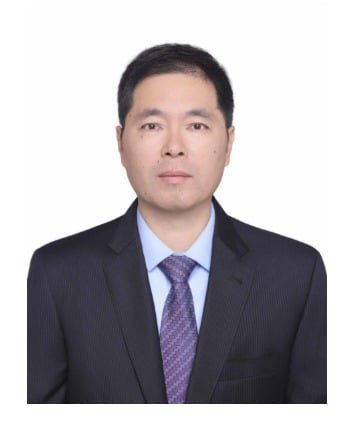
By H.E. Zhao Yong, Chinese Ambassador to Sierra Leone