

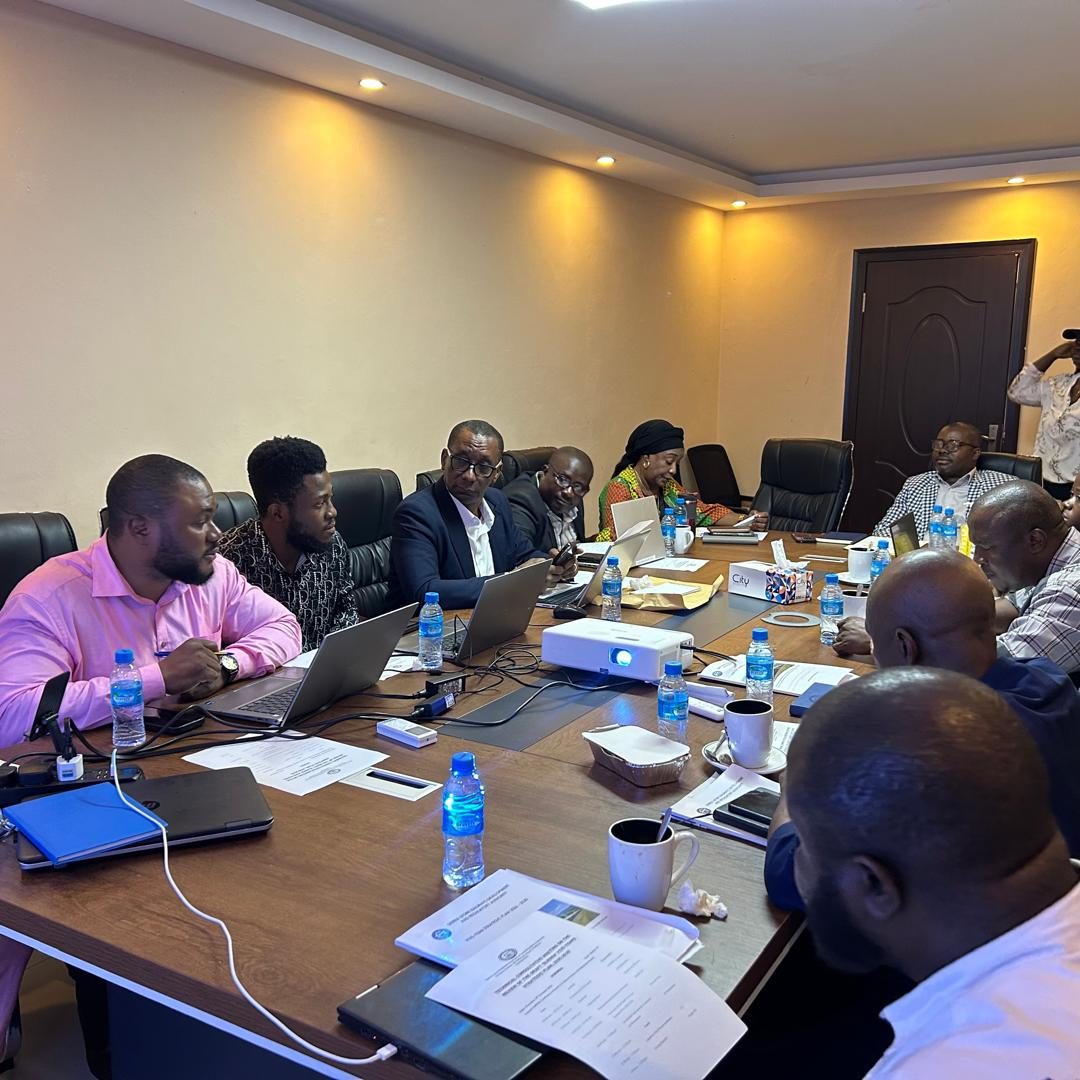
The Sierra Leone Railways Development and Regulatory Authority (SLRDRA) has held a one-day stakeholder validation workshop in Freetown to review its Draft Five-Year Strategic Plan for 2026–2030, marking another important step towards restoring the country’s railway network and promoting safe, efficient and sustainable railway and cable car transportation.
The engagement, held on Thursday, 8 October 2026, brought together representatives from Government Ministries, Departments and Agencies, regulatory institutions and other key stakeholders to examine the proposed strategic direction of the Authority and make recommendations for strengthening its implementation.
Opening the workshop, the Director-General of the Sierra Leone Railways Development and Regulatory Authority, Ing. Dr. Albert Forde, underscored the importance of stakeholder participation in developing a practical and sustainable framework for the country’s railway sector.
He explained that the Authority, as a newly established institution, is working to strengthen its administrative, regulatory and operational structures to effectively deliver on its mandate. He maintained that contributions from relevant institutions would be essential in ensuring that the strategic plan responds to national development priorities and emerging transportation needs.
Welcoming participants on behalf of the Board, Management and Staff, the Deputy Director-General, George Simeon Songu, expressed appreciation for their participation and encouraged constructive discussions aimed at improving the document.
Presenting the Draft Five-Year Strategic Plan, the Director of Environmental Compliance, Ing. Abdul Kaadiru Kallon, outlined five major strategic priorities intended to guide the Authority’s operations between 2026 and 2030.
Those include making the Authority fully operational, mobilizing revenue to ensure financial sustainability, developing regulations for railway and cable car transportation, preparing a comprehensive National Railway Master Plan and advancing priority infrastructure projects.
Ing. Abdul Kaadiru Kallon disclosed that the proposed National Railway Master Plan would cover 14 interconnected railway corridors extending approximately 1,900 kilometres across Sierra Leone. He identified the Kasafoni–Banana Island corridor as one of the priority projects under consideration.
The proposed railway network is expected to provide a framework for improving transportation infrastructure, strengthening connectivity and creating opportunities for economic development across different parts of the country.
During the discussions, stakeholders examined several issues relating to railway infrastructure development, investment opportunities, regulatory responsibilities, environmental protection, land acquisition, public-private partnerships and the proposed introduction of cable car transportation.
A representative of the National Investment Board recommended strengthening the governance framework for public-private partnerships to attract credible investors and ensure transparency in project implementation.
The representative also emphasized the need to establish appropriate railway access and safety regulations before developing investment arrangements for the proposed corridors. Additional recommendations included independent investment assessments, safeguards for the Bauya–Waterloo section and Western Area approach, and a review of the proposed investment budget and implementation timetable.
The Ministry of Finance representative stressed the importance of developing a realistic financing strategy supported by proper risk assessments to ensure that the proposed projects are financially sustainable.
The representative explained that a credible funding framework would be essential in attracting investment, managing financial obligations and ensuring the successful implementation of the Authority’s development priorities.
The Ministry of Transport and Aviation representative sought clarification on whether the Authority’s mandate would focus mainly on regulating railway operations or also extend to supervising the implementation of cable car projects.
Similarly, the Ministry of Justice representative raised concerns about the institutional mapping contained in Section 3.5 on Page 26 of the draft document, noting that the Office of the Attorney-General and Minister of Justice had not been adequately reflected.
The representative further recommended that matters relating to land acquisition should be properly coordinated with the relevant land authorities, particularly the National Land Commission.
The Ministry of Planning and Economic Development representative commended the technical team for preparing what was described as an excellent draft strategic plan but emphasized the need for greater clarity in its objectives and stronger alignment with relevant international development frameworks.
Environmental sustainability also featured prominently during the discussions, with the Environmental Protection Agency representative questioning the long-term sustainability of a railway development strategy heavily focused on mining activities.
The representative argued that because mining resources are exhaustible, railway infrastructure development should also support other productive sectors, particularly agriculture, trade and broader economic activities, to ensure lasting national benefits.
The National Railway Museum representative highlighted the importance of railway safety and security standards, bilateral cooperation and the exchange of relevant technical documents to support effective planning and implementation.
Meanwhile, the Sierra Leone Road Safety Authority representative sought clarification on whether the proposed cable car transportation system would be restricted to Freetown or extended to other parts of the country.
The representative also raised concerns about electricity availability and connectivity in provincial areas, noting that reliable power supply would be an important consideration in determining the feasibility of cable car operations outside the capital.
Other participants called for stronger collaboration among public institutions, clearer separation of regulatory and project implementation responsibilities, improved environmental safeguards and greater attention to the potential contribution of railway transportation to agricultural production and national economic integration.
The discussions also highlighted the importance of ensuring that railway development projects are properly coordinated with existing national infrastructure plans and international development commitments.
At the conclusion of the workshop, Samuel Morgan, representing the Ministry of Transport and Aviation, and Adama Boima, Esq., of the Ministry of Justice, moved a motion for the adoption of the Draft Five-Year Strategic Plan.
The motion followed extensive stakeholder discussions and recommendations aimed at strengthening the document’s regulatory provisions, financing arrangements, investment governance, environmental safeguards and overall contribution to national development.
However, the meeting record did not indicate whether the motion was formally carried or whether the revised strategic plan had received final approval.
Delivering the closing remarks, Deputy Director-General, George Simeon Songu, thanked the participating institutions for their contributions and acknowledged the importance of their recommendations in improving the proposed strategic framework.
The workshop represents a significant stage in the Sierra Leone Railways Development and Regulatory Authority’s efforts to establish a coordinated approach to railway restoration, modern transportation development and long-term infrastructure investment.
The recommendations gathered during the engagement are expected to inform further improvements to the Draft Five-Year Strategic Plan as the Authority works towards establishing a modern, safe, financially sustainable and nationally connected railway transportation system in Sierra Leone.