

By Amin Kef-Ranger
The Ministry of Transport and Aviation has signed contracts with two major construction firms for the development of four climate-resilient bridges across Sierra Leone, marking another significant step in the Government’s efforts to improve rural connectivity, facilitate agricultural trade and strengthen critical transport infrastructure against the growing threats of climate change.
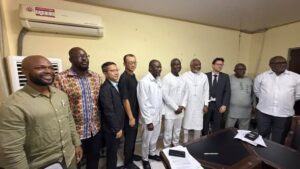
The contracts, signed on Friday, 16 October 2026, form part of the Sierra Leone Connectivity and Agricultural Market Infrastructure Project (SL-CAMIP), a US$74 million initiative financed through a grant from the International Development Association (IDA), the concessional financing arm of the World Bank.
The project will support the construction of four strategic bridges in Tonkolili, Moyamba, Bo and Karene districts, where inadequate transport infrastructure, seasonal flooding and difficult road conditions have continued to affect the movement of people, agricultural produce and essential goods.
Under the contractual arrangements, Matiere and Secon Joint Venture (JV) has been awarded Lot 1, covering the construction of bridges at Kombabai in Tonkolili District and Kabba in Karene District.
China Railway Seventh Group (CRSG) has secured Lot 2, which involves the construction of bridges at Sumbuya in Bo District and Moselolo in Moyamba District.
The four bridges are expected to provide safer and more reliable transport connections, particularly for rural communities that experience serious accessibility challenges during the rainy season.
Speaking during the contract-signing ceremony, the Minister of Transport and Aviation, Alhaji Fanday Turay Esq., emphasized that the signing of the agreements represented an important milestone but cautioned that the ultimate success of the initiative would depend on the quality and timely completion of the construction works.
“Today’s signing is only the beginning. The real success will be the timely completion of safe, durable and climate-resilient bridges,” the Minister stated.
He assured stakeholders that the Ministry would maintain strict oversight throughout the implementation process to ensure that the contractors deliver infrastructure that meets the required engineering, environmental and safety standards.
“The Ministry will ensure close monitoring, regular reporting, and strong coordination among all partners,” he added.
Minister Alhaji Fanday Turay Esq. further underscored the importance of accountability, effective project management and adherence to contractual obligations, stressing that the bridges must provide lasting benefits to the communities they are intended to serve.
The Ministry also urged the contractors to prioritize quality workmanship, comply with environmental and occupational safety requirements and complete the projects within the agreed contractual timelines.
Particular attention was drawn to the importance of creating employment opportunities for Sierra Leoneans, especially residents of the beneficiary communities, wherever appropriate skills and opportunities are available.
The Sierra Leone Connectivity and Agricultural Market Infrastructure Project is designed to address longstanding transport challenges that have limited agricultural productivity, increased transportation costs and restricted access to markets in several rural communities.
For many farmers, particularly those involved in the production of rice, vegetables and other agricultural commodities, poor road networks and unreliable river crossings have made it difficult to transport produce to commercial centres, especially during periods of heavy rainfall.
The construction of the bridges is therefore expected to improve all-season accessibility, reduce travel time, lower vehicle operating costs and facilitate the movement of agricultural products from farming communities to major markets.
Beyond agricultural transportation, the improved infrastructure is also anticipated to enhance access to healthcare facilities, educational institutions and other essential social services.
The climate-resilient design of the bridges represents another important component of the initiative, as Sierra Leone continues to face increasing infrastructure vulnerabilities associated with flooding, intense rainfall and other climate-related hazards.
By incorporating appropriate engineering standards and climate-adaptation measures, the project seeks to improve the durability of the bridges and reduce the likelihood of transport disruptions caused by extreme weather conditions.
The Ministry of Transport and Aviation, working in collaboration with the Sierra Leone Roads Authority (SLRA), will oversee project supervision, implementation, monitoring and compliance with relevant technical, environmental and safety requirements.
The involvement of the Sierra Leone Roads Authority is expected to strengthen technical oversight and help ensure that the completed bridges meet national infrastructure standards and provide sustainable transport solutions.
The US$74 million World Bank-funded SL-CAMIP initiative also reflects the broader development objective of connecting agricultural production areas to markets, thereby supporting economic activities, improving rural livelihoods and strengthening the country’s transport network.
Improved rural connectivity is considered particularly important to Sierra Leone’s agricultural development ambitions, as reliable infrastructure can help reduce post-harvest losses, improve market participation and encourage greater private-sector investment in agricultural value chains.
For communities in Tonkolili, Moyamba, Bo and Karene districts, the construction of the four bridges is expected to address longstanding mobility challenges and create opportunities for increased commercial activities.
The award of the contracts to Matiere and Secon JV and China Railway Seventh Group now places responsibility on the contractors to translate the Government’s infrastructure commitments into tangible improvements for the beneficiary communities.
With the contracts formally signed, attention will shift to project mobilization, construction schedules, engineering supervision and the effective coordination of all institutions involved in implementation.
The Ministry has reiterated its commitment to ensuring that the projects are executed transparently, efficiently and in accordance with established contractual standards.
The construction of the four climate-resilient bridges is expected to contribute significantly to Sierra Leone’s long-term infrastructure development by strengthening rural transport connectivity, improving access to agricultural markets and building greater resilience against climate-related disruptions.
For the Government, the successful delivery of the bridges will represent not only an investment in physical infrastructure but also an opportunity to improve livelihoods, promote economic inclusion and support sustainable development in some of the country’s important agricultural communities.