
By Kemo Cham
Campaigners are intensifying calls for collective action against the worsening drug crisis in Sierra Leone, as new research confirms the presence of Nitazene, a highly potent synthetic opioid, in Kush; the substance at the center of the country’s epidemic.

According to the Global Initiative Against Transnational Organized Crime (GI-TOC), in partnership with the Clingendael Institute, Kush circulating in Sierra Leone contains Nitazene, a chemical linked to multiple deaths in Europe and North America, alongside synthetic cannabinoids. Researchers described Nitazene as “very addictive and deadly,” comparable to fentanyl.
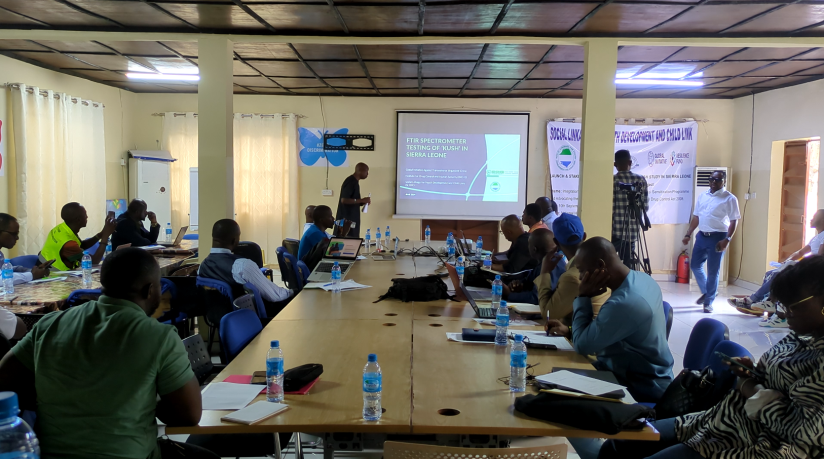
The report, unveiled at a stakeholders’ engagement in Freetown on Wednesday, 10 September 2025 provides new insights into Kush’s composition, its market structure and its devastating health and social consequences.
The study follows the Government’s 2024 declaration of a public health emergency on drugs. With thousands of lives believed lost to Kush abuse, campaigners say the crisis is eroding the country’s youth potential.
“Kush has become a menace which Government alone cannot address,” warned Abdurahman Sesay, Director General of the National AIDS Secretariat (NAS). He cautioned that without swift and coordinated action the epidemic could derail national development efforts.
Data shows that young people form the majority of those affected. Civil Society partners, including Social Linkages for Youth Development and Child Link (SLYDCL), which works directly with youth who inject drugs, stressed the urgency of embedding research findings into national policy.
While Government has opened two rehabilitation centers, one in Hastings and another in Bo, campaigners note they are not currently operational due to resource constraints. According to the Ministry of Social Welfare, out of over 2,000 drug users who registered for treatment, only 400 have been admitted, with most experiencing relapse or worsening mental health conditions.
“This points to major gaps in our response,” Abdurahman Sesay said, adding that the crisis also threatens to overwhelm healthcare financing and infrastructure.
Other experts echoed the urgency of a multi-sectoral approach:
- Dr. Godswill Agada, of World Vision, noted that the study had identified supply and demand chains critical for tackling the epidemic.
- Ansumana Konneh, Director of Mental Health at the Ministry of Social Welfare, said ongoing drug inflows undermine progress: “In spite of whatever we are doing, if the supply of drugs in this country still continues to flow, we are wasting our time.”
- Dr. Mohamed Bangura, Director of Medical Services at the Sierra Leone Police, warned that Kush is fuelling crime and violence, with many arrested youths being addicts rather than criminals.
Delivering the keynote on behalf of the Minister of Youth, Charles Moinina urged stronger protection of the youth population, describing them as the “greatest human resource capacity” of the country.
Campaigners are now pushing for urgent legislative reform, including a modern anti-drug law and expanded rehabilitation services, to stem the tide of addiction and protect Sierra Leone’s future generations.