
By Amin Kef (Ranger)
Chairman of the Board of Authority of the National Civil Registration Authority (NCRA), Sorie Fofana, has come under strong calls from registration officers and community stakeholders across Sierra Leone to accelerate the decentralization of the Authority’s services, in order to make them more accessible to citizens in rural and hard-to-reach areas.

During his visit to Kono District on Tuesday, September 16, 2025, Sorie Fofana held discussions with the District Registration Officer, Daniel Matturi, who emphasized the urgent need for additional mobile teams and service outlets in chiefdoms where access remains limited. He noted that the shortage of staff and mobility constraints were hampering service delivery and making it difficult for residents in remote areas to secure essential registration and identification documents.
Similar appeals were echoed by Regional Registration Officers in the East, Northeast and Northwestern regions, who pointed out that decentralizing services would reduce the cost and stress citizens incur traveling to district headquarters or even Freetown for simple corrections such as typographical errors, name mismatches and spelling amendments. Community leaders also pressed for services to be available at chiefdom levels, stressing that decentralization was critical for inclusion and effective national identity management.
Responding to the concerns, Chairman Sorie Fofana assured staff and community stakeholders that the Board and senior Management of NCRA would carefully examine the issues raised and adopt measures to address them. He described the matters highlighted as “low-hanging fruits” that could be acted upon swiftly. He also commended the resilience and dedication of NCRA staff, many of whom continue to operate in difficult circumstances to keep services running.
The Chairman stressed that improving staff welfare remains a top priority for the Board and Management, noting that mobile teams deserve special recognition for their commitment and selfless contribution to national service. He reaffirmed that decentralization is at the core of NCRA’s mission and pledged that every Sierra Leonean and non-national resident should be able to benefit from registration and identification services, regardless of location.
It will be recalled that Sorie Fofana embarked on a nationwide inspection tour of NCRA district offices on Monday, September 15, 2025. His tour has already taken him to Bo, Kenema and Kailahun, with Bombali and other districts also on his schedule. The purpose of the tour is to assess operations, strengthen service delivery and identify opportunities for expansion.
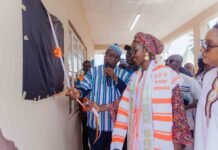
In his engagements in the southern and eastern regions, he underscored the growing demand for civil registration and national identification services, describing valid National and Non-National ID cards as gateways for citizens and residents to access vital social and economic services. He also disclosed that the Authority has recently rolled out new service outlets in remote areas, including one at Mile 91 in Tonkolili District, with another nearing completion in Lungi, Port Loko District.
The NCRA Chairman further revealed that the Authority has been engaging the Council of Paramount Chiefs to ensure that decentralization strategies include services at chiefdom levels. He lauded the chiefs for their cooperation and expressed confidence that the structured rollout would significantly ease citizens’ access to registration services.
Regional Registration Officers in the South and East, along with the District Registration Officer in Kailahun, provided updates on their operations and outlined the challenges they face. In response, Sorie Fofana reiterated the Board’s and Management’s commitment to addressing those challenges while ensuring that the Authority delivers on its mandate of providing efficient, reliable and inclusive registration services to all.
By deepening decentralization, NCRA aims not only to bring services closer to the people but also to enhance national planning and strengthen identity management systems that are vital for governance, security and socio-economic development.