By Sunkary Zainab Koroma
Child labour remains a serious and growing concern in Kailahun District, where many children continue to work in hazardous mining activities despite national laws prohibiting such practices. Across Sierra Leone, an estimated 35.1 percent of children aged between 5 and 14 are engaged in some form of work, with many involved in what the International Labour Organization describes as the worst forms of child labour. In Kailahun, recent findings show that the situation has worsened over the past five years, particularly in dangerous mining environments.
Reports indicate that children in mining communities are exposed to harsh and risky conditions, including carrying heavy loads, inhaling dust and fumes, operating machinery and working in extreme weather. Data from a joint assessment by the Center on Human Trafficking Research and Outreach (CenHTRO) and the Conflict Management Development Associations (CMDA-SL) show that Kailahun recorded a sharp rise in hazardous child labour conditions between 2019 and 2024. Exposure to dust, fumes or gas increased by 33 percentage points, exposure to loud noise rose by 26 percentage points, and cases of children operating heavy machinery increased by 21 percentage points.
The overall prevalence of child labour in Kailahun also climbed significantly. The rate rose from about 35 percent at baseline to 46 percent at endline, representing an 11-percentage point increase. In terms of estimated numbers, the district saw a 32 percent rise in child labour cases, from approximately 64,265 children at baseline to 84,953 at endline. These figures point to a troubling trend in which more children are entering hazardous work instead of remaining in school.
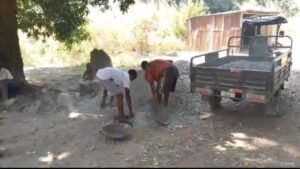
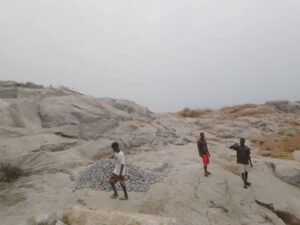
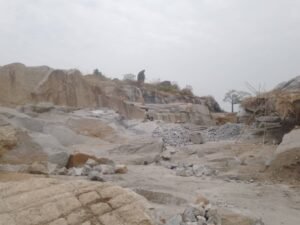
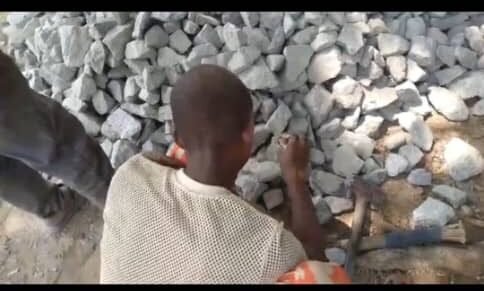
Interviews with children engaged in stone quarrying reveal that poverty remains the main driving factor. Fifteen-year-old Mohammed Mansary said he has been breaking stones for years to survive while attending school. Sixteen-year-old Steven Fornah explained that he sells broken stones for 40 Leones to support his schooling and avoid dropping out. He said the income, though small, helps him cover basic school expenses. Sorie S. Kargbo, who dropped out after his Basic Education Certificate Examination due to financial hardship, said he began quarry work before leaving school and hopes to return if he receives support. He described how he learned to burn stones before breaking them into smaller pieces for sale, adapting to the physically demanding work over time.
Although Sierra Leone has ratified key International Labour Organization conventions, including Convention 138 on minimum age and Convention 182 on the worst forms of child labour, enforcement remains weak. Mining is classified under international standards as one of the worst forms of child labour because of the risks it poses to children’s health, safety and moral development. National laws such as the Child Rights Act, the Mines Act and the Anti-Human Trafficking and Migrant Smuggling Act criminalize child labour, particularly in mining. However, implementation in districts like Kailahun remains inconsistent.
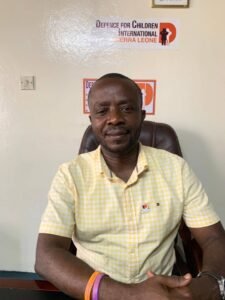
Abdul Manaff Kemokai, Executive Director of Children for Defense, said child mining continues largely in artisanal sites where monitoring is limited. He noted that while inspectors from the Ministry of Mines and the National Minerals Agency are mandated to ensure children are not involved in mining, prosecutions are rare and many cases stall at police level. He expressed concern that monitoring systems are weak and documentation of offenders is increasingly scarce.
Officials from the Ministry of Labour, Employment and Social Security acknowledge resource constraints. Abu Karim Conteh, Director of Occupational Health and Safety and former Director of Child Labour at the Ministry, said the last nationwide child labour survey was conducted in 2011 with support from the International Labour Organization. Since then, financial and human resource limitations have hindered follow-up surveys and regular inspections. In the regions, staffing is critically low, making effective monitoring of informal mining activities difficult.
Legal experts have also highlighted gaps between national laws and international standards. A report by Dr. Emmanuel Allicious Macpherson Sam, a legal practitioner, observed that while Sierra Leone has adopted several international instruments on child labour, inconsistencies and weak enforcement continue to undermine progress. He warned that in mining communities, children are exposed to serious health risks, including unsafe pits and poor sanitation, with long-term consequences for their education and well-being.
Advocates say urgent action is needed in Kailahun District to strengthen monitoring, prosecute offenders, and provide alternative livelihoods for families. They argue that without sustained government commitment and adequate resources, the gap between law and reality will continue to widen. For many children in Kailahun’s mining communities, the promise of education and a better future remains overshadowed by the daily struggle to survive in hazardous conditions.
The publication is supported by the National Fund for Public Interest Media (NaFPIM), through the Media Reform Coordinating Group (MRCG), with funding from the International Fund for Public Interest Media (IFPIM) and the United Kingdom.