By Ibrahim Sesay
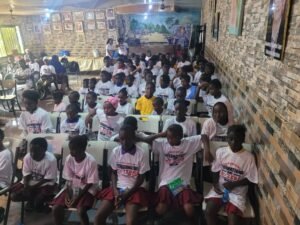
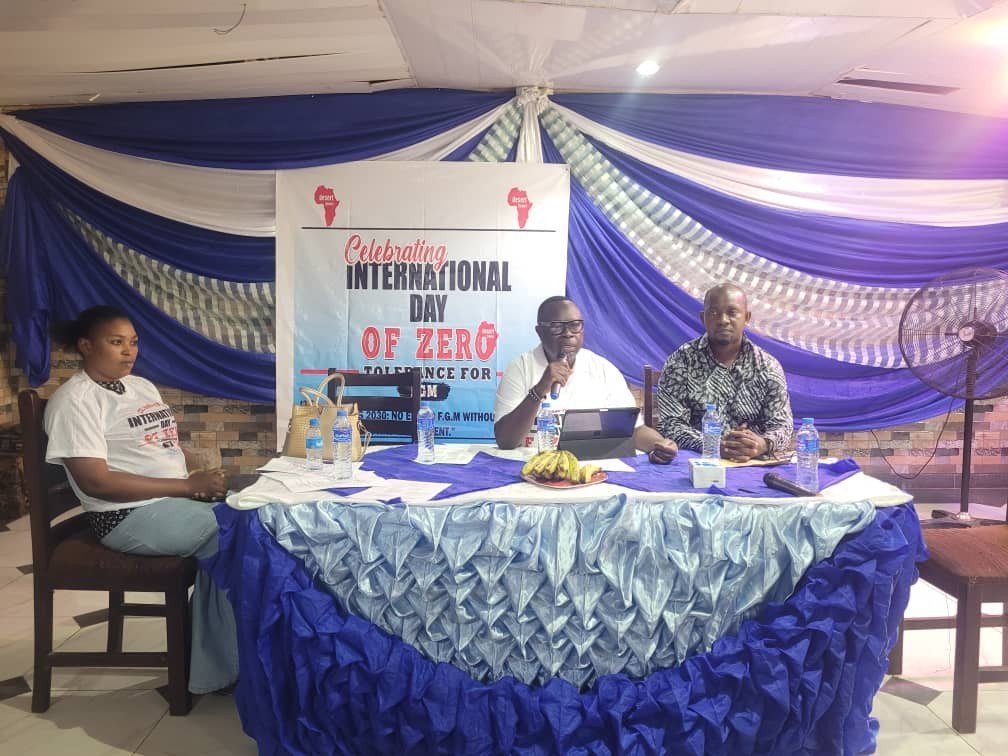
The Desert Flower Foundation Sierra Leone has, on Friday February 6, engaged residents of No. 2 Community during a symposium held at St. Mary’s Interim Care Centre to commemorate the International Day of Zero Tolerance for Female Genital Mutilation (FGM), calling for collective action to end the practice.

Held under the theme: “Her Voice Matters in the Global Movement to End Female Genital Mutilation,” the event brought together community leaders, women’s rights advocates, youth activists and beneficiaries to connect, learn and share ideas on advancing the fight against FGM in Sierra Leone.
Speaking at the programme, the President of Desert Flower Foundation Sierra Leone and Africa, Rev. Fr. Peter Alpha Leo Konteh, described FGM as a serious violation of the rights and dignity of women and girls, stressing that the practice has no cultural or religious justification.
“FGM is not culture. It is not religion. It is violence against women and girls,” Rev. Fr. Peter Alpha Leo Konteh said, noting that many girls across Africa, including Sierra Leone, continue to suffer lifelong physical, psychological and emotional harm as a result of the practice.
He reaffirmed the Foundation’s commitment to ending FGM through education, community engagement, survivor support and advocacy, while partnering with traditional leaders, faith communities, Government institutions and international allies.
Rev. Fr. Peter Alpha Leo Konteh further warned that the global target to eliminate FGM by 2030 would not be achieved without “sustained commitment, adequate investment and courageous leadership at all levels.”
Also speaking at the event, Samuel Byrne of Inspiration Life Line clarified that the campaign against FGM is not an attack on the Bondo Society as a whole, but specifically against the cutting of the female genital.
He explained that while the Bondo Society once served as a training institution for young girls, its original purpose no longer applies in present-day society. Samuel Byrne recounted a case of a two-year-old girl allegedly initiated into the society in Makeni, describing it as evidence that the practice has deviated from its original intent.
Samuel Byrne further alleged that in some parts of the country, certain politicians have been complicit in perpetuating FGM by financially supporting initiation ceremonies for political gains. He urged parents and communities to take responsibility for protecting young girls from practices that cause physical and psychological harm.
A survivor of FGM and founder of Nyama’s Diary Initiative, Nyamakoro Marah, shared a personal account of her experience, pointing out both the medical and emotional consequences of the practice.
Nyamakoro Marah explained that beyond sexual function, the clitoris plays an important role during childbirth and its removal can lead to serious complications, particularly for women with narrow birth passages.
“Till this day, I relive some of the horrors I was subjected to during initiation,” she said, while she questioned whether parental protection should mean exposing girls to harm in the name of tradition.
She recalled how she and her sister were deceitfully led into the Bondo bush and forcefully initiated despite her opposition, an experience that she said left her “emotionally withdrawn and depressed” for a long period.
Nyamakoro Marah also raised concerns about reported cases of girls bleeding to death following FGM and questioned whether culture could be preserved without subjecting young girls to torture.
“I believe culture can be taught without torture and guidance can be given without force,” she said. She called on parents to reflect on the kind of future they want for their children.
One of the beneficiaries at the programme, Marion Challey, expressed appreciation to the Desert Flower Foundation for creating a safe space for survivors and vulnerable girls, adding that she intends to share the knowledge acquired at the symposium to other girls who were not present.
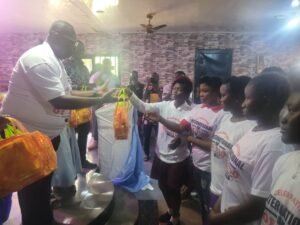
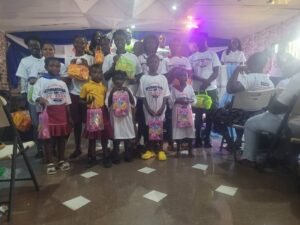
The symposium featured an interactive question-and-answer session and ended with the symbolic distribution of dignity kits to beneficiaries, underscoring the Foundation’s commitment to promoting dignity, protection and the well-being of girls.