By Foday Moriba Conteh
Health Alert Sierra Leone has issued an urgent call for Government action to avert a looming national vaccine shortage that could put thousands of children’s lives at risk.

Speaking during a media briefing at the organization’s Blackhall Road office in Freetown, Executive Director, Victor Lansana Koroma, warned that unless the Government of Sierra Leone pays the remaining $721,807 of its 2025 co-financing obligation to the Global Alliance for Vaccines and Immunization (GAVI) by August 31, 2025, the country could face severe vaccine stockouts.
The Government of Sierra Leone had committed a total of $823,680 for the procurement of essential vaccines, but so far only $101,873 allocated for the Penta vaccine has been paid. The outstanding balance is critical for securing vaccines such as Measles-Rubella, Rotavirus, Yellow Fever, Human Papillomavirus (HPV), Malaria and Pneumococcal Conjugate (PCV).
Breakdown of unpaid vaccine costs:
- Measles-Rubella (MR): $237,430
- Rotavirus (RV): $85,065
- Yellow Fever (YF): $57,399
- HPV: $14,708
- Malaria: $195,156
- PCV: $132,049
According to GAVI’s June 25 letter to the Government of Sierra Leone through the Ministry of Health, failure to make those payments by the end of August 2025 will delay vaccine procurement, with restocking potentially taking up to three months a gap that could lead to preventable illness and deaths among children.
Victor Lansana Koroma noted that while President Julius Maada Bio has publicly reaffirmed Sierra Leone’s commitment to immunization most recently at the GAVI Global Summit in Brussels immediate action is now required to match words with delivery.
Health Alert, in collaboration with WASH-Net and supported by the Global Health Advocacy Incubator (GHAI), is urging:
- The Ministry of Finance to release the remaining funds without delay.
- The Ministry of Health to actively follow up with the Finance Ministry and Accountant General.
- The Bank of Sierra Leone to expedite fund transfers for vaccine procurement.
- Parliamentary Committees on Health and Finance to prioritize vaccine co-financing in the 2025 National Budget.
- The public and media to hold stakeholders accountable.
“Health through immunization is not a privilege; it is a right,” Victor Lansana Koroma stressed, echoing President Bio’s statement at the GAVI summit. “The cost of inaction will be paid in lives if we fail to act now and faster.”
In his presentation, Programme Manager, Health Alert, Dalton John stressed that vaccines are one of the most cost-effective public health interventions, saving lives, preventing outbreaks, reducing healthcare costs, supporting child development and strengthening national resilience.
“Healthy children are more likely to attend school and reach their full potential. Immunization protects the population during crises and sustains public confidence in the health system,” Dalton John noted.
Dalton John warned that GAVI requires at least a three-month lead time between payment and vaccine delivery. “Payments made after August may result in delayed shipments, heightening the risk of stockouts,” he said.
He recommended that the Government aligns payments with vaccine program needs, monitor stock levels closely, engage the Ministry of Finance for timely fund releases and prioritize co-financing payments in the health budget
GAVI co-financing, he emphasized, is not just a financial obligation but a lifeline for children’s health in Sierra Leone.
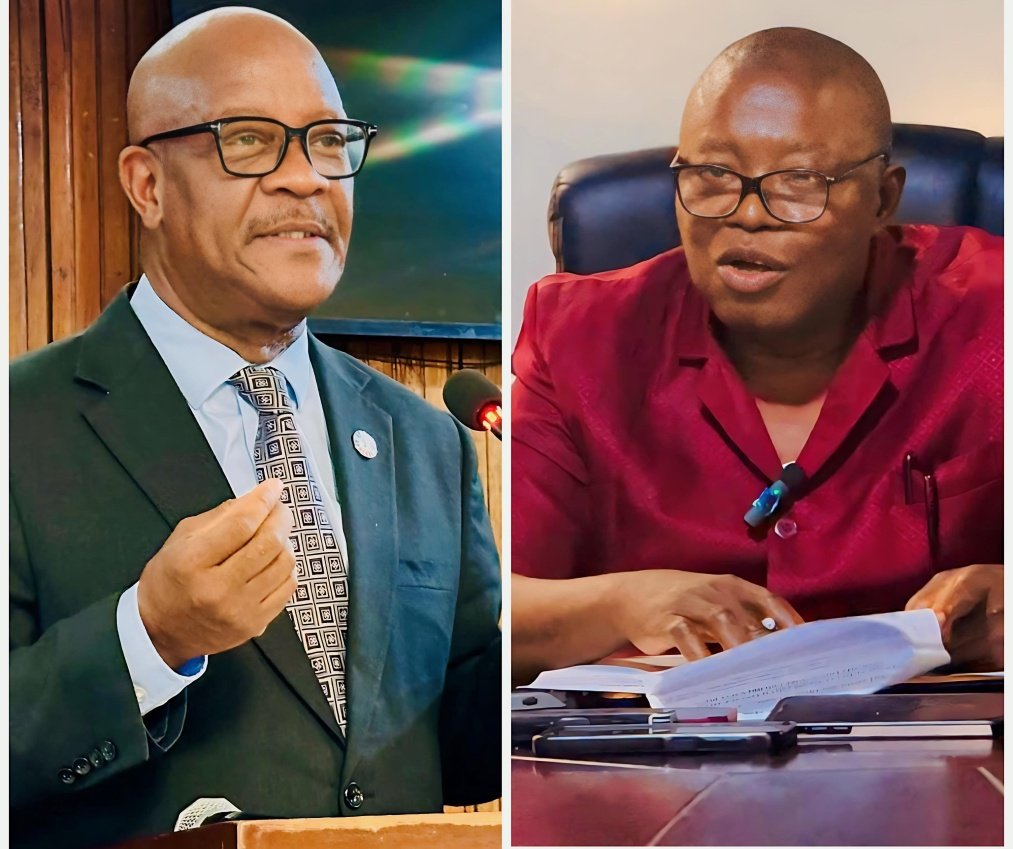
This medium contacted the Minister of Health, Dr. Austin Demby, to comment on the recent concerns raised by Health Alert Sierra Leone regarding Sierra Leone’s co-financing obligations to the Global Alliance for Vaccines and Immunization (GAVI).
Dr. Austin Demby stressed that Sierra Leone remains one of GAVI’s strongest partners, having consistently maintained over 90% coverage for all major vaccines over the past five years; a record that recently earned commendations from both GAVI and UNICEF.
“We have successfully introduced several new vaccines for malaria, cervical cancer, COVID-19, Ebola and Marburg viruses,” Dr. Austin Demby noted, adding that President Julius Maada Bio was invited to deliver the keynote address at GAVI’s replenishment conference in Brussels, where Sierra Leone was recognized as a continental leader in vaccine delivery.
Dr. Austin Demby confirmed that the Ministry of Finance has already approved payment of the $823,000 co-financing amount to GAVI, with checks prepared and set to be remitted “in the next few days.” He emphasized that Sierra Leone has a strong track record of meeting all co-financing commitments, a factor that has helped secure over $17 million in grants for vaccines and delivery in the next three years.
Outlining plans to strengthen domestic health financing, Dr. Austin Demby pointed to initiatives such as the Sierra Leone Social Health Insurance scheme (SLeSHI), debt swaps and “sin taxes” to supplement international funding.