
By Amin Kef (Ranger)
The Justice Sector Coordination Office (JSCO) has officially released its Half-Yearly Report for January to June 2025, offering a comprehensive assessment of achievements, ongoing reforms and challenges facing Sierra Leone’s justice institutions. The report, produced with technical and financial support from the United Nations Development Programme (UNDP), evaluates the performance of ten core institutions under the Justice Sector Reform Strategy (JSRS) 2024–2030.

The strategy, launched last year, aims to consolidate past reforms, expand access to justice and strengthen institutional capacity across the country. According to the report, while significant progress has been made, systemic constraints, particularly underfunding, delayed disbursement of resources and logistical shortfalls, remain major stumbling blocks.
The Ministry of Justice spearheaded important reforms during the reporting period. A total of eight Cabinet Papers were prepared and submitted, including proposals for the Law Officers’ Bill, the Contempt of Court Bill, the Referendum Bill, the Copyright (Amendment) Bill, the Legal Practitioners Bill, the Correctional Service (Amendment) Bill, the Law Reform Commission Bill and amendments to the Human Rights Commission of Sierra Leone Act.
In addition, draft bills on Occupational Safety and Health, Maritime Administration, Merchant Shipping and Railway Development were developed. These reforms, the report notes, are central to modernizing Sierra Leone’s legal framework and ensuring alignment with national development goals.
Attorney General and Minister of Justice, Hon. Alpha Sesay, reaffirmed Government’s commitment to equality, human rights and non-discrimination. He emphasized that reforms are being designed not only to update laws but also to promote inclusivity, tackle stigma and ensure that justice remains accessible to all citizens.
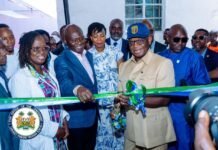
The Judiciary of Sierra Leone recorded several landmark achievements. The most notable was the inauguration of a Sexual Offences Model Court in Bo, the first of its kind in the Southern Region and the third nationwide. The court is designed to fast-track the adjudication of sexual offence cases, provide trauma-sensitive support for victims and restore public trust in the justice system.
Chief Justice, Komba Kamanda, in his remarks, described the court as a “critical milestone” in protecting vulnerable groups and ensuring survivors receive timely justice. The initiative aligns with President Julius Maada Bio and First Lady Fatima Bio’s “Hands Off Our Girls” campaign, which continues to advocate for stronger action against gender-based violence.
Other achievements included the commissioning of the Judiciary’s first ultramodern library at the Main Law Courts Building in Freetown. Equipped with an e-library, internet access and photocopying services, the library is expected to enhance legal research and judicial performance. The Chief Justice also held familiarization sessions with newly appointed Magistrates, reinforcing the values of impartiality, integrity and accountability in judicial conduct.
Despite those successes, the Judiciary continues to grapple with inadequate funding, poor infrastructure in provincial courts and the lack of integrated case management systems; factors that slow down adjudication and affect public confidence.
A key highlight of the report is the Justice Sector Coordination Office’s effort to initiate Sierra Leone’s first e-Justice system. In collaboration with the Canadian Academic and Industrial Network (CAAIN), consultations began to design a digital case management framework aimed at reducing backlogs, improving transparency and expanding access through online and mobile platforms.
JSCO Coordinator Shahid M. Korjie stressed that the e-Justice system is more than a technological upgrade; it represents a transformational shift in how justice will be delivered across Sierra Leone. The project is designed to curb corruption, improve record-keeping, and build public trust in judicial processes.
The JSCO also convened a Justice Sector Technical Working Group to review implementation progress of the JSRS. The meeting brought together representatives from the Judiciary, Anti-Corruption Commission, Human Rights Commission and Law Reform Commission. Emphasis was placed on collaborative reform implementation and mobilizing resources from both Government and development partners.
The Human Rights Commission of Sierra Leone (HRCSL) continued its mandate of protecting and promoting rights. With support from the Danish Institute for Human Rights, the Commission conducted community engagements in Lunar, Taiama and Tongo, focusing on the intersection of climate change and human rights. Residents voiced concerns over deforestation, flooding and environmental degradation, linking those challenges to declining livelihoods and human rights violations.
The HRCSL also partnered with UNDP and Irish Aid to host a two-day stakeholder consultation in Makeni on developing a National Action Plan for Business and Human Rights. The initiative aims to hold corporations accountable while aligning business practices with international human rights standards. Chairperson, Patricia Narsu Ndanema, reiterated the Commission’s commitment to strengthening corporate accountability and promoting sustainable investment in Sierra Leone.
The Sierra Leone Correctional Service (SLCS), led by Director General Joseph John Senessie, reported ongoing construction of a modern three-story headquarters, expected to centralize operations and improve efficiency. The Service also advanced its 2025 recruitment process, with hundreds of applicants sitting entrance examinations.
Efforts were made to decongest correctional centers and expand rehabilitation programs, including carpentry workshops, literacy classes and vocational training. However, challenges persist. As of the first quarter of 2025, Sierra Leone’s inmate population stood at 6,074, with over 1,900 held on remand. Overcrowding, poor living conditions and inadequate resources for correctional officers continue to strain the system.
The Office of the Ombudsman received 30 complaints in the first quarter of 2025, dealing mainly with unlawful dismissals, non-payment of salaries and poor service delivery within Ministries, Departments and Agencies (MDAs). Limited cooperation from public institutions and lack of enforcement powers remain barriers to effective resolution.
The Independent Police Complaints Board (IPCB) processed 64 complaints nationwide, with 40 cases referred to investigations. The Board is currently working with partners to digitize its Case Management System and strengthen oversight of the Sierra Leone Police.
The Law Reform Commission launched reviews of outdated statutes, including the Offences Against the Person Act of 1861 and the Matrimonial Causes Act of 1960, while finalizing a new Partnership Bill 2025 to support small and medium-scale enterprises.
Across all institutions, the most recurring obstacle remains budgetary constraints. The report cites delayed disbursement of approved funds, outdated infrastructure and limited human resources as factors undermining service delivery. Many institutions still rely heavily on donor support, raising concerns about long-term sustainability.
In concluding, the report emphasizes the importance of greater Government investment and enhanced coordination with development partners to ensure the effective implementation of the Justice Sector Reform Strategy.
Attorney General, Alpha Sesay, noted that “justice sector reforms must be people-centered, inclusive and technologically responsive,” while Chief Justice, Komba Kamanda, stressed that “judicial accountability and transparency are key to restoring public confidence.”
The Half-Yearly Report affirms that while Sierra Leone’s justice sector has made notable strides, addressing structural weaknesses will be crucial to achieving the overarching goal of equitable, efficient and accessible justice for all citizens by 2030.