By Alvin Lansana Kargbo
The Institute for Governance Reform (IGR) has called for the introduction of a hybrid electoral system in Sierra Leone, warning that the ongoing debate between Proportional Representation (PR) and First-Past-the-Post (FPTP) oversimplifies the country’s governance needs.

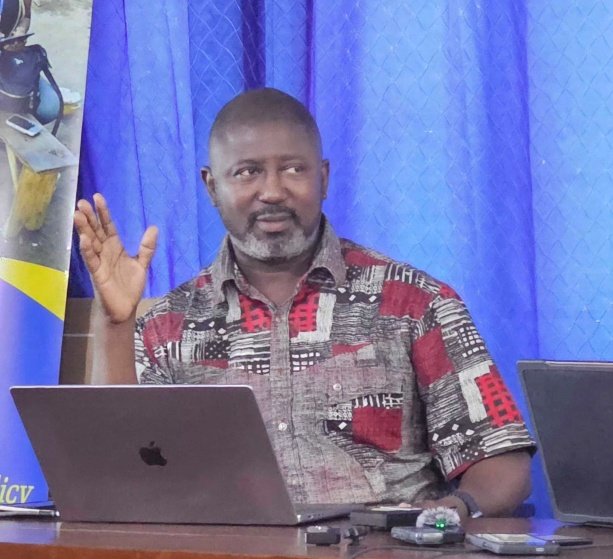
Addressing journalists during a session of its Critical Perspectives Series on Monday 30th March, 2026, the Institute’s Executive Director, Andrew Lavalie, said Sierra Leone’s electoral reform process should focus on combining the advantages of both systems rather than treating them as mutually exclusive options.
He noted that the engagement was aimed at presenting IGR’s position while encouraging citizens to support reforms that reflect the country’s realities. Andrew Lavalie stressed that electoral reform should be guided by what delivers effective governance and improves citizens’ welfare.
According to him, the structure of an electoral system directly influences accountability, political conduct and national development outcomes. He argued that although Sierra Leone is endowed with significant natural and human resources, these have not translated into widespread benefits for citizens, partly due to governance weaknesses and limited public understanding of political processes.
He also pointed out that discussions around electoral reform have largely been shaped by a narrow choice between PR and FPTP, particularly following recommendations by the Tripartite Committee and ongoing constitutional review efforts. He said that approach fails to capture the broader governance challenges facing the country.
The Institute further raised concern over low public awareness of electoral systems. Findings from its 2022 research indicate that the majority of Sierra Leoneans do not know which electoral system the country uses, highlighting a gap between policy discussions and citizen engagement.
Providing further analysis, Professor M’Cormack-Hale outlined four critical pillars for any electoral framework: accountability, stability, inclusion and cost efficiency.
She explained that while FPTP strengthens accountability by establishing a clear link between voters and their representatives, recent implementation of the district block PR system has weakened that relationship. In many cases, communities are unable to identify their representatives, limiting avenues for participation and feedback.
Research cited by the Institute shows that numerous wards across several districts lack direct councillor representation, with Western Rural, Falaba and Kono among the most affected areas.
IGR warned that such gaps risk creating uncertainty in representation and weakening local governance structures.
To address those concerns, the Institute recommended that constituencies be clearly defined and easily recognizable to citizens, rather than using numbering systems that may cause confusion.
It concluded by calling for a pragmatic electoral approach that integrates the accountability benefits of FPTP with the inclusiveness of PR, arguing that a hybrid system offers a more suitable path for Sierra Leone’s democratic development.