
By Alvin Lansana Kargbo
A multi-stakeholder workshop convened by the UN Resident Coordinator’s Office on Thursday, 27 November 2025, presented the preliminary findings of Sierra Leone’s latest conflict analysis and prioritization exercise. The event, held at the Radisson Blu Hotel in Aberdeen, brought together Government representatives, UN agencies, Civil Society, peace institutions and security actors to validate emerging evidence that will inform the country’s application for renewed eligibility under the UN Peacebuilding Fund (PBF).

The session formed part of a national process led jointly by the Independent Commission for Peace and National Cohesion (ICPNC) and the Ministry of Planning and Economic Development (MoPED), with technical support from the PBF. The ICPNC’s presence was central as the institution is mandated to coordinate national peace infrastructures and guide conflict prevention strategies nationwide.
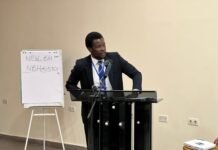
Speaking at the event, the Deputy Executive Secretary of ICPNC, Moses Margao, said the engagement represented a shared responsibility to rigorously critique and validate the emerging findings before they are submitted to New York. He emphasized that effective conflict prevention depends on a structured understanding of root causes, key actors and conflict dynamics; warning that “interventions undertaken without proper analysis can cause unintended harm.”
Moses Margao disclosed that Sierra Leone’s fragility assessment consists of five phases, with the day’s deliberations focusing on one of the most critical. He reminded participants that timelines were tight and any delay in submitting the required documentation could “jeopardize the country’s re-eligibility for conflict prevention interventions.”
The Deputy Executive Secretary noted that the outcomes of the workshop would form a substantive component of Sierra Leone’s submission to the Peacebuilding Architecture in New York. He called on participants to remain fully engaged, stating that the exercise was essential for “shaping targeted, evidence-based strategies that address tensions and strengthen national resilience.”
Robert Banamwana, Head of the UN Resident Coordinator’s Office, commended the Government, the Peace Commission, UN agencies and communities across the country for contributing to the process. Drawing from personal experience as someone from a nation that endured genocide, he cautioned that sustaining peace is more difficult than ending conflict.
He noted that Sierra Leone has benefitted from significant peacebuilding investments, citing an estimated US$184 million and emphasized that the returns far exceed monetary value. “Peace is a critical parameter,” he said, “and removing it would distort all outcomes in any model.” He encouraged young people in particular to view peace as their most valuable national asset and urged participants to interrogate the findings with honesty and rigor.
Delivering remarks on behalf of the Government, Deputy Development Secretary, Usman Cherry Conteh, positioned the exercise as a crucial step in Sierra Leone’s long-standing partnership with the PBF, which has invested more than US$84 million since 2007.
He recalled that Sierra Leone exited automatic PBF eligibility in 2020 and is now in the final year of its five-year transition period. A formal eligibility request is due and the conflict analysis will form the technical backbone of the next national application.
Usman Cherry Conteh cautioned that despite not being in a post-conflict transition phase, the country still faces serious political, economic and social vulnerabilities that could escalate if left unaddressed. He underscored the Government’s commitment to lead the process, ensure inclusive participation and align priorities with the Medium-Term National Development Plan.
The presentation outlined major findings gathered from nationwide consultations, interviews and field assessments:
Governance and Political Dynamics
- Rising political intolerance and confrontational public discourse
- Deepening SLPP–APC rivalry reinforcing ethnic and regional divides
- Elections remain major conflict flashpoints
- Incomplete post-war reconciliation, with many TRC recommendations still unimplemented
Socio-Economic Vulnerabilities
- Increasing poverty, unemployment and inflation, especially affecting the youth
- Rapid spread of the synthetic drug, Kush, destabilizing communities
- Heightened tension around resources due to economic pressures
Institutional Weaknesses
- Political interference in policing and justice
- Fragmented and under-resourced peace infrastructures
- Persistent reliance on informal “orders from above”
Media and Information Landscape
- Misinformation and hate speech proliferating online
- Social media outpacing traditional media, shaping divisive narratives
Typologies and Geography of Conflict
- Political exclusion, economic hardship, land disputes, drug abuse and weak governance identified as recurring drivers
- Hotspots include Bo (land issues), Kenema (mining tensions), Kambia and Kailahun (border disputes) and Freetown (urban crime and drugs)
- Yenga remains the only significant external boundary concern
Emerging Peacebuilding Trends
- Strengthening traditional and community-based peace actors
- Expansion of decentralized peace infrastructures (CHISECs and DISECs)
- Growing momentum for inclusive governance and youth participation
- Emphasis on digital peacebuilding and countering misinformation
- Rising influence of climate-related pressures on conflict dynamics
Strategic Pathways Proposed
Recommendations include depoliticizing institutions, strengthening decentralization, promoting youth employment and drug-prevention measures, enhancing media literacy and improving border coordination. Community-level strategies call for empowering youth groups, women’s networks and grassroots peace structures, while further research is recommended on digital misinformation, customary justice and climate-related conflict risks.
The validated findings will inform the next stage of prioritization and will ultimately form Sierra Leone’s consolidated submission to regain eligibility for future peacebuilding support.