
By Amin Kef (Ranger)
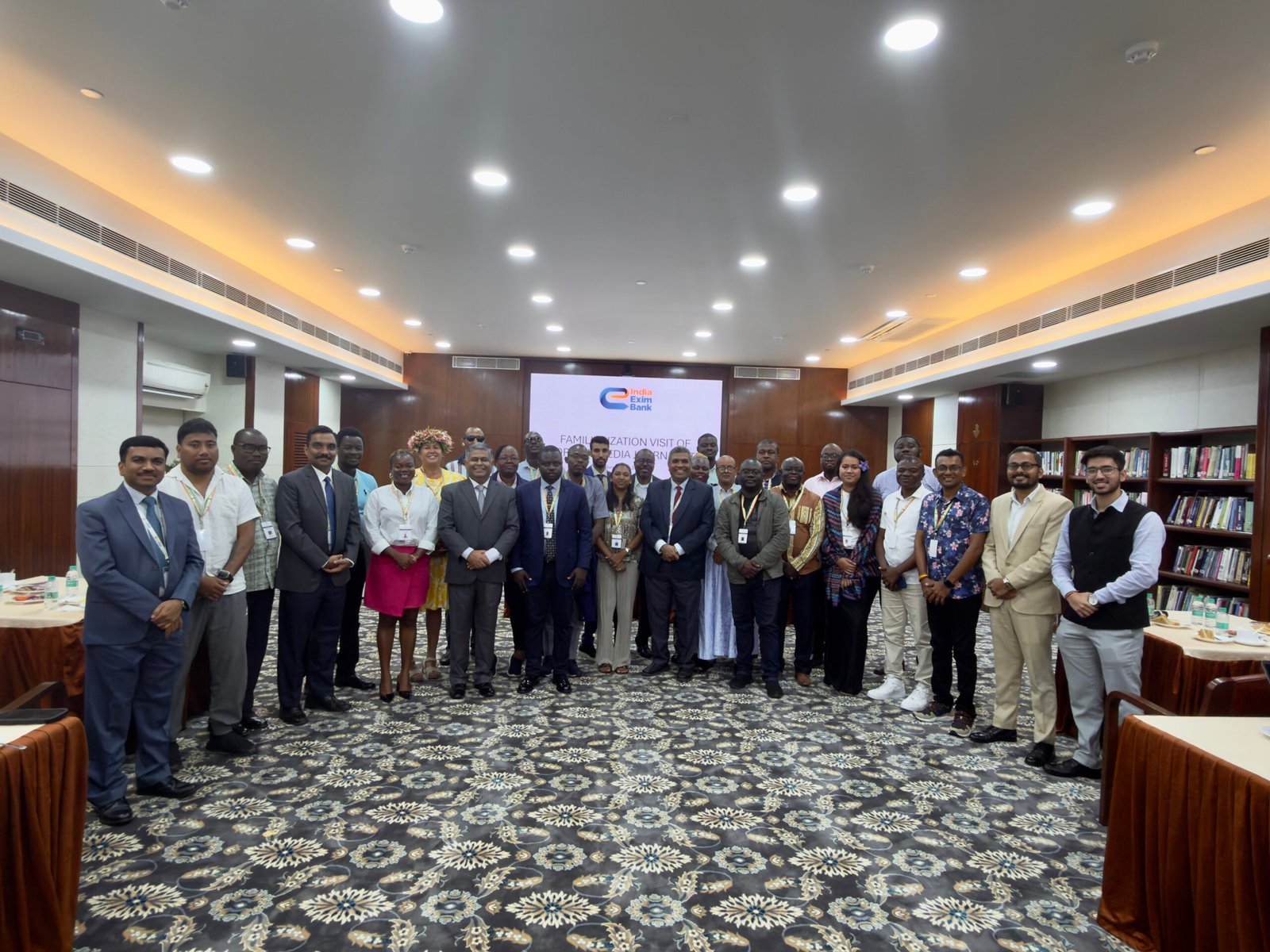
A high-powered delegation of 27 journalists from West Africa, Central Africa and Pacific Oceania on Monday, January 19, 2026, paid a familiarization visit to the Export-Import Bank of India (India Exim Bank) at the Centre One Building, Floor 21, World Trade Centre Complex, Cuffe Parade, Mumbai. The engagement formed part of a structured international media exposure programme designed to strengthen professional knowledge of development finance, international cooperation frameworks, and India’s growing partnerships with friendly countries across the Global South.

Hosted under the theme “Familiarization Visit of Foreign Media Journalists,” the programme brought visiting media professionals into direct engagement with senior officials of India Exim Bank—India’s premier export finance institution that supports trade growth, export promotion, overseas project financing, and development cooperation through targeted financial instruments.
Participants described the visit as a rare and high-impact opportunity for journalists to gain direct insight into the operations of a major international finance institution and better interpret complex economic and policy frameworks for public-interest reporting in their home countries.
Among the visiting delegation were prominent Sierra Leonean media practitioners, including Alhaji Manika Kamara, President of the Sierra Leone Association of Journalists (SLAJ); Amin Kef Sesay (Ranger), Managing Editor of The Calabash Newspaper; and Thomas Dixon, Managing Editor of The New Age Newspaper.
The Sierra Leonean representatives joined colleagues from multiple countries across Africa and the Pacific, reflecting the international scope of the programme and the growing recognition of the media’s role in shaping public understanding of development-oriented partnerships.
During the interactions, delegates noted that the exposure tour was strategically significant, particularly for journalists reporting on governance, development, infrastructure, and international relations. They emphasised that understanding development finance institutions is essential for accurate and balanced reportage on projects funded through bilateral credit facilities and international cooperation agreements.
The session at India Exim Bank featured in-depth presentations by senior bank officials.
T. D. Sivakumar, Chief General Manager, provided an overview of India Exim Bank’s foundation, mandate, and operational scope. His presentation offered a broad explanation of how the institution functions as a specialised export finance bank and an important instrument of India’s global economic engagement.
Kunal Gulati, Chief Manager, delivered a comprehensive presentation on the bank’s services and global footprint, highlighting practical examples of how India Exim Bank supports trade development, project financing, and long-term partnerships between India and developing countries.
Their presentations helped visiting journalists understand the bank’s mechanisms for supporting trade and development—particularly through credit systems and structured financing arrangements that facilitate sustainable investments in partner countries.
India Exim Bank is India’s leading financial institution dedicated to promoting and financing the country’s international trade and cross-border investment. It was established under the Export-Import Bank of India Act, 1981, and commenced operations in March 1982.
Headquartered in Mumbai, Maharashtra, the bank is wholly owned by the Government of India and operates as a specialised development finance institution supporting India’s external economic strategy. Its creation responded to the need for a dedicated institution capable of providing long-term financing solutions and advisory services that conventional commercial banks may not fully provide—especially for international trade and overseas project development.
During the engagement, the journalists were briefed on India Exim Bank’s core services, including financial assistance and advisory support designed to help Indian businesses expand internationally while enabling partner countries to access concessional credit for development.
Officials explained that the bank provides a wide range of financing tools, including:
- Export Credits, including both pre-shipment and post-shipment financing for exporters
- Lines of Credit (LoCs) extended to overseas governments and financial institutions to facilitate imports of Indian goods and services
- Project Finance for Indian companies executing overseas projects or setting up export-oriented units
- Overseas Investment Finance to support Indian equity investments in foreign joint ventures and wholly owned subsidiaries
- SME Financing, with tailored products and advisory support for small and medium enterprises to access international markets
In addition to financial support, India Exim Bank plays a strong advisory role through:
- Market research and trade studies that assist businesses and policymakers to identify opportunities
- Risk management services to mitigate trade-related risks such as political risk, credit risk, and non-payment exposure
- Promotional initiatives, including workshops, trade fairs, research publications, and competitiveness support programmes
A major focus of the programme was strengthening journalists’ understanding of how development finance operates in real-world settings—especially in emerging economies where infrastructure expansion and public service investment remain pressing priorities.
India Exim Bank officials emphasised that financing solutions such as Lines of Credit are often structured around national development goals, linking capital support to areas that improve livelihoods and build long-term economic resilience.
Journalists were introduced to how Exim Bank’s interventions contribute to economic growth through:
- Trade finance and export support
- Structured project export financing
- Advisory services for investment promotion
- Development cooperation tools that support priority sectors
Officials highlighted that development finance is not simply about lending, but about enabling systems that lead to sustainable national progress through infrastructure, access to services, trade expansion, and institutional strengthening.
The presentations outlined key sectors that India Exim Bank supports globally, particularly in developing partner countries. These include:
- Agriculture and irrigation
- Water supply and sanitation systems
- Energy and power development
- Transport and infrastructure improvement
- Telecommunications and ICT expansion
- Healthcare and pharmaceuticals
- Education and capacity building
- Industrial growth and manufacturing development
These areas were described as essential pillars of long-term national development because they directly shape citizens’ quality of life and expand opportunities for trade, investment, and employment.
Delegates noted that for African and Pacific nations, such development-focused financing arrangements can make a significant difference by helping governments and institutions build and expand services in underserved communities.
A key highlight of the engagement was the emphasis placed on India’s long-standing commitment to South–South cooperation, where development support is framed around partnership, shared priorities, and mutual benefit.
Officials explained that India Exim Bank plays a strategic role in India’s economic diplomacy by supporting development projects across Africa, Asia, Latin America, and the Pacific, with financing arrangements that encourage trade relations and strengthen long-term collaboration.
For the visiting journalists, the engagement offered a clearer connection between international policy frameworks and the realities of development on the ground—showing how financing cooperation can translate into improved public utilities, increased trade opportunities, and wider economic transformation in partner nations.
Africa was highlighted as one of the most significant regions for India Exim Bank’s trade and development engagement. The bank has supported many projects across the continent through:
- Government-backed Lines of Credit
- Project export financing
- Development partnerships between India and African states
In several African countries, Exim Bank-backed projects have supported national infrastructure, expanded rural electrification, improved water access, increased agricultural productivity, and strengthened technology connectivity.
For countries like Sierra Leone, such financing interventions have contributed to key sectors including agriculture support, water and sanitation development, energy improvements, and ICT expansion—strengthening long-term development goals.
Beyond technical presentations, the programme was marked by strong interaction between the visiting journalists and Exim Bank officials. Delegates engaged the officials on issues such as:
- How development projects are selected and prioritised
- How financing agreements are structured
- Sustainability and long-term project viability
- Accountability, transparency, and monitoring mechanisms
- Risk management in trade and development financing
The interactive session concluded with a lively questions-and-answers segment that participants described as one of the most valuable moments of the visit, allowing journalists to clarify concepts and deepen their understanding through direct engagement.
Observers said the exchange was timely and necessary at a time when global development discussions increasingly demand stronger media literacy on financial institutions, international agreements, and the policy processes behind major investments.
The visit also reflected a growing international recognition that journalists play a major role in ensuring public understanding of development finance initiatives. As international partnerships expand and new infrastructure projects emerge, accurate reporting becomes essential for:
- Public accountability
- Citizen awareness and engagement
- Informed national dialogue
- Strengthening transparency around international agreements
Organisers of the programme said the exposure tour was designed to improve the depth and quality of media reporting on development finance while helping foreign journalists understand India’s institutional approach to global cooperation.
The delegation’s presence in Mumbai also reflected the broader importance of people-to-people engagement as a pillar of diplomacy—bringing journalists closer to the institutions shaping development outcomes across regions.
The Mumbai engagement formed part of a wider familiarization tour designed to expose foreign journalists to India’s major institutions, development strategy, and policy priorities. Delegates are expected to return to their home countries with improved insight, stronger professional capacity, and renewed ability to report on international cooperation with balance, clarity, and accuracy.
For many participants, the India Exim Bank session was more than a formal institutional engagement—it was a practical learning opportunity that revealed how development funding influences national projects and impacts everyday lives.
The visit ended with renewed appreciation from the delegation for India’s openness in promoting international engagement and institutional learning. Many participants described the programme as a valuable platform for professional growth and international understanding.
As development partnerships continue to influence economic transformation across Africa and the wider Global South, institutional engagements such as the India Exim Bank familiarization visit remain important in strengthening cooperation, improving information exchange, and supporting responsible journalism that advances informed public discourse.
The Export–Import Bank of India (India Exim Bank) was widely described during the engagement as a key pillar in India’s financial system—supporting exports, promoting trade competitiveness, and expanding development cooperation through strategic financing instruments, advisory services, and long-term partnerships.