
By Alvin Lansana Kargbo
The Kids Advocacy Network, in collaboration with the United Nations Development Programme (UNDP), on Thursday 11 December 2025 held a national symposium on technology-facilitated gender-based violence in schools and universities, along with the adaptation of a new electronic monitoring platform. The event, hosted at the Multipurpose Hall of Fourah Bay College, Freetown, centred on the theme: “Unite! End Digital Violence Against All Women and Girls.” It brought together representatives from Government Ministries, university administrations, student bodies, civil society organisations, development partners and young people from across the country, all committed to discussing the growing impact of digital technology on safety and wellbeing.

Executive Director of the Kids Advocacy Network, Edmond Alim Fornah, highlighted the dual influence of digital platforms in modern society, noting that while tools such as Facebook and WhatsApp have improved communication, they are increasingly being misused in ways that disproportionately harm women and girls. He said the symposium aimed to advance a national conversation on responsible and productive technology use and referenced an online policy created by the organisation to guide safer digital engagement among its members and their families. He further disclosed that the Network would soon launch a new tool designed to draw attention to responsible online behaviour and support the creation of healthier digital communities. He thanked Government representatives and the university administration for supporting what he described as a crucial national dialogue.
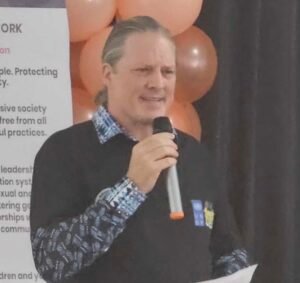
Deputy Resident Representative of UNDP in Sierra Leone, Kelvin Petrini, echoed the need for shared responsibility in building a safe and empowering digital environment. He observed that the rise in internet and social media use had increased opportunities for learning and connection, but had also exposed young people to harassment, blackmail, manipulation and coercion, with young women being most affected. He criticized the practice of all-male panels, describing them as non-inclusive and damaging to perceptions of leadership. Kelvin Petrini reaffirmed UNDP’s zero-tolerance stance on sexual exploitation, abuse and harassment, and commended Government progress through the Sexual Offences Act and the Gender Equality and Women’s Empowerment Act. However, he stressed that laws must be matched by strong enforcement, community action and responsible digital citizenship.
President of the National Union of Sierra Leone Students, Fiona Ngima, said gender-based violence discussions must reflect the realities of the digital age, noting that online spaces now shape identity, professional interactions and public engagement. She spoke of her own experiences navigating online visibility, explaining that while the internet offers opportunities for advocacy and advancement, it also enables rumour-mongering, personal attacks and targeted abuse. She urged students and the wider public to practice responsible digital conduct and work collectively toward safer online spaces for women and girls.
Minister of Technical and Higher Education, Dr. Haja Ramatulai Wurie, delivered the keynote address, describing technology-facilitated gender-based violence as one of the most urgent threats facing young people today. Citing findings from a recent perception survey conducted by the Kids Advocacy Network, she noted rising cases of non-consensual image sharing, sextortion, impersonation, cyber harassment, online coercion and the misuse of digital content. She warned that those forms of abuse erode confidence, disrupt learning and undermine long-term wellbeing. Dr. Haja Ramatulai Wurie stressed the responsibility of educational institutions to remain safe spaces grounded in empowerment and intellectual freedom and called on participants to foster cultures of respect and accountability both online and offline. She reminded young people that small individual actions, including refusing to circulate harmful content or supporting victims, could bring meaningful change.
The Minister also underscored the value of digital tools for reporting violations and enhancing accountability. She encouraged attendees to view the symposium as an opportunity to learn, reflect and help shape a more secure and student-centred digital environment. She reaffirmed her Ministry’s commitment to ensuring that students across Sierra Leone can learn and thrive in both physical and digital spaces.
The symposium ended with a unified call for continued collaboration among Government institutions, civil society, development partners and young people to eliminate digital violence against women and girls and promote responsible technology use nationwide.