
By Alvin Lansana Kargbo
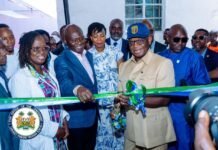
Marampa Mines Limited, a leading iron ore producer in Sierra Leone, showcased a major show of regional cooperation and industrial ambition on Tuesday, 3rd June 2025, as it welcomed Vice President Dr. Mohamed Juldeh Jalloh and Senegalese Prime Minister Ousmane Sonko to its operational site in Lunsar, Northern Province.

The visit, which was part of a two-day working mission by the Senegalese leader , is being hailed as a major step toward industrial integration between West African nations, with a focus on leveraging shared resources to advance mutual development.
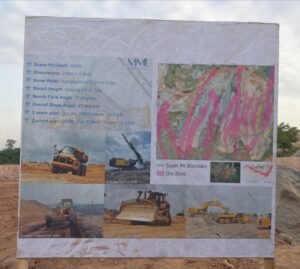
Marampa Mines Limited has emerged as a model of operational excellence since restarting its mining activities in 2021. With a focus on producing high-grade iron ore concentrate (65.3% Fe) and investing in modern mining infrastructure, the company stands at the center of Sierra Leone’s economic transformation.
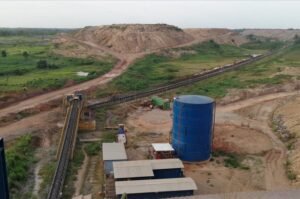
The delegation, which included Deputy Minister of Mines and Mineral Resources, Umaru Napoleon Koroma and local Paramount Chiefs from Marampa and Maforki chiefdoms, was given a guided tour of the site’s core facilities, including a newly commissioned primary crusher with a capacity of 3,000 tons per hour and the final concentrate production plant.
Aminata Kamara, Vice President of Corporate Affairs at Marampa Mines, emphasized the company’s commitment to working in harmony with host communities.
“We are proud to be a part of the Marampa and Maforki Chiefdoms. The progress we’ve made would not be possible without the consistent support of our local stakeholders,” she said.
Operations Director, Basudeb Datta, detailed the company’s advancements in mining technology, stressing its adherence to international best practices.
“It is an honor to showcase how we’ve built a responsible and productive mining operation. Our iron ore concentrate is internationally competitive and reflects Sierra Leone’s growing role in the global mineral market,” Basudeb Datta noted.
The Vice President of Sierra Leone, Dr. Mohamed Juldeh Jalloh in addressing both delegations, emphasized the strategic purpose of intergovernmental cooperation.
“This is more than a diplomatic visit,” he said. “It is an opportunity to align the strengths of two nations. Sierra Leone has vast mineral resources, iron ore, bauxite, rutile while Senegal possesses natural gas and stronger energy infrastructure. Together, we can build a new African industrial pathway.”
He further noted that the goal was not simply to extract and export, but to process resources regionally for value addition, job creation and long-term growth.
“Instead of sending iron ore thousands of miles to Asia, we can process it right here in West Africa. That is what today’s visit symbolizes, a blueprint for how we transform raw potential into real prosperity,” Dr. Mohamed Juldeh Jalloh explained.
“We are entering a new era where our economies are no longer isolated. We are creating a shared space of opportunity and the Marampa Mines visit is a shining example of what this future can look like,” the Vice President concluded.
Jasmine Robert, Vice President and Head of Energy Solutions at Marampa Mines and a Board Executive, provided context for the Senegalese delegation’s interest in Sierra Leone’s mineral sector.
“Smelting iron ore into steel requires tremendous energy, more than what Sierra Leone currently generates. Senegal, with its abundant natural gas, is planning to develop a regional hub for iron and steel production. That makes them a natural partner,” she said.
Jasmine Robert stressed that hosting the Senegalese Prime Minister was a proud moment for Marampa Mines and a clear recognition of the company’s standing in Sierra Leone’s mining industry.
“We are honored to showcase the Marampa model to the wider West African region. This is how partnerships for development are built with shared vision and mutual benefit.”
The high-level visit not only showcased Marampa Mines’ achievements but also highlighted Sierra Leone’s commitment to transforming its mineral wealth into sustainable economic growth. The collaboration with Senegal could serve as a regional model for how natural resources, when managed responsibly and strategically, can fuel industrial development across Africa.