
By Foday Moriba Conteh
As part of the global observance of World Breastfeeding Week, celebrated annually from August 1st to 7th, the Ministry of Health, through its Directorate of Food and Nutrition, has held a Press Briefing to highlight the importance of breastfeeding and galvanize national support around the 2025 theme: “Prioritizing Breastfeeding, Creating Sustainable Support Systems.”

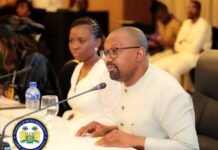
The event, which took place on Wednesday, August 6th at the Ministry’s Conference Room in the Youyi Building, Freetown, brought together members of the press, development partners and health experts to raise awareness about the crucial role breastfeeding plays in promoting infant and maternal health.
In her remarks, Millicent Mamie Allie, Chief Nutritionist at the Ministry of Health, highlighted the life-long benefits of breastfeeding to both mother and child, emphasizing that breastfeeding is not just a health issue but a national development priority.
“All of you who are successful today, our journalists, professors, professionals, many of you are here because you received proper breastfeeding,” Millicent Mamie Allie said. “It impacts cognitive development, strengthens immunity and establishes a bond between mother and child that lasts a lifetime.”
She explained that the first milk, colostrum, acts as the baby’s first immunization, providing vital nutrients and protection against infections. Millicent Mamie Allie stressed the importance of exclusive breastfeeding for the first six months and continued breastfeeding up to two years.
Citing her own experience as a mother who breastfed her child for over a year, she addressed misconceptions, particularly among younger women, who often avoid breastfeeding due to cosmetic concerns. “If you’re not ready to breastfeed, you’re not ready to be pregnant,” she said firmly, urging young mothers to prioritize their child’s health above societal pressures.
Millicent Mamie Allie also praised the Government’s policy strides, including the extension of maternity leave from 12 to 14 weeks under recent gender equality legislation. “We are pushing for more because our children are our future and they deserve the best start in life,” she noted.
She called on men to step up. “Support systems, start the moment a woman says she has missed her period,” she said. “Fathers must provide emotional, nutritional and financial support to ensure healthy pregnancies and strong babies.”
Millicent Mamie Allie concluded by stressing that breastfeeding is a shared responsibility. “It’s not just a women’s issue. It’s a national issue. And together we must create the systems that make breastfeeding not only possible but sustainable.”
Commenting on behalf of Civil Society Organizations, Umu Hawa Jalloh, Program Director at Helen Keller International (HKI), emphasized that breastfeeding is not just a health matter but a national development issue rooted in both religious and scientific importance.
“Even the Quran and the Bible endorse breastfeeding. If God himself ordained it why aren’t we fully committed to it?” she asked, stressing that breastfeeding is essential to child survival, growth and long-term food security.
Umu Hawa Jalloh called breastfeeding one of the most sustainable and cost-effective methods of improving child health, reducing healthcare costs and securing long-term nutritional outcomes in communities. She acknowledged progress made such as a national breastfeeding rate of 52% but stressed that much more need to be done to expand awareness and support.
In her closing remarks, Umu Hawa Jalloh urged all sectors; Government, private employers, communities, families and religious leaders to see breastfeeding as a shared responsibility. “This is not just a health issue. It is everybody’s business,” she said. “Let’s prioritize breastfeeding to secure a healthier and more sustainable future for our children.”
UNICEF Deputy Representative, Liv Elin Indreiten, stressed that breastfeeding is not only a maternal and child health issue but a societal priority that must be supported across all levels; homes, communities, workplaces and national institutions.
“This year’s theme, ‘Prioritize Breastfeeding, Create Sustainable Support Systems’, is a powerful call to action,” Liv Elin Indreiten stated. “It reminds us to go beyond awareness and build the structures that truly support mothers to breastfeed prioritizing skilled health workers, peer counselors, workplace policies and family involvement.”
Liv Elin Indreiten praised Sierra Leone’s achievement in meeting the World Health Assembly’s 2025 target of 50% exclusive breastfeeding, calling it a significant milestone made possible through Government leadership, partner collaboration and the unwavering commitment of mothers. However, she warned that reaching the 2030 global target of 75% will require sustained efforts across three pillars:
- Prioritizing breastfeeding through strong public health policies like the 2021 Breast Milk Substitute Act.
- Creating long-term support systems for mothers from health facilities to family structures.
- Promoting sustainability, highlighting that breastfeeding is an eco-friendly practice that supports climate resilience.
“Breastfeeding supports brain development, strengthens immunity and forms a lasting bond between mother and child. For mothers, it reduces the risk of illnesses and promotes recovery after childbirth. For society, it’s a smart investment in the nation’s future,” she said.
She concluded by calling on all Sierra Leoneans families, health workers, employers and policymakers to rally behind the national breastfeeding agenda. “Together, let’s work to reach the 2030 target of 75% exclusive breastfeeding. The health and future of our children depend on it.”
In his keynote address, Deputy Minister of Health, Dr. Charles Senessie, highlighted the critical role breastfeeding plays in improving child survival, strengthening the immune system and preventing diseases. He acknowledged the support of development partners, NGOs and the media in championing health and nutrition across the country.
Dr. Charles Senessie highlighted the Government’s strides, including a dramatic reduction in maternal mortality, digital tracking of pregnancies through platforms like Kumala and BreastTrack, and the introduction of breastfeeding-friendly spaces in healthcare facilities.
He praised the 2021 Breastfeeding Act and the 2022 Gender Equality and Women’s Empowerment Act, which expanded maternity leave from 12 to 14 weeks as key policies promoting breastfeeding. Stressing the importance of exclusive breastfeeding for the first six months of life, he called for collective national effort, involving men, workplaces and communities, to ensure that mothers receive adequate time and support to breastfeed successfully.
Dr. Charles Senessie concluded by urging all sectors to align efforts in creating a sustainable support system for breastfeeding mothers, describing the initiative as not just a weekly observance, but a year-round priority.