By Amin Kef (Ranger)
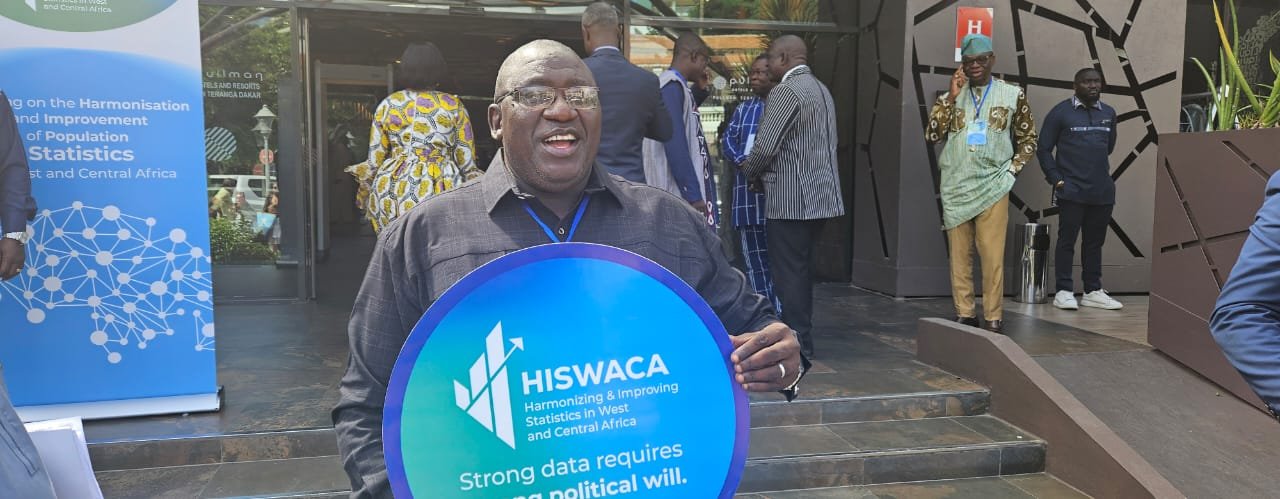
The Director General of Sierra Leone’s National Civil Registration Authority (NCRA), Mohamed Mubashir Massaquoi, delivered a powerful keynote address at the High-Level Policy Engagement and Advocacy Meeting on the Harmonization and Improvement of Statistics in West and Central Africa (HISWACA). The event, held from July 9 to 11, 2025, in Dakar, Senegal, coincided with the celebration of World Population Day and the launch of the 2025 State of World Population (SWoP) Report.

Organized by the United Nations Population Fund (UNFPA) West and Central Africa Regional Office (WCARO), in collaboration with ECOWAS, CEMAC, and the World Bank, the conference brought together regional leaders, statistical experts and policymakers to advance the quality and integration of statistical systems across Africa.
Speaking during Session 2 of the conference, Mohamed Mubashir Massaquoi shared Sierra Leone’s transformative journey in Civil Registration and Vital Statistics (CRVS) and Identity Management Systems under his leadership. Highlighting the country’s achievements in registering citizens and non-citizens, including children from birth, he emphasized the vital role of strong political will in creating effective, inclusive and technology-driven CRVS systems.
“Strong data requires strong political commitment,” he affirmed, while acknowledging the unwavering support of His Excellency President Julius Maada Bio. He noted that President Bio stands out across Africa for integrating development systems ranging from education and healthcare to social protection and electoral processes into a centralized CRVS and ID management framework. Mohamed Mubashir Massaquoi boldly challenged partners, including the UN, AU and ECOWAS, to identify another African leader who has demonstrated equal commitment to CRVS modernization.
Under Mohamed Mubashir Massaquoi’s leadership, the NCRA has achieved an impressive 93% national registration coverage, significantly reducing the number of unregistered persons and ensuring universal access to essential services such as healthcare, education and financial inclusion. By digitizing and modernizing civil registration services, he has made them more accessible, particularly in rural and marginalized communities, positioning Sierra Leone as a regional trailblazer in identity systems.
The Director General’s remarks also focused on the importance of Government-development partner collaboration, urging stronger cooperation to build sustainable CRVS systems. His leadership has attracted international recognition and support, fostering partnerships that continue to strengthen Sierra Leone’s CRVS and national identity infrastructure. Through interoperable data systems, the country is now a reference point for how civil registration can power national planning and drive progress toward the Sustainable Development Goals (SDGs).
Mohamed Mubashir Massaquoi’s participation in HISWACA, along with invitations to other prestigious global platforms like ID4Africa, is a testament to his growing international reputation as a champion for data systems and inclusive development. His address in Dakar not only showcased Sierra Leone’s success but also contributed to shaping the region’s statistical and identity data strategies.
The HISWACA conference concluded with renewed commitments to harmonize data systems across West and Central Africa and recognized the central role of demographic data in informing public policy and ensuring inclusive development. Mohamed Mubashir Massaquoi’s contributions reaffirmed Sierra Leone’s place at the forefront of CRVS innovation in Africa.