
Home Blog Page 76

Africell CEO Highlights MNOs’ Critical Role in Securing West Africa’s Digital Future

Chief Executive Officer of Africell Sierra Leone, Shadi Gerjawi

By Alvin Lansana Kargbo

Chief Executive Officer of Africell Sierra Leone, Shadi Gerjawi, has emphasized the indispensable role of digital infrastructure in strengthening digital sovereignty and advancing sustainable technological development across West Africa during the 18th Edition of the West Africa Internet Governance Forum (WAIGF 2026) held in Freetown.

The high-profile regional forum, officially opened on Thursday, May 14, 2026, at the Miatta Conference Centre, Youyi Building, brought together policymakers, technology experts, regulators, youth representatives, development partners and private sector actors from across West Africa to deliberate on the future of internet governance, emerging technologies and digital transformation in the region.

Speaking on behalf of Sierra Leone’s Mobile Network Operators (MNOs), Shadi Gerjawi, CEO of Africell, underscored that digital sovereignty cannot exist without strong physical infrastructure, stressing that telecommunications towers, fibre optic networks and last-mile connectivity remain the backbone of digital advancement.

Shadi Gerjawi noted that mobile network operators have made substantial investments in strengthening telecommunications infrastructure across Sierra Leone and the wider region, explaining that countries with strong digital connectivity are better positioned to compete globally while safeguarding their citizens in an increasingly digital world.

According to him, extending reliable connectivity to underserved and remote communities requires sustained investments, supportive Government policies, targeted subsidies and regulatory frameworks that encourage investment. He pointed out that despite continuous network expansion in recent years, service costs have significantly declined, making telecommunications services increasingly accessible to citizens.

The Africell CEO further emphasized that digital infrastructure alone is insufficient to drive meaningful transformation, highlighting the important role mobile operators play in digital literacy and capacity building.

He explained that telecommunications operators engage millions of people daily and therefore possess the capacity to collaborate with Governments, schools and educational institutions to equip young people with practical digital skills necessary to thrive in the digital economy.

Shadi Gerjawi also stressed the responsibility of Mobile Network Operators in ensuring secure and trustworthy digital networks, maintaining that user data protection and online safety remain essential priorities, especially for vulnerable groups.

Looking toward the future, he identified mobile money services as one of the region’s most successful financial inclusion models, urging stakeholders to deepen financial integration through expanded access to credit, savings and insurance products. He called for stronger regulatory cooperation and continuous innovation to maximize the transformative potential of digital financial services.

While commending Sierra Leone for hosting the regional forum, Shadi Gerjawi praised the country’s leadership role in advancing discussions on digital governance and internet development in West Africa.

The five-day forum commenced after the successful hosting of the West Africa School on Internet Governance, held from May 11 to 12, where experts, facilitators and fellows explored issues surrounding internet governance, artificial intelligence, cybersecurity, digital cooperation, data governance and emerging technologies.

The opening ceremony also featured strategic discussions on regional digital transformation, cybersecurity, digital inclusion and innovation, with Government officials reaffirming commitments to stronger collaboration aimed at building a secure, resilient and digitally sovereign West Africa.

WAIGF 2026 is expected to generate actionable recommendations that will shape internet governance policies, digital inclusion efforts and innovation strategies across the West African region.

Vice President Applauds President Bio’s Commitment to Inclusive Leadership and National Development

Man in a blue traditional outfit speaks at a wooden podium with a microphone, an official seal to his left and a backdrop with 'LEAD' text behind him, during an event.
Vice President, Dr. Mohamed Juldeh Jalloh

By Amin Kef (Ranger)

Vice President Dr. Mohamed Juldeh Jalloh has described President Dr. Julius Maada Bio as a bold and visionary leader whose unwavering commitment to inclusive governance, democratic accountability and human capital development continues to position Sierra Leone as a model of progressive leadership on the African continent.

Speaking on Wednesday, 13 May 2026, at the Freetown International Conference Center during the landmark Julius Maada Bio Leadership Colloquium, Vice President Juldeh Jalloh said President Bio’s leadership continues to inspire democratic reforms and inclusive national development at a time when many African nations are grappling with political and economic uncertainty.

The high-level colloquium, organized by the African Young Leadership Convergence (AYLC) as part of activities marking President Bio’s birthday, brought together African leaders, policymakers, diplomats, traditional authorities, youth representatives, women leaders and governance experts to discuss the future of leadership across the continent. Held under the theme, “Reimagining African Leadership: Courage, Accountability, Innovation and Leadership in an Era of Global Uncertainty,” the event focused on strengthening democratic governance, innovation and accountable leadership in Africa.

In his welcome remarks, Vice President Dr. Mohamed Juldeh Jalloh underscored President Bio’s determination to foster democratic accountability and inclusive governance, noting that Sierra Leone’s growing reputation on the continent reflects deliberate efforts to strengthen institutions and empower citizens through education and development initiatives.

He maintained that President Bio’s emphasis on human capital development, particularly in education and youth empowerment, demonstrates leadership committed to long-term national transformation and sustainable development.

Delivering a keynote address, President Julius Maada Bio described the colloquium as more than a ceremonial gathering, stressing that it represented a critical moment of reflection and responsibility for African leaders.

“We are here to confront a defining and unavoidable question: What kind of leadership will shape Africa’s future in this century?” President Bio stated, emphasizing the urgent need for courageous, accountable and innovative leadership capable of responding to contemporary challenges facing the continent.

President Bio asserted that Africa must take ownership of its future through decisive leadership and structural transformation, cautioning against symbolic reforms that fail to address real societal needs. According to him, leadership should not be measured by the ability to retain power, but by the transformation of institutions and improvement in people’s lives.

Reflecting on his own political journey, President Bio recounted his historic decision in 1996 to hand over power to a democratically elected civilian Government, describing the move as a demonstration of democratic conviction and responsible stewardship.

As Chairman of the Authority of Heads of State and Government of the Economic Community of West African States (ECOWAS), President Bio also highlighted the growing governance and security challenges confronting West Africa. He warned that governance failures, economic inequality and declining trust in democratic institutions continue to threaten regional peace and stability.

The President further called for stronger African integration, increased intra-African trade and a unified continental voice in global affairs, insisting that Africa must no longer remain on the margins of international influence.

Former Commonwealth Secretary-General, Baroness Patricia Scotland, commended President Bio for promoting women’s empowerment and inclusive governance, while former President of Malawi, Joyce Banda, encouraged African Governments to create more opportunities for women and young people.

The event concluded with renewed commitments from participants to promote accountable governance, inclusive leadership and democratic stability across Africa, while former Vice President Victor Bockarie Foh described the colloquium as an inspiring and historic initiative for Sierra Leone.

Orange Sierra Leone Supports SLBC with Financial Donation Following Fire Incident

Two women stand in front of SLBC banners as one hands a yellow envelope to the other during a formal exchange at a media event.

In a demonstration of its continued commitment to Corporate Social Responsibility (CSR), Orange Sierra Leone has made a financial donation to the Sierra Leone Broadcasting Corporation (SLBC) to support the institution following the recent fire incident and to contribute to national broadcasting and media development initiatives.

The donation underscores Orange Sierra Leone’s dedication to supporting national institutions and strengthening strategic partnerships that contribute to information dissemination, public awareness and national development across Sierra Leone.

As a longstanding strategic partner of SLBC, Orange Sierra Leone acknowledged the important role the national broadcaster continues to play in promoting access to information, enhancing public awareness and supporting national development efforts through responsible and effective broadcasting.

The financial support was formally presented during a brief ceremony held on Friday, 15 May 2026. The presentation was led by Orange Sierra Leone’s Chief Marketing Officer, Abdramane Kone, alongside the company’s General Secretary, Danetta Younge.

Receiving the donation on behalf of SLBC were the Director General, Josephine Kamara and Deputy Director General, Mohamed Asmieu Bah, who welcomed the support and recognized the significance of the partnership during a challenging period for the institution.

Also present at the presentation ceremony was the Chief Executive Officer of OWL Newspaper, Alhaji Dauda Bangura, who joined the Orange Sierra Leone delegation during the handing-over event.

Orange Sierra Leone reaffirmed its commitment to supporting impactful partnerships and initiatives that contribute to national development, community empowerment and the strengthening of institutions that serve the public interest. Through such interventions, the company continues to position itself as a responsible corporate institution committed to supporting Sierra Leone’s growth and development agenda.

Orange SL Engages Prince of Wales Pupils on Cyberbullying, Excessive Screen Time

Outdoor school assembly with hundreds of students listening to a speaker, banners on both sides, and a partially built brick building in the background.
Orange SL sensitizes pupils of Prince of Wales school on cyberbullying and excessive screen time

By Ibrahim Sesay 

Orange Sierra Leone has, on Friday, May 15, 2026, continued its “For Good Connections” campaign with a sensitization session for pupils of Prince of Wales School aimed at promoting responsible digital use among young people.

The awareness session focused on educating Junior Secondary School (JSS) pupils on cyberbullying, its forms, effects and prevention, as well as excessive screen time, its impact on students and measures that can be taken to reduce it.

Speaking to journalists, Margaret Sia Mondeh, Firm Executive, Orange Foundation Sierra Leone who serves as ⁠one of the facilitators, said the initiative seeks to promote a healthy relationship between young people and mobile technology.

“As you know, Orange is a mobile and telecommunication company and since we deal with mobile devices and people we decided there should be a proper and good connection between people and their devices,” she said.

Margaret Sia Mondeh explained that the campaign targets JSS pupils because many of them begin to misuse mobile phones as they transition into secondary school, often leading to excessive screen use and online misconduct.

“Sometimes they use those devices excessively and also engage in some forms of cyberbullying. They think they can say anything online because they see themselves as matured. That’s why we’re creating the awareness,” she added. Margaret Sia Mondeh further disclosed that the campaign is currently targeting eight schools within Freetown, with plans to expand nationwide after assessing its impact.

According to her, pupils of Prince of Wales and St. Joseph’s Convent Secondary School demonstrated a fair understanding of the subject areas during the interactive session.

“We’ve got very great feedback from the pupils. Some of them already know about the forms of cyberbullying but they still go ahead and do exactly what they are not supposed to do,” she noted.

She also revealed that the campaign will climax on June 6 with a football and drama competition among the participating schools, with cash prizes to be awarded to winners.

Meanwhile, some of the pupils described the session as impactful.

Alfred Sesay, a JSS 3 pupil, said the engagement helped him understand the importance of balancing screen time with other activities. “This awareness has really helped us understand that spending too much time on phones and social media can affect our studies and even our health. I have learned that it is important to balance screen time with reading, sports and other activities,” he said.

Samuel Kamara, a JSS 2 pupil, said the program changed his perception of cyberbullying and online behavior. “Before today, many of us did not take cyberbullying seriously. Today, we learned that the internet should be used responsibly. I will share these lessons with my friends and encourage them to use social media in a positive way,” he stated.

The awareness session concluded with an electrifying musical performance by Leonus Di Genius, which entertained pupils and added a joyful climax to the event.

Crowd of students and staff lining a school building’s exterior, watching a long orange-and-white banner or float held between them. Group of people outdoors around a table; a woman in an orange safety vest hands a document or item to a man in a white shirt while others watch, some in formal attire including a pink dress, in a campus or building courtyard setting. Group of students gathered outside a school around a tall curved banner with white, orange, and green sections during an event.

Sierra Leone Hosts WAIGF 2026 to Advance Internet Governance, Digital Inclusion and Regional Innovation

A woman in a blue patterned dress speaks into a microphone at a podium on a stage with a colorful backdrop behind her.
Minister of Communication, Technology and Innovation, Salima Bah

By Alvin Lansana Kargbo

The Ministry of Communication, Technology and Innovation officially opened the 18th Edition of the West Africa Internet Governance Forum (WAIGF 2026) on Thursday, May 14, 2026, at the Miatta Conference Centre, Youyi Building in Freetown.

The regional forum commenced following a series of engagements focused on digital governance, emerging technologies and youth inclusion across West Africa.

Ahead of the official opening, the West Africa School on Internet Governance was convened on May 11–12 at the Miatta Conference Centre. The program brought together fellows, experts and facilitators from across the region to deliberate on internet governance, artificial intelligence, cybersecurity, digital cooperation, data governance and other emerging technologies.

The opening day featured four parallel workshops and strategic discussions addressing key issues influencing internet governance and digital transformation in West Africa. Organizers described the forum as a critical platform for policy dialogue, regional collaboration and cooperation on technology and digital development.

Speaking on behalf of Sierra Leone’s Mobile Network Operators (MNOs), Shadi Gerjawi, CEO of Africell, emphasized that digital sovereignty is fundamentally built on physical infrastructure.

He highlighted significant investments made by MNOs in telecommunications towers, fiber networks and last-mile connectivity; describing them as the foundation upon which digital initiatives depend. According to Shadi Gerjawi, countries with robust connectivity are better positioned to compete globally and safeguard their citizens.

The Africell CEO stressed that expanding connectivity to underserved communities requires sustained investment, supportive Government policies, targeted subsidies and investment-friendly regulatory structures. He noted that network expansion has accelerated in recent years while service prices have significantly declined.

Shadi Gerjawi emphasized that infrastructure alone is insufficient. He described MNOs as critical partners in digital literacy noting that operators engage millions of citizens daily and can collaborate with Governments and educators to equip young people with relevant digital skills.

He underscored the responsibility of MNOs to ensure secure and trustworthy networks that protect user data and promote safe digital experiences, particularly for vulnerable populations.

Looking ahead, Shadi Gerjawi identified mobile money as a proven financial inclusion model and called for deeper financial integration through credit, savings and insurance services. He urged continued regulatory partnership and innovation to unlock that potential and praised Sierra Leone’s leadership in hosting the forum.

At the ceremony, Amara Brewah, Director General of National Telecommunications Commission (NaTCA), emphasized that digital sovereignty should not be equated with isolation.

Instead, he framed it as strategic participation in the global digital economy on fairer terms, ensuring Africa maintains both voice and influence in shaping the future of the internet.

Amara Brewah reaffirmed NaTCA’s commitment to regional and international collaboration, highlighting four focus areas:

  • Strengthening connectivity
  • Advancing innovation
  • Promoting inclusion
  • Supporting economic growth

She called on the forum to move beyond dialogue and serve as a catalyst for coordinated regional action toward a secure, resilient and sovereign digital future for West Africa.

In her keynote address, the Minister of Communication, Technology and Innovation emphasized cybersecurity, regional integration and digital equity as central pillars of West Africa’s digital transformation.

The Minister stressed that no African country can tackle digital economy challenges alone. She advocated for aligned governance frameworks and a unified regional approach, envisioning a single digital market where entrepreneurs can seamlessly conduct cross-border e-commerce within the region.

Referencing the example of the European Union, she highlighted the benefits of collective movement as a bloc to strengthen smaller and larger economies alike.

The Minister called for innovative solutions to modern challenges, noting the region’s limited data center capacity relative to its population. On artificial intelligence, she urged West Africa to move beyond being consumers of AI technologies and instead co-design and influence them.

She proposed exploring regional collaboration models, including Data Embassy frameworks, to develop AI-enabled data centers and ensure local languages are reflected in global language models.

While commending mobile operators for expanding coverage, the Minister urged them to make internet data more affordable to ensure meaningful access.

Addressing global tech platforms such as Meta, she raised concerns about misinformation and deep-fakes. She called for increased investment in local content moderation, language-sensitive AI models and the hiring of local moderators to strengthen responsible platform governance.

The Minister also highlighted the monetization gap facing African content creators. Despite generating significant global engagement, many lack access to fair revenue opportunities. She called for mechanisms that ensure African creators can equitably benefit from their digital contributions.

As Chair of ECOWAS, Sierra Leone, she said, remains committed to collaborative progress in advancing the region’s digital agenda.

The five-day forum aims to generate actionable outcomes that advance internet governance, digital inclusion and innovation across West Africa.

In closing, the Minister welcomed delegates to experience Sierra Leone’s culture and hospitality, thanking sponsors, partners, the YAIJF Secretariat, ECOWAS and the organizing team for their contributions to the successful hosting of WAIGF 2026.

Shadi Gerjawi, CEO of Africell

UN Agencies, Government Ministries Monitor Ready Salone Project at Central University

Group of diverse people standing together for a photo in front of a gray building with red doors and external staircases, outdoors on a paved area, suggesting a community event or gathering.

By Ibrahim John Sesay

Central University has hosted a high-level monitoring delegation comprising United Nations agencies and key government ministries to assess progress on the ongoing Ready Salone Project, an initiative focused on youth skills development and innovation-led learning. The event took place on Friday, May 8, 2026, at the Central University campus in Mile 91, Tonkolili District.

The visit brought together representatives from the United Nations in Sierra Leone, the United Nations Development Programme (UNDP), UNICEF, the Ministry of Youth Affairs, the Ministry of Planning and Economic Development, the Ministry of Communication, Technology and Innovation, the Ministry of Gender and Children’s Affairs, and the Ministry of Trade and Industry, alongside officials from the International Trade Centre (ITC) and development partners.

Implemented through the International Trade Centre (ITC) with support from the Korea International Cooperation Agency (KOICA), the Ready Salone Project continues to position itself as a flagship youth empowerment programme in Sierra Leone.

At the core of the initiative are two practical training programmes: Smart Agriculture and Digital Content Creation, both of which are currently being delivered at Central University to enhance employability and entrepreneurship among 200 young people.

During the monitoring exercise, the delegation toured the Smart Agriculture Farm and Digital Content Creation Hub, observing students actively engaged in modern agricultural practices, agribusiness innovation, media production, video editing, and graphic design.

Speaking at the event, the National Coordinator of the International Trade Centre (ITC), Siaka Kawa, described the project as a transformational platform for young people across the country.

“The Ready Salone Project is not just training; it is economic transformation in action,” he said. “What we are seeing here at Central University proves that young people can drive innovation when given the right tools and environment.”

He further noted that the integration of agriculture and digital skills reflects global trends in job creation and entrepreneurship.

The UN delegation, led by the UN Resident Coordinator, Seraphine Wakana, expressed strong satisfaction with the progress of the project and the quality of student output. She commended the initiative, noting that the visit provided valuable insights for development programming.

“We have learned a great deal from the Smart Agriculture model here,” she stated. “The technologies and approaches demonstrated will certainly inform how we support similar initiatives across Sierra Leone.”

She emphasized that youth-driven innovation remains central to achieving the Sustainable Development Goals in the country.

In her statement, the Minister of Planning and Economic Development (MOPED), Kenyeh Barley, highlighted the alignment of the project with national priorities. She praised Central University and its partners for complementing government efforts.

“This initiative is fully aligned with our human capital development agenda,” she said. “It demonstrates what is possible when academia, government, and development partners work together.”

She added that such programmes are critical to reducing youth unemployment and expanding digital literacy nationwide.

The Minister of Gender and Children’s Affairs (MOGCA), Dr. Isata Mahoi, described the joint visit as highly insightful. She stated that the project reflects the practical implementation of empowerment policies.

“This joint visit has been an eye-opener,” she said. “It complements government efforts to ensure young people, especially women, are actively included in national development.”

She encouraged the expansion of similar programmes to more institutions across the country.

The Vice Chancellor of Central University, Prof. Bob Karankay Conteh, expressed gratitude to all partners supporting the initiative. He acknowledged the collaborative effort behind the project’s success.

“We are deeply appreciative of ITC, KOICA, UN agencies, and government ministries for believing in our vision,” he said. “Central University is committed to practical, innovation-driven education.”

He noted that the university aims to scale up the Smart Agriculture and Digital Content Creation training models in the coming academic cycles.

Students participating in the programme also shared testimonies on its impact. Mariatu Kargbo, a beneficiary of the Digital Content Creation programme, explained how the training has reshaped her academic direction and future ambitions.

“The Ready Salone Project has changed how I see education,” she said. “I can now edit videos and create flyers for clients.”

She added that the hands-on experience has increased her confidence in pursuing entrepreneurship after the six-month diploma programme.

“I am deeply grateful for the stipend we receive every month to motivate us to learn,” she stated.

The delegation observed Smart Agriculture techniques, structured farming systems, irrigation methods, and digital content created by students under supervision.

Officials noted that the integration of practical learning with innovation reflects a shift from theory-based to skills-based education. As the monitoring visit concluded, stakeholders reaffirmed their commitment to sustaining and expanding the initiative.

The Ready Salone Project continues to be viewed as a strategic model for youth empowerment, innovation, and sustainable development in Sierra Leone.

QNET Warns Sierra Leoneans to Beware of Unauthorized Persons Misrepresenting the Company

QNET and TRANSBLUE Limited logos shown side by side, separated by a vertical divider.

QNET, an international wellness and lifestyle company, is aware of the publication by Sierraloaded.sl, which narrated the account of an individual who was allegedly scammed of Le 18,000,000 in 2018. The article falsely and inaccurately attributed the individual’s narration to a fraudulent scheme linked to QNET. QNET dissociates itself from this allegation and advises people to be vigilant when others offer them fake investment, employment or travel opportunities in exchange for money.

Talking about QNET’s commitment to protecting the public and consumers, Biram Fall, Deputy Chairman of QNET for Sub-Saharan Africa, said: “We empathise with those who have unfortunately fallen victim to the activities of criminals who deliberately scam people of their hard-earned money. QNET is taking proactive steps to protect the public and consumers from continuing to fall victim to those who misuse and misrepresent QNET’s name and products to deceive innocent people.”

We will continue to provide authentic information about our business to the public so that it can help people understand how fraudsters misuse the company name and how to avoid them. QNET does not offer investment schemes, jobs abroad or visas in exchange for money. The company does not coerce people into its business by kidnapping or trafficking them.”

According to Biram Fall, the simplest way to identify these scammers is by their making false promises of employment, visas or investments and asking victims to travel to other countries for these fake opportunities, sometimes using QNET’s name.

QNET recently held a media webinar that brought together about 25 experienced journalists from various media organisations in Sierra Leone to deepen their understanding of the company’s efforts to combat misinformation and misuse of its name and products.

Across Sub-Saharan Africa, QNET is intensifying its awareness campaigns through its “QNET Against Scams” initiative, broadcast on television, radio, online media, social networks and billboards, as well as in print media.

The company is also strengthening its collaboration with security institutions and working on replicating its exemplary partnership with Ghana’s Economic and Organised Crime Office (EOCO) in other parts of West Africa to effectively combat these fraudulent practices.

The public is advised to verify any opportunities claiming to be linked to QNET by contacting the company directly via its compliance service on WhatsApp at +233 2566 30005 or by email at network.integrity@qnet.net.

QNET is a prominent lifestyle and wellness company that uses a direct selling business model to offer a wide selection of exclusive products that enable individuals to embrace a healthier, more balanced life.

Since 1998, QNET’s innovative products and e-commerce-driven business model have helped build a global community of satisfied customers and micro-entrepreneurs, who are driven by the mission of RYTHM – Raise Yourself To Help Mankind. Popular product brands offered by QNET include the Bernhard H. Mayer range of luxury watches and jewellery, HomePure range of home care products, the Amezcua wellness range, Physio Radiance personal care range and QVI branded holiday packages.

QNET proudly holds memberships in the Direct Selling Association in several countries, the Hong Kong Health Food Association, the Health Supplements Industry Association of Singapore and more. QNET is also active in several global sports sponsorships including in its role as the official direct selling partner of the Manchester City Football Club and the Confederation of African Football (CAF), underscoring its commitment to excellence and global reach.  Discover a world of new possibilities with QNET by visiting www.qnet.net

Sierra Leone Records 41 Measles Cases as Health Authorities Urge Immediate Vaccination

Young person receiving a vaccine shot in the upper arm from a healthcare worker, with a group of community members watching nearby.

By Foday Moriba Conteh

The National Public Health Agency (NPHA), in collaboration with the Ministry of Health (MoH), has alerted the public to a measles outbreak in Sierra Leone, with 41 confirmed cases recorded across eight districts between January and April 2026.

According to a Press Release issued on Tuesday, May 13, 2026, health authorities disclosed that the outbreak has raised serious concern due to the rapid increase in infections, particularly in the Western Area Urban district, which has emerged as the most affected area with 15 confirmed cases. Authorities also revealed that nine new cases were recorded in April alone, signaling active community transmission.

The NPHA described measles as a highly contagious viral disease that spreads through the air when an infected person coughs, sneezes or breathes nearby. The Agency warned that the disease can lead to severe illness and even death, especially among young children, pregnant women and individuals with weakened immune systems.

In response to the outbreak, the Ministry of Health and the National Public Health Agency are urging members of the public to remain vigilant and seek immediate medical attention if symptoms such as high fever, rash, cough, runny nose or red watery eyes develop.

Health officials emphasized that vaccination remains the most effective protection against measles and encouraged parents and guardians to ensure that children receive the two free doses of the measles vaccine available at Government health facilities nationwide.

The Agency further advised parents to keep sick children at home and avoid sending them to school or crowded places in order to reduce transmission. Citizens were also cautioned against self-medication and the use of traditional remedies, noting that such practices do not treat measles.

As part of ongoing efforts to contain the outbreak, the Government of Sierra Leone, through the NPHA and the Ministry of Health, has deployed field teams to affected communities, particularly in the Western Area Urban district, to identify and treat cases.

Authorities disclosed that ring vaccination exercises are currently being conducted around confirmed cases to interrupt transmission, while infection prevention and control measures are being strengthened across health facilities.

The Government also assured the public of continuous updates as investigations and response efforts progress.

Executive Director of the National Public Health Agency, Brig. Gen. Prof. Foday Sahr, reassured citizens that there is no cause for panic, stressing that measles is preventable and treatable when detected early.

Health authorities are encouraging the public to cooperate fully with healthcare workers and promptly report suspected cases to the nearest health facility or by calling the toll-free emergency number 117.

First Lady Secures Major Boost for Maternal and Child Healthcare with Türkiye Hospital Agreement

Four officials stand on a red carpet at a signing ceremony; from left to right, a man in a black suit with red tie holding a blue folder, a man in a dark suit, a woman in a blue patterned dress and headwrap, and a man in a gray traditional outfit holding a yellow folder, with a Turkish flag on the left and an Ivory Coast flag on the right; ceremony seal on the floor.

The Government of Sierra Leone and the Republic of Türkiye have signed a landmark agreement for the construction and furnishing of the Emine Erdoğan Mother and Child Hospital in Bo City, a major development expected to significantly transform maternal and child healthcare delivery in the country.

The protocol agreement, signed on Monday, 11 May 2026, at State House in Freetown between the Office of the President of Sierra Leone and the Turkish Cooperation and Coordination Agency (TİKA), marks another milestone in the growing diplomatic and development partnership between Sierra Leone and Türkiye.

The initiative, inspired by the shared vision of Sierra Leone’s First Lady, Fatima Maada Bio and Türkiye’s First Lady, Emine Erdoğan, is expected to strengthen maternal and child healthcare services while supporting President Dr. Julius Maada Bio’s Human Capital Development agenda, particularly in the health sector.

The modern healthcare facility, which will cover approximately 2,000 square metres, is expected to provide advanced and specialized maternal and child health services. According to details of the agreement, the hospital will feature emergency medical services, operating theatres, specialized obstetric units, advanced neonatal intensive care units, antenatal and postnatal wards, as well as training facilities for healthcare professionals.

Welcoming dignitaries and guests at the signing ceremony, the Secretary to the President described the project as another major milestone in Government’s sustained commitment to strengthening Sierra Leone’s healthcare system and improving access to quality medical care for women and children.

Speaking during the ceremony, TİKA Coordinator to Sierra Leone, Mirzet Müezzinoğlu, reaffirmed Türkiye’s commitment to equitable healthcare access and sustainable development. He emphasized that meaningful development begins with prioritizing the wellbeing of mothers and children, adding that the partnership would also create professional training and capacity-building opportunities for Sierra Leonean doctors and healthcare workers.

Sierra Leone’s Minister of Health described the agreement as “a declaration of hope, dignity and life,” stressing that no mother should lose her life while giving birth and no child should be deprived of access to quality healthcare services.

Türkiye’s Ambassador to Sierra Leone, Yusuf Burak Rende, described the initiative as a historic symbol of friendship, solidarity and shared aspirations for development between Sierra Leone and Türkiye, noting that the partnership continues to deepen cooperation in critical sectors.

Delivering her keynote address, First Lady Fatima Maada Bio described the agreement as “the signing of a dream,” stating that the project would save lives and restore hope to thousands of families across Sierra Leone. She expressed profound appreciation to Türkiye’s First Lady, Emine Erdoğan, for her continued support and commitment to improving maternal and child healthcare.

The First Lady also thanked the Inspector General of Police for providing the land that will host the hospital project, noting that the initiative reflects a collective national effort to improve healthcare outcomes for women and children.

The signing of the agreement further strengthens bilateral cooperation between Sierra Leone and Türkiye in healthcare, infrastructure development and people-centered service delivery, while reinforcing both countries’ commitment to improving the wellbeing of citizens through strategic partnerships.

Two officials sit at a green-cloth table; the man on the left signs a document while the woman on the right sits attentively. Between them are two small flags (one red with a white star and crescent, the other green/white/blue) and a circular official seal on the front of the table. Two officials shake hands in front of a light backdrop; a government seal is in the top right corner.

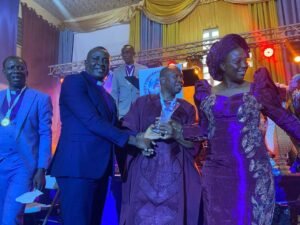
Ambassador Justice Desmond Babatunde Edwards Receives Prestigious 2026 West Africa Heroes Award

Two men in formal attire shake hands as one receives a glass trophy at an awards ceremony in front of orange and navy drapes.

Sierra Leone’s Ambassador to Ireland and former Chief Justice, Justice Desmond Babatunde Edwards, has been honoured with the prestigious 2026 West Africa Heroes Award in recognition of his remarkable contributions to judicial reform, access to justice and the promotion of the rule of law in Sierra Leone and beyond.

The award was presented during a distinguished ceremony held at the Freetown International Conference Centre in Aberdeen, where Ambassador Justice Desmond Babatunde Edwards was celebrated for his decades of dedicated public service and transformational leadership within the judiciary.

Before ascending to the position of Chief Justice, Ambassador Justice Desmond Babatunde Edwards built an extensive judicial career spanning over two decades. He was appointed as a High Court Judge in 2006 and later elevated to the Court of Appeal in 2015, before assuming office as Chief Justice in 2018.

Prior to joining the Bench, he served as the first Head of the Litigation Unit at the National Social Security and Insurance Trust (NASSIT), where he played a pivotal role in establishing both the Medical Appeals Tribunal and the Social Security Appeals Tribunal, helping to strengthen institutional justice mechanisms in Sierra Leone.

During his tenure as Chief Justice, Ambassador Justice Desmond Babatunde Edwards became widely recognized for pioneering key judicial reforms aimed at improving access to justice and strengthening public confidence in the legal system. Under his leadership, the judiciary introduced specialized courts, including the Sexual Offences Model Court, Anti-Corruption Court and Social Security Court, alongside the establishment of Mobile Courts across every district in Sierra Leone to enhance justice delivery.

He also distinguished himself as a strong advocate for transparency within the judiciary by opening court proceedings to greater media access. That landmark move earned him recognition from the Sierra Leone Association of Journalists (SLAJ), making him the only Chief Justice in Sierra Leone to receive an award from the media body.

In further recognition of his contributions to journalism and court reporting, SLAJ later instituted the Chief Justice Desmond Babatunde Edwards Award in Court Reporting, acknowledging his unwavering support for media development and the nationwide training of court reporters.

Beyond Sierra Leone, Ambassador Justice Desmond Babatunde Edwards also served internationally as a Judge of the Residual Special Court for Sierra Leone after being sworn in in 2016. His distinguished service later earned him election as Staff Appeals Judge in 2022, further elevating Sierra Leone’s presence in international justice systems.

His achievements also gained continental recognition when the African Bar Association honoured him in 2023 for his contributions to legal education, access to justice and the promotion of the rule of law across Africa.

Ambassador Justice Desmond Babatunde Edwards has equally been commended for championing women’s and children’s rights, particularly his advocacy against sexual and gender-based violence. His sustained efforts to support women and girls’ empowerment earned him additional honours in both 2021 and 2022.

The 2026 West Africa Heroes Award now adds to a growing list of recognitions celebrating Ambassador Justice Desmond Babatunde Edwards’ enduring legacy of judicial excellence, institutional reform and commitment to justice in Sierra Leone and internationally.