Home Blog Page 80

Vice President Calls for Results-Oriented Decentralization Reforms

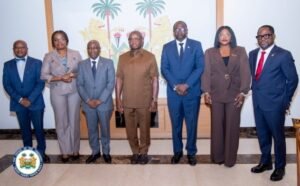
Group of mostly African officials posing for a formal group photo at a governance event, with a World Bank banner and official seal in the background.

By Amin Kef (Ranger)

The Vice President of Sierra Leone, Dr. Mohamed Juldeh Jalloh, has underscored the urgent need to transition the country’s decentralization agenda from policy formulation to tangible, measurable results, as he chaired a high-level meeting of the Inter-Ministerial Committee (IMC) on Decentralization.

Delivering a keynote address on Thursday, May 7, 2026, Dr. Jalloh emphasized that decentralization remains one of the most critical governance reforms in Sierra Leone, directly influencing how government institutions function and how citizens access essential services across the country.

Addressing a gathering of Ministers, Deputy Ministers, Local Council officials, and senior government stakeholders, the Vice President noted that despite years of policy commitments and strategic frameworks, implementation has lagged behind expectations. He pointed to persistent challenges such as weak institutional coordination, gaps between policy and practice, and inconsistencies in service delivery across various districts.

“We have made commitments. We have developed policies. But we have not consistently translated those into results on the ground. That is the reality,” Dr. Jalloh stated, setting the tone for a renewed push toward accountability and performance.

To bridge this gap, he announced the establishment of the IMC Secretariat within the Office of the Vice President, describing it as a strategic intervention designed to ensure that decisions taken at the committee level are effectively implemented, monitored, and completed. According to him, the Secretariat will serve as the central coordinating hub, bringing coherence to what has historically been a fragmented system.

Dr. Jalloh stressed that the time for incremental progress has passed, declaring that decentralization must now be pursued as a results-driven, government-led reform process. He warned that the continuation of fragmented approaches, delays in implementation, and weak accountability structures would undermine national development efforts.

“This is no longer business as usual,” he said. “We must move with discipline, clarity, and a strong commitment to delivery.”

He further explained that the IMC will undergo a functional transformation, shifting from a platform for routine updates to a decision-making body focused on alignment, coordination, and accountability across government institutions. The newly established Secretariat will act as the “delivery engine,” ensuring that all agreed actions are tracked and executed within defined timelines.

Outlining the government’s reform priorities, Dr. Jalloh identified institutional coordination as a central pillar. He announced plans to introduce regular Vice Presidential-led coordination meetings, establish a technical working group chaired by senior government officials, and enhance alignment among ministries and agencies to ensure a unified approach to decentralization.

The Vice President also highlighted the need for urgent reforms within the Local Government Service Commission (LGSC), describing human resource management as one of the most significant bottlenecks affecting service delivery at the local level. He noted that without an efficient system for recruitment, deployment, and performance management, local councils would continue to struggle in fulfilling their mandates.

Proposed reforms, he said, would focus on strengthening the Commission’s mandate, building its institutional capacity, developing a more robust legal framework, and introducing structured oversight mechanisms to enhance performance and accountability.

On fiscal decentralization, Dr. Jalloh emphasized that resources must follow functions, stressing the importance of aligning financial allocations with devolved responsibilities. He disclosed that government would prioritize clarifying and unbundling devolved functions, strengthening fiscal transfer systems, and aligning these efforts with the ongoing review of the Local Government Act.

In addition, the Vice President announced plans to re-establish Regional Coordinating Committees, which he said are critical for ensuring that decentralization is not confined to central government but effectively implemented at the regional level. These committees will help identify challenges in real time and provide a feedback mechanism to inform national decision-making.

To strengthen monitoring and accountability, Dr. Jalloh revealed that the IMC Secretariat will introduce an Action Tracker system. This tool will be used to monitor decisions, assign responsibilities, track timelines, and identify bottlenecks, ensuring that progress is both visible and measurable.

Taking the reform process beyond policy rooms in Freetown, the Vice President also announced plans to embark on a series of regional consultations in Kenema, Bo, Makeni, and Port Loko. He emphasized that these engagements will provide an opportunity to interact directly with Paramount Chiefs, local councils, and frontline service providers to better understand the practical challenges facing decentralization efforts.

“Too often, we sit in Freetown and design solutions without fully confronting the realities on the ground,” he noted. “This time, we will engage directly with those implementing these policies.”

He added that the consultations will involve key central government officials, including Deputy Ministers and sector leaders, to ensure that issues raised are addressed promptly and that decisions are followed through effectively.

Dr. Jalloh reaffirmed that decentralization is fundamental to Sierra Leone’s long-term stability and development, noting that bringing governance closer to the people enhances service delivery, strengthens accountability, and builds public trust in state institutions.

He concluded his address by urging all stakeholders to prioritize implementation, coordination, and accountability, emphasizing that citizens will ultimately judge government performance based on real improvements in their daily lives.

“Our citizens will not measure us by what we say here today, but by what they experience tomorrow,” he said. “Let us move from policy to performance and deliver results that truly impact lives.”

The renewed push for decentralization reforms signals a critical phase in Sierra Leone’s governance agenda, as government intensifies efforts to ensure that policies translate into meaningful change across communities nationwide.

WAYCAN Concludes Agro-Fish Farming Training for 250 Youths in Makeni

Large group of people outdoors holding certificates and a banner advertising a workshop on agro-fish farming at Makeni EBK University Makeni Campus.

The West Africa Youth and Children’s Advocacy Network (WAYCAN), with support from Global Youth Mobilization, has successfully concluded a comprehensive Agro-Fish Farming Training for 250 young people at Ernest Bai Koroma University of Science and Technology in Makeni.

The training formed part of ongoing efforts to promote youth empowerment, entrepreneurship, food security, and sustainable livelihood development in Sierra Leone. Participants included students, young women, youth leaders, and aspiring entrepreneurs who received both practical and theoretical lessons in modern fish farming and agricultural practices.

The program focused on areas such as sustainable fish farming systems, pond construction and management, fish breeding, water management, fish feeding, agribusiness management, environmental sustainability, and entrepreneurship development. Participants also engaged in practical demonstrations, group exercises, and interactive learning sessions facilitated by agricultural and aquaculture experts.

Speaking during the opening session, Executive Director of WAYCAN, Mohamed Amidu Koroma, emphasized the importance of vocational education and entrepreneurship in addressing unemployment and poverty among young people.

According to him, agriculture and fish farming remain among the most promising sectors capable of transforming the lives of young people in Sierra Leone. He noted that although the country possesses enormous agricultural potential, many youths fail to take advantage of available opportunities due to limited access to practical training and entrepreneurial support.

Mr. Koroma particularly encouraged young women to take the training seriously and use the skills acquired to establish businesses capable of generating income and improving their standard of living. He stressed that empowering women economically contributes significantly to poverty reduction, community growth, and national development.

“This training is intended to create opportunities for young people, especially young women, to become self-employed and economically empowered,” he stated. “We want participants to see fish farming not only as an agricultural activity but also as a serious business opportunity capable of changing lives and supporting families.”

He also expressed appreciation to Global Youth Mobilization for supporting the initiative and investing in youth-centered programs that directly impact communities and improve livelihoods.

Facilitators at the training guided participants through various aspects of Agro-Fish Farming, including pond preparation, water quality control, fish species selection, fish nutrition, disease prevention, harvesting techniques, and sustainable farming practices. Sessions on entrepreneurship and business management also equipped participants with knowledge in record keeping, budgeting, customer relations, marketing, and business sustainability.

According to the facilitators, Sierra Leone possesses significant opportunities for fish farming due to favorable environmental conditions and the growing demand for fish products across the country. They encouraged participants to take advantage of the expanding market within the fisheries and agricultural sectors.

The practical sessions formed a major component of the training, allowing participants to directly engage with fish farming techniques and management practices. Many participants described the program as highly impactful and transformative, noting that it improved their understanding and confidence in fish farming and agribusiness.

Young women who participated in the program praised the organization for creating opportunities that encourage female participation in vocational and entrepreneurial sectors. Some participants stated that the training changed their perception of agriculture and inspired them to consider fish farming as a profitable and sustainable business venture.

The Deputy Vice Chancellor of Ernest Bai Koroma University of Science and Technology commended WAYCAN for selecting the institution as host for the initiative. He noted that one of the university’s key objectives is to equip students with practical and entrepreneurial skills necessary to compete effectively in society and contribute to national development.

According to him, modern education should extend beyond classroom learning to include practical empowerment opportunities capable of preparing students for real-life challenges. He added that the Agro-Fish Farming initiative aligns with the university’s vision of promoting innovation, employability, and self-reliance among young people.

“We are grateful to WAYCAN for bringing this important initiative to our institution,” he remarked. “This training is timely and highly beneficial for our students and young people, and we look forward to further collaboration and partnership.”

Throughout the training, participants also engaged in collaborative learning activities designed to strengthen teamwork, leadership, creativity, and innovation. Facilitators encouraged beneficiaries to explore agribusiness opportunities capable of contributing to food security and economic growth within their communities.

Environmental sustainability and climate-smart agriculture also featured prominently during the sessions. Participants were encouraged to adopt responsible farming practices and become ambassadors of sustainable agriculture within their respective communities.

On the final day of the training, the Deputy Registrar of the university highlighted the long-term impact the initiative would have on participants and their communities. He encouraged participants to remain committed to continuous learning, discipline, and hard work, stressing that vocational education remains one of the most effective pathways toward reducing unemployment and promoting sustainable development.

The closing ceremony was marked by celebration and recognition of the commitment demonstrated by participants, facilitators, and institutional partners throughout the program. WAYCAN presented a Certificate of Appreciation to Ernest Bai Koroma University of Science and Technology in recognition of its support and partnership toward the successful implementation of the initiative.

Certificates were also presented to all 250 participants who successfully completed the training. Beneficiaries expressed excitement and pride, describing the certificates as motivation to continue pursuing opportunities within agriculture and entrepreneurship.

The successful conclusion of the Agro-Fish Farming Training represents another major achievement for WAYCAN in promoting youth empowerment, sustainable livelihoods, and community development in Sierra Leone.

Stakeholders noted that initiatives focusing on agricultural entrepreneurship and vocational empowerment among young people could play a critical role in reducing unemployment, strengthening economic resilience, and supporting national food security efforts.

WAYCAN reaffirmed its commitment to expanding similar empowerment initiatives to other communities and districts across Sierra Leone, particularly targeting vulnerable and underserved youth populations with practical vocational and entrepreneurial opportunities.

Media Advocacy Network-SL Concludes 2026 World Press Freedom Day Conference in Freetown

Diverse group of about 25 people posing for a photo in a room, with American flag banners in the background.

By Foday Moriba Conteh

Media Advocacy Network-SL on Wednesday, May 6, 2026, concluded a one-day conference organized to commemorate World Press Freedom Day 2026 at the Africell American Corner on Bathurst Street in Freetown. The event was held under the theme: “Shaping a Future at Peace: Promoting Press Freedom for Human Rights, Development, and Security.”

In her welcome remarks, Amb. Mariama S. Tarawally, Deputy Coordinator of Media Advocacy Network-SL, highlighted the important role journalists play in safeguarding democracy, defending human rights, and ensuring accountability in society. She noted that a free and independent press remains essential for promoting transparency and enabling citizens to make informed decisions.

According to her, World Press Freedom Day serves not only as a moment of celebration but also as an opportunity to reflect on the challenges confronting journalists and media practitioners around the world.

She expressed concern that press freedom continues to face threats, with journalists often subjected to intimidation, harassment, and attacks while carrying out their professional duties. She further noted that the rise of misinformation, disinformation, and rapidly evolving technologies, including Artificial Intelligence (AI), continue to reshape the media landscape and create new challenges for journalists.

Tarawally emphasized the need for collective efforts to strengthen independent and ethical journalism while fostering a media environment that supports truth, accountability, and public trust. She also commended journalists and media practitioners who continue to stand on the frontlines in pursuit of truth and public interest despite growing challenges.

In his statement, Amb. Mohamed Tejan Barrie, Executive Director of Media Advocacy Network-SL, called on authorities and stakeholders to take concrete actions to promote and protect press freedom in Sierra Leone.

He emphasized the importance of a free, independent, and professional media in safeguarding democracy, accountability, and the public interest. According to him, while Sierra Leone has made significant progress in expanding civic space and media plurality, those gains remain fragile.

Reflecting on this year’s theme, Amb. Barrie highlighted the growing intersection between journalism, technology, including Artificial Intelligence (AI), and human rights, stressing the need to strengthen information ecosystems that are truthful, inclusive, and resilient against manipulation.

“It is deeply concerning that journalists in Sierra Leone continue to face intimidation, harassment, and at times physical assault, particularly while covering political events and public demonstrations,” he stated.

He further condemned reports of rogue police officers allegedly targeting journalists, noting that such actions undermine constitutional guarantees on freedom of expression and media independence.

“Journalists are not adversaries of the state; they are essential actors in informing citizens and holding power to account,” he said, adding that attempts to silence the press through force or coercion pose a serious threat to democratic governance.

Amb. Barrie urged leaders to move beyond rhetoric by enforcing accountability within security agencies, strengthening legal protections for journalists, and promoting respect for media practitioners across the political divide.

He also called for increased investment in media literacy and ethical journalism while encouraging the responsible use of technology to combat misinformation and disinformation.

“A free press is not a privilege granted by those in power; it is a right that must be actively defended,” he concluded, calling for the creation of an environment where journalists can operate without fear and where truth continues to serve as the foundation of democracy.

The statements were followed by presentations from several speakers on issues relating to media, technology, storytelling, and press freedom.

John Koroma, Executive Director of Stop IT Newspaper, delivered a presentation on “The Importance of Newspaper in the Social Media Age,” where he underscored the enduring relevance of newspapers despite the rapid growth of social media platforms. According to him, while social media provides instant access to information, newspapers remain important sources of verified and in-depth reporting capable of combating misinformation and promoting informed public discourse.

Esther Yealie Kamara, Co-Founder of Youth Initiative for Climate Action (YICA), used her presentation to emphasize the importance of storytelling in driving social change and raising awareness on critical environmental issues. She noted that telling authentic and impactful stories helps communities better understand the realities of climate change, environmental degradation, and the challenges affecting vulnerable populations. According to her, storytelling remains a powerful tool for advocacy, education, and inspiring action, particularly among young people. She encouraged journalists, content creators, and activists to use their platforms responsibly to amplify voices, promote environmental awareness, and influence positive change within society.

Cecilia Alice Sesay, a journalist with Sierra Leone Broadcasting Corporation (SLBC), spoke on “The Importance of Press Freedom on the Internet,” stressing that digital platforms have become critical spaces for freedom of expression, access to information, and citizen engagement. She noted that protecting online press freedom is essential in ensuring transparency, accountability, and democratic participation in the digital age. Ms. Sesay also raised concerns about online harassment, misinformation, censorship, and cyber threats faced by journalists and media practitioners, calling for policies that safeguard digital rights and promote responsible online journalism.

The conference brought together journalists, civil society actors, media practitioners, and other stakeholders to discuss issues relating to press freedom, human rights, development, and national security in Sierra Leone. The event also featured interactive discussions following each presentation, during which attendees had the opportunity to ask questions and contribute to the conversations.

EXPOSED!!! Poor Nor Good Building Materials Accused of Selling Fake RR Cables at Sussex

Collage on building materials: a wall graphic warning about poor/normal/good materials; spools of electrical cable and wire rolls

By Foday Moriba Conteh

An investigation conducted by The Calabash Newspaper has uncovered allegations involving a businessman accused of importing and allegedly selling suspected counterfeit RR electrical cables, raising fresh concerns about consumer safety and the circulation of substandard electrical materials within the country.

According to credible sources, the businessman, identified as Abdul, owner of Poor Nor Good Building Materials located at Sussex along the Peninsula, is currently under police investigation over allegations that suspected counterfeit RR electrical cables were being sold at his shop.

Sources disclosed that the Sierra Leone Police acted on intelligence reports and subsequently carried out an operation at the businessman’s premises in Sussex. During the exercise, police reportedly discovered and seized several rolls of electrical cables suspected to be counterfeit RR products.

Following the operation, Abdul was reportedly invited to the Criminal Investigation Department (CID) Headquarters for questioning. Sources further stated that he was later taken into custody and subsequently released pending ongoing investigations.

The seized cables, according to sources familiar with the matter, remain under police examination as authorities continue efforts to determine their authenticity and establish whether any laws relating to importation, trademark infringement, or public safety may have been violated.

The development comes amid increasing public concern over the growing number of fire outbreaks recorded across Sierra Leone in recent years. Authorities at the Electricity Distribution and Supply Authority (EDSA) have previously linked several fire incidents to poor electrical installations and the use of substandard electrical materials, particularly inferior electrical cables.

Industry experts say the alleged circulation of counterfeit electrical products poses significant risks to households, businesses, and public institutions, warning that poor-quality cables can contribute to electrical faults, power surges, and fire outbreaks.

Further findings by The Calabash Newspaper indicate that RR cables are a registered trademark product of SV Electrical, a company situated on Siaka Stevens Street in Freetown. Since 2019, the company has reportedly remained the sole authorized importer and distributor of genuine RR cables in Sierra Leone.

Sources disclosed that SV Electrical recently became aware of suspected counterfeit versions of its products allegedly being sold in parts of the country. The imitation products reportedly bear similarities in branding and packaging to genuine RR cables, raising concerns over consumer deception and broader public safety implications.

In a public advisory, SV Electrical reportedly reaffirmed its status as the exclusive distributor of genuine RR cables in Sierra Leone and urged customers to exercise caution when purchasing electrical products. The company advised consumers to verify product authenticity and encouraged purchases directly from its head office on Siaka Stevens Street or its branch at Hastings Junction.

Authorities have repeatedly warned importers, distributors, and traders against the importation and sale of counterfeit or substandard electrical products, emphasizing the dangers such products pose to public safety and national infrastructure.

Law enforcement officials have maintained that individuals found culpable of violating import regulations or endangering lives through the sale of fake or unsafe electrical materials could face legal action in accordance with the laws of Sierra Leone.

Police sources confirmed that investigations into the matter remain ongoing, with many observers believing the outcome of the case could send a strong signal to individuals allegedly involved in the importation and distribution of counterfeit products.

Meanwhile, some concerned citizens have called on authorities to ensure that any counterfeit electrical materials seized during investigations are safely destroyed to prevent them from re-entering the market and posing further risks to the public.

When contacted by The Calabash Newspaper for comment, Abdul reportedly responded aggressively, insisting that “there is no matter” and claiming that the issue had already been resolved.

The Calabash Newspaper remains committed to balanced and objective journalism and stands ready to publish Abdul’s full response or side of the story should he choose to formally engage with this medium.

50 Most Influential Women Committee Celebrates Hon. Rosemarie Bangura’s Pan-African Parliament Position

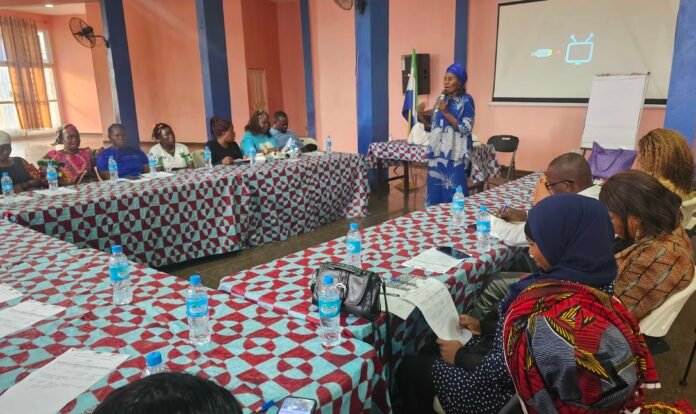
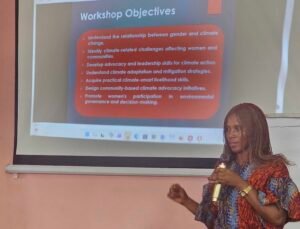
Woman with patterned headscarf speaks into a microphone at a podium, with a projector screen and blue balloons in the background.

By Alvin Lansana Kargbo

The Committee of the 50 Most Influential Women in Sierra Leone on Saturday 9th May, 2026 hosted a celebration in honour of Hon. Rosemarie Bangura following her election as Vice President for the West African Caucus of the Pan-African Parliament during a ceremony held at the CCSL Hall on Kingharman Road in Freetown.

The event attracted parliamentarians, women leaders, student representatives, old pupils associations, and other dignitaries who gathered to recognize Hon. Rosemarie Bangura’s latest achievement on the continental stage. The ceremony was chaired by Madam Hawa Samai, Executive Secretary of the Independent Commission for Peace and National Cohesion.

Hon. Rosemarie Bangura, a Member of Parliament representing Tonkolili District, was recently elected Deputy Chairperson of the West African Regional Caucus of the Pan African Parliament during the continental body’s engagements in Midrand, South Africa. The Pan African Parliament, which serves as the legislative arm of the African Union, brings together representatives from member states to deliberate on issues affecting governance, development, peace, and regional integration across Africa.

The election forms part of a broader restructuring of leadership within the Pan African Parliament’s Seventh Legislature, following an Extraordinary Session held between April 28 and 30, 2026, to elect new bureau members and regional caucus leadership in accordance with the African Union’s regional rotation framework.

Speaking during the celebration, Enid Wilson, Vice President of the Freetown Secondary School for Girls Old Students Association, congratulated Hon. Rosemarie Bangura on what she described as a well-deserved achievement reflecting strong leadership, dedication, and commitment to regional cooperation and development in West Africa.

She said Bangura’s rise continues to make the institution proud, noting that she exemplifies the values of excellence, integrity, and service instilled at the school. She further stated that Hon. Rosemarie Bangura’s accomplishment serves as motivation for young women and aspiring leaders across Africa.

Representing the YWCA Old Pupils Association, Agatha S. Vandy described Hon. Rosemarie Bangura’s election as a reflection of years of hard work, integrity, and dedication to public service. She said the position carries major responsibility for advancing regional development and strengthening the voice of women within African governance institutions. She maintained that Bangura’s success demonstrates the values cultivated during her formative years and reaffirmed the association’s support for her new role.

Hon. Memunatu Jalloh, Member of Parliament for Port Loko District, praised Hon. Rosemarie Bangura’s leadership and contribution within Sierra Leone’s Parliament. She highlighted the Honourable role as deputy female caucus leader at 5he Sierra Leone Parliament and commended her ability to work across party lines with both the ruling Sierra Leone People’s Party and the opposition All People’s Congress. She stressed the need for women in Parliament to maintain solidarity beyond partisan politics and collectively advance issues affecting women and national development.

The National Union of Sierra Leone Students, represented by Miguel Koroma on behalf of the union’s president, also commended Hon. Rosemarie Bangura’s election. He stated that Bangura’s work in Parliament has inspired many young people, particularly female students, to pursue leadership roles.

He noted that women continue to play critical roles in governance, mentorship, and national development, adding that Hon. Rosemarie Bangura’s achievement demonstrates that women are capable of occupying influential positions at both regional and continental levels.

Miguel Koroma further encouraged young women not to be discouraged from aspiring to leadership positions, stating that future generations would continue to build upon the achievements of women currently breaking barriers in governance and politics. He disclosed that thousands of students attended the celebration in solidarity with Hon. Rosemarie Bangura and to recognise her contribution to inspiring youth leadership.

In her remarks, Hon. Rosemarie Bangura expressed appreciation to the organisers and attendees for the recognition, stating that she was surprised by the scale of the celebration organised in her honour. She described her election as a major responsibility and an opportunity to contribute meaningfully to issues affecting West Africa and the African continent.

She explained that the Pan African Parliament consists of representatives from African Union member states, with regional caucuses playing key roles in coordinating positions and addressing issues affecting their respective regions. She stated that her responsibilities as Vice President for the West African Caucus include strengthening regional coordination, promoting youth and women empowerment, and contributing to policy discussions affecting West Africa.

Hon. Rosemarie Bangura also disclosed that this was not her first leadership role within the continental parliament, revealing that she had previously served as rapporteur for the Western Caucus. Hon. Rosemarie Bangura noted that she was elected unopposed despite interest from other countries in the region, which she attributed to the confidence reposed in her leadership and experience.

The parliamentarian took out time and also thanked the people of Tonkolili District for electing her to Parliament for a third term and pledged continued service to her constituents. She further called on African female parliamentarians to move beyond rhetoric and actively champion women and youth empowerment initiatives across the continent.

She also emphasised the need for progress in areas such as education, mental health, and youth development across Africa. She expressed gratitude to her political party leadership, women’s groups, and supporters for their continued encouragement and support throughout her political journey.

The event concluded with renewed calls for increased female participation in leadership and governance across Sierra Leone and Africa.

Sierra Leone Excellence Skills Academy Graduates First Cohort

Group of graduates posing with red certificates at a ceremony, banner and screen in the background.

By Alvin Lansana Kargbo

The completion ceremony for the first cohort of the Sierra Leone “Excellent Skills Academy”, jointly organized by China Railway Seventh Group Co., Ltd., Zhengzhou Railway Technician College, and Freetown Polytechnic, together with the “Talk to China” China–Sierra Leone Youth Exchange Dialogue, was grandly held on Friday 8th May, 2026 at the Freetown Polytechnic, Jui. The event aims to showcase the achievements of the “Excellent Skills Academy,” deepen China–Sierra Leone cooperation in vocational education, and promote integration and exchanges between Chinese and Sierra Leonean youth.

The ceremony brought together government officials, representatives of the Chinese Embassy, technical education institutions, students, lecturers, youth representatives, and development partners from both Sierra Leone and China.

The “Talk to China” China Sierra Leone Youth Exchange Dialogue featured discussions among representatives from the Excellence Skills Academy, Sierra Leonean youth employees of CRSG Sierra Leone, Chinese youth employees of CRSG Sierra Leone, a young teacher from Freetown Polytechnic, a student representative from Freetown Polytechnic, a youth diplomat from the Chinese Embassy in Sierra Leone, and a young official from the Ministry of Technical and Higher Education. Discussions focused on technical education, youth empowerment, skills transfer, employment opportunities, innovation, and strengthening people to people exchanges between Sierra Leone and China.

Speaking at the ceremony, the Principal of Freetown Polytechnic, Dr. Samba Moriba, described the graduation ceremony as a historic milestone marking the successful completion of the first cohort of the Sierra Leone Excellence Skills Academy launched under the leadership of President Julius Maada Bio. He explained that the academy was established through collaboration between Freetown Polytechnic and Chinese partners to promote technical skills development, produce qualified technicians, and create employment opportunities for young people in Sierra Leone and the wider region. He highlighted that the academy provides modern, industry focused, and practical training directly linked to national development priorities.

Dr. Moriba commended China Railway Seventh Group Co., Ltd. for its commitment to youth empowerment and technical education, noting that the company’s investment was contributing significantly to national development. He praised the graduates for their resilience and dedication, stating that their certificates represented not only academic achievement but also their ability to innovate, build and lead. He encouraged them to continue improving their skills, remain disciplined, and adapt to technological advancements in order to remain valuable contributors to society.

The Principal of Zhengzhou Railway Technician College, Wu Wei, through a virtual message, congratulated the graduates for successfully completing their studies and described their achievement as proof that discipline, hard work, and commitment can create opportunities for a brighter future. He encouraged the graduates to use the technical knowledge and practical skills acquired during the programme to contribute meaningfully to Sierra Leone’s national growth and transformation.

Wu Wei thanked the Government of Sierra Leone, the Chinese Embassy, and all partner institutions for supporting the initiative and helping to strengthen vocational education cooperation between Sierra Leone and China. He expressed confidence that the Excellence Skills Academy would continue achieving greater success and producing more skilled professionals capable of supporting national development in the years ahead.

Chief Supervisor, China Railway Seventh Group (SL) Co., Ltd., Feng Tao, described the graduation ceremony as a historic milestone in China Sierra Leone vocational education cooperation and emphasized that the graduates were no longer ordinary certificate holders but skilled technicians prepared to contribute to Sierra Leone’s development. He explained that the Excellence Skills Academy was designed to bridge the gap between technical training and employment by aligning its programmes with Sierra Leone’s development priorities. According to him, graduates who successfully completed the programme would receive employment opportunities through CRSG and its partner enterprises.

Feng Tao stated that the academy represented an important achievement in international cooperation and demonstrated CRSG’s commitment to skills development, employment creation, and youth empowerment in Sierra Leone. He commended Freetown Polytechnic, Zhengzhou Railway Technician College, the Government of Sierra Leone, and the Chinese Embassy for supporting the programme. He stressed that CRSG intended to remain a long term development partner by prioritizing localization, skills transfer, and inclusive growth while expanding technical education cooperation between Sierra Leone and China.

Delivering the keynote address, Minister of Technical and Higher Education, Haja Ramatulai Wurie, described the graduation of the first cohort as a defining moment in Sierra Leone’s efforts to reform technical and vocational education and training. She stated that the programme demonstrated how practical and industry linked education can produce measurable national development outcomes. According to the Minister, the government’s strategy focuses on demand driven and industry led technical training that prepares graduates for real workplace environments and addresses labour market needs.

The Minister praised the Excellence Skills Academy for providing competency based and hands on training that enables graduates to transition directly into productive employment opportunities through partnerships with CRSG. She commended CRSG for contributing not only to infrastructure development but also to skills transfer, workforce localization, and capacity building in Sierra Leone. She further described the graduates as pioneers of a new model of technical education and urged them to uphold discipline, professionalism, integrity, and excellence while contributing to national development.

Wang Peng, Counselor in charge of commercial and economic cooperation of the Chinese Embassy congratulated the graduates and praised the partnership between CRSG, Zhengzhou Railway Professional and Technical College, and Sierra Leonean institutions. He described the graduation as a major step in strengthening technical education and infrastructure development capacity in Sierra Leone, noting that the academy had successfully provided intensive practical training in automotive driving technology and others.

Wang Peng stated that the academy created an integrated pathway linking technical training, certification, practical learning, and employment opportunities. He commended CRSG for supporting vocational education and employment creation while strengthening China Africa people to people exchanges. He further announced that preparations for the second cohort were already underway with plans to expand technical courses and practical training opportunities for more young Sierra Leoneans.

The best performing graduate, Yusuf Kamara, described the programme as life changing and praised the organizers and trainers for bringing world class vocational and technical education opportunities to Sierra Leone. He stated that the academy equipped students with practical and marketable skills that directly respond to real world demands and employment opportunities.

He thanked CRSG, the trainers, and partner institutions for empowering young people with confidence, discipline, technical competence, and professional skills. He noted that many graduates entered the programme uncertain about their future but were now leaving prepared to contribute meaningfully to society and national development. He also described the programme as a symbol of the growing friendship between Sierra Leone and China and pledged that graduates would apply their skills responsibly in service to their communities and the nation.

The ceremony concluded with the awarding of completion certificates and letters of employment certificates to qualified graduates, eight of whom were recognized as outstanding graduates.

The graduation ceremony and youth dialogue reinforced growing educational, cultural, and economic ties between Sierra Leone and China while highlighting the increasing role of technical education in supporting Sierra Leone’s industrial growth, infrastructure development, and long term economic transformation.

A woman wearing an orange headwrap speaks at a wooden podium during a formal conference, with a banner and seated panel behind her showing flags of Sierra Leone and China.
Minister of Technical and Higher Education, Haja Ramatulai Wurie

Panel of six people seated on stage in front of a large banner advertising a China–Sierra Leone youth exchange event and skills academy opening ceremony; diverse speakers in formal and traditional attire show a formal discussion setting. Man in a dark suit and red tie speaks at a wooden podium during a formal ceremony, with a large banner and seated panelists behind him (Sierra Leone and China flags visible). Group of students and officials posing on stage at a ceremony, many holding red certificates with a banner behind them.

Mr. Wang Peng, Counselor in charge of commercial and economic cooperation of the Chinese Embassy in Sierra Leone

Ahead of Upcoming Fourth Forum Summit in New Delhi… India High Commission Hosts Strategic Briefing on India-Africa Business Dialogue & Exhibition 2026

Man in a light gray vest and dark shirt speaks into a handheld microphone at a wooden podium.
High Commissioner of India to Sierra Leone, Baisnab Charan Pradhan

By Amin Kef (Ranger)

The High Commissioner of India to Sierra Leone, Baisnab Charan Pradhan, on Wednesday, May 6, 2026, outlined major opportunities for Sierra Leone and the wider African continent ahead of the upcoming Fourth India-Africa Forum Summit (IAFS-IV) and the India-Africa Business Dialogue and Exhibition scheduled to take place from May 29 to 31, 2026, in New Delhi.

The presentation was delivered during a high-level press briefing held at the Lagoonda Hotel in Aberdeen, Freetown, where members of the diplomatic community, business leaders, investors and stakeholders gathered to discuss the growing partnership between India and African nations.

Among those present at the event were India Commission in Sierra Leone Chargé d’Affaires, Neeraj Saini, Executive Director of the National Investment Board, Dr. Edward Sandy, President of the Sierra Leone Chamber of Commerce, Industry and Agriculture, Oluniyi Robin Coker, prominent businessman Rajesh Balani of Balani and Sons Enterprise, Harish Agnani, Head of Choithram’s, Uganda’s Consul, Deepak Bhurani, CEO of Emkay Store Manoj Rajwani, Girish Harish Budhwani and several members of Sierra Leone’s private sector and diplomatic circles.

Speaking during the engagement, High Commissioner Baisnab Charan Pradhan described the India-Africa Forum Summit as one of the most significant institutional platforms aimed at strengthening relations between India and African countries across a wide range of sectors including trade, technology, healthcare, infrastructure, education, agriculture, development cooperation and cultural exchange.

According to him, the summit has become a major mechanism for advancing political and diplomatic relations, trade and investment partnerships, capacity building programmes and people-to-people engagement between India and Africa.

The High Commissioner explained that the India-Africa Forum Summit journey began in 2008 in New Delhi, followed by the second summit in Addis Ababa in 2011 and the third edition in New Delhi in 2015. He disclosed that the fourth summit, expected later this month in India, will be held under the theme: “IA SPIRIT – India Africa Strategic Partnership for Innovation, Resilience and Inclusive Transformation.”

He emphasised that the 2026 summit comes at a crucial period for both India and Africa as the two sides seek to strengthen South-South cooperation and deepen collaboration around sustainable development, industrialisation, innovation and economic transformation.

According to the High Commissioner, the summit’s vision aligns with Africa’s Agenda 2063 development blueprint and India’s Viksit Bharat 2047 agenda, which focuses on long-term national transformation and inclusive growth.

“The partnership between India and Africa is built on mutual respect, shared aspirations and common development priorities,” he stated, adding that the summit aims to move beyond traditional diplomacy by promoting innovation-driven and people-centered cooperation.

Highlighting the growing economic relationship between India and Africa, Shri Pradhan disclosed that bilateral trade between India and African countries exceeded US$100 billion during the 2024-2025 period, while Indian investments across the continent currently stand between US$75 billion and US$80 billion.

He identified several strategic sectors driving the partnership, including energy, mining, infrastructure, telecommunications, agriculture, pharmaceuticals and digital technology.

Focusing specifically on Sierra Leone, the High Commissioner pointed to several sectors with strong potential for future collaboration between the two countries. These include agriculture and agro-processing, mining and critical minerals, infrastructure development, renewable energy, healthcare modernization, digital economy initiatives, fintech innovation, pharmaceuticals, education and human capacity development.

Speaking on the upcoming India-Africa Business Dialogue (IABD), Shri Pradhan described the forum as a flagship private-sector platform that brings together investors, businesses, policymakers, financial institutions and development partners from India and African countries.

According to him, the business dialogue seeks to transform policy discussions into practical economic partnerships capable of driving investment, innovation, industrialization and regional growth across Africa.

He explained that the dialogue will focus on promoting trade and investment opportunities, strengthening small and medium-sized enterprises, facilitating technology transfer and building sustainable value chains between India and African economies.

The High Commissioner strongly encouraged Sierra Leone to participate actively in the dialogue, stressing that the event offers enormous opportunities for Sierra Leonean businesses and institutions to access Indian investment, technology and industrial expertise.

He further highlighted the importance of business-to-business engagement opportunities that will allow Sierra Leonean entrepreneurs and companies to hold direct discussions with Indian firms on investment partnerships, technology cooperation, infrastructure development and market expansion.

According to him, Sierra Leonean businesses stand to benefit significantly from partnerships in manufacturing, agriculture, healthcare services, renewable energy, mining support services and digital innovation.

Shri Pradhan also underscored India’s longstanding development cooperation with Sierra Leone, describing the relationship as one rooted in solidarity, mutual growth and practical support.

He noted that over the years, India has supported Sierra Leone through concessional loans, grants, training programmes, infrastructure support and socio-economic development initiatives.

The High Commissioner added that the exhibition component of the India-Africa Business Dialogue will provide Sierra Leone with an important platform to showcase its investment opportunities, natural resources, tourism potential, industrial strengths and development success stories to Indian industries, investors and Government institutions.

He stressed that the exhibition will not only promote Sierra Leone as an investment destination but also create opportunities for long-term commercial partnerships capable of accelerating economic transformation and job creation.

Also speaking during the briefing, Dr. Edward Hinga Sandy, Executive Director of the National Investment Board (NIB), described the India-Africa Business Dialogue and Exhibition as a strategic opportunity for Sierra Leone to strengthen economic cooperation with India and attract transformative investments into key productive sectors.

Dr. Edward Sandy explained that India has increasingly emerged as one of Sierra Leone’s major trade and investment partners, noting that Government’s industrialization agenda has been driven by deliberate reforms aimed at stimulating domestic production, increasing investment and improving economic resilience.

He disclosed that during his tenure as Minister of Trade, Government reviewed the country’s industrial policy framework and introduced a Special Economic Zone policy designed to accelerate industrial growth and attract investors into strategic sectors including agro-processing, agriculture, mineral beneficiation and light manufacturing.

According to Dr. Edward Sandy, the reforms have already generated growing interest from Indian investors who now see Sierra Leone as an emerging destination for industrial and commercial opportunities.

Highlighting some success stories, he pointed to the establishment of Sierra Leone’s first steel industry by an Indian investor as a major milestone in the country’s industrialization journey.

He also referenced ongoing investments in iron ore processing into iron pigment and aluminum recycling initiatives aimed at promoting value addition rather than exporting raw materials.

In the agricultural sector, Dr. Edward Sandy praised Pee Cee & Sons for pioneering large-scale onion farming and local palm oil processing initiatives, which he said are helping position Sierra Leone toward becoming a net exporter of vegetable oil.

He stressed that the broader objective behind Government’s industrialization drive is to reduce dependence on imports and strengthen local production capacity, especially in light of lessons learned during the COVID-19 pandemic when global supply chain disruptions exposed vulnerabilities in import-dependent economies.

Dr. Edward Sandy maintained that building strong local industries remains essential for long-term economic resilience, employment creation and sustainable growth.

He further noted that participation in the India-Africa Business Dialogue would create opportunities for Sierra Leonean businesses to showcase the country’s investment climate, explore financing opportunities and establish strategic international partnerships.

According to him, several compliant businesses operating in Sierra Leone have already attracted international financing from institutions such as the International Finance Corporation and French financial partners.

He also underscored existing South-South cooperation arrangements between Sierra Leone and India, which he said could facilitate increased exports of Sierra Leonean products into the Indian market.

Dr. Edward Sandy encouraged Sierra Leonean businesses and investors to fully maximize the opportunities presented by the India-Africa Business Dialogue in order to accelerate the country’s industrial transformation agenda.

Adding the voice of the private sector, President of the Sierra Leone Chamber of Commerce (SLCC), Industry and Agriculture, Oluniyi Robin Coker, stated that the summit has the potential to unlock significant economic opportunities for Sierra Leonean businesses if participants approach the engagement strategically and proactively.

Oluniyi Robin Coker explained that the ultimate success of the summit would depend on how effectively businesses prepare themselves, build partnerships, identify procurement channels and secure export opportunities into the Indian market.

He noted that he has already observed substantial Indian investment activity in countries such as Saudi Arabia and South Africa, describing India’s growing international business footprint as evidence that Sierra Leone must position itself to attract similar investments.

Speaking on the country’s business environment, Oluniyi Robin Coker stated that he could not claim to be satisfied with the current state of businesses in Sierra Leone because complacency often undermines innovation, competitiveness and growth.

He stressed that Sierra Leone must remain focused on expanding businesses, increasing employment opportunities, improving wages and strengthening Government revenue generation through taxation.

According to him, businesses in Sierra Leone are operating under difficult global economic conditions and therefore require supportive and predictable Government policies to succeed.

Oluniyi Robin Coker carefully distinguished between policy support and Government interference, emphasizing that businesses need an enabling environment built on transparency, consistency and fairness.

He noted that Government’s role should be to establish policies that encourage competition, attract investment and create opportunities for both local and foreign businesses to thrive.

Citing the recently launched Flour Mill project operated by a member of the Chamber of Commerce, he described it as clear evidence that supportive Government policies can help attract major international investments into Sierra Leone.

He concluded that while Government may not be able to directly support every business, strong and consistent policies can create a level playing field that enables companies to grow and contribute meaningfully to national economic development.

The upcoming summit is expected to attract African Heads of State, senior Government officials, investors, policymakers, business executives and development experts from across Africa and India, making it one of the largest platforms for Africa-India cooperation in recent years.

Analysts believe the growing partnership between India and Sierra Leone presents significant opportunities in infrastructure expansion, industrialization, healthcare modernization, agriculture, education, digital transformation and technology transfer.

With preparations now intensifying ahead of the India-Africa Forum Summit IV in New Delhi, expectations remain high that the engagement will open new pathways for strategic cooperation, trade expansion and sustainable economic growth between India, Sierra Leone and the broader African continent.

Sierra Leonean Lawmaker Raises Concerns Over President Barrow’s Third-Term Bid at ECOWAS Parliament

Man in traditional gray attire and patterned hat speaks at a microphone in a legislative chamber, gesturing with his hands.

By Melvin Tejan Mansaray

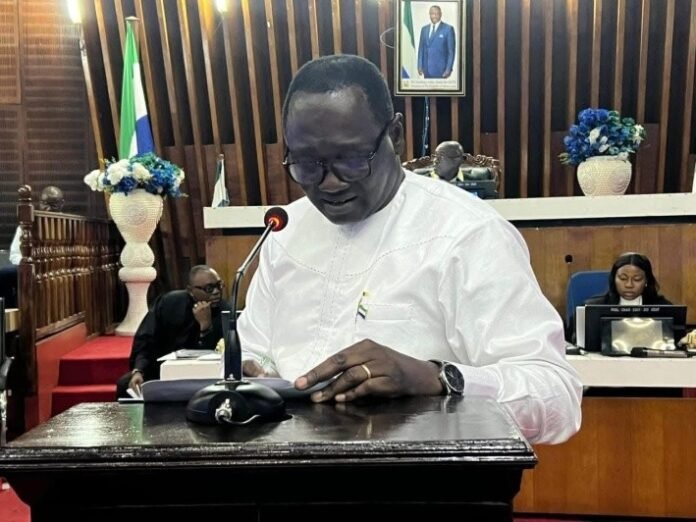
A Sierra Leonean lawmaker and Member of the ECOWAS Parliament, Hon. Saa Emerson Lamina, has expressed concern over attempts by some West African leaders to seek extended stay in power, warning that altering term-limit arrangements after assuming office poses a threat to democracy and regional stability.

Hon. Saa Emerson Lamina, who also serves as Leader of Government Business Two in Sierra Leone’s Parliament, made the remarks on Tuesday, May 5, 2026, during the ongoing 2026 First Ordinary Session of the ECOWAS Parliament taking place in Abuja, Nigeria, from May 4 to 17.

Speaking exclusively to the Press following the presentation of country reports by Côte d’Ivoire, Ghana and The Gambia, the Sierra Leonean legislator praised the detailed nature of the reports, particularly on governance, peace, security, democracy, environmental challenges and the implementation of ECOWAS community initiatives.

“I should commend the presenters for giving comprehensive details on their political situation, democracy, peace, security and human rights, environmental situation including the effects of climate change and the status of implementation of Community texts, initiatives and programmes within member states,” Hon. Saa Emerson Lamina stated.

While acknowledging The Gambia’s strides in strengthening its Early Warning mechanisms and democratic participation, Hon. Saa Emerson Lamina said he remained skeptical about developments surrounding presidential term limits in the country.

“I expressed concern about the presidency and entrance legitimacy which seem to change from what they promised to the reality on the ground,” he said. “For example, there is a term limit debate, but at the time the President came to power, it turned out that there is no term limit now. That is surprising.”

The outspoken parliamentarian stressed that leaders across West Africa should avoid changing constitutional or political arrangements after gaining power, describing such actions as dangerous precedents capable of undermining democratic gains across the region.

“Technically, I am saying that leaders in West Africa must not shift the goalpost in the middle of the game. That is a red flag,” Hon. Saa Emerson Lamina emphasized.

According to him, prolonging presidential tenure beyond originally agreed democratic frameworks often creates political tension that can encourage unconstitutional changes of Government, including military interventions.

“The danger in the prolongation of term limits and shifting from campaign promises is that it attracts military intervention,” he warned.

However, Hon. Saa Emerson Lamina firmly stated that he does not support military takeovers, noting that juntas often suppress democratic institutions, restrict press freedom, dissolve parliament and suspend constitutions.

The Sierra Leonean MP further disclosed that he was uncomfortable that discussions surrounding the extension of presidential tenure were not explicitly highlighted in The Gambia’s Country Report presented before the ECOWAS Parliament.

He also questioned the proliferation of political parties in The Gambia, arguing that stronger eligibility standards should exist before political organizations are allowed to contest national elections.

“It is difficult to reconcile how a small country with a small population is having over twenty-two political parties,” he said. “There should be a stronger threshold in which individuals and political parties should fulfill before having the real opportunity to contest. That is very important.”

The Gambia is currently preparing for its December 2026 Presidential Elections, with the Independent Electoral Commission already publishing the official electoral timetable and key milestones for the process.

Hon. Saa Emerson Lamina observed that many leaders across Africa often begin their political journeys by promising reforms and democratic change, only to later seek prolonged rule.

“Fathers of democracy like the United States or even Nigeria have a two-term limit. I actually detest and do not admire leaders that campaign on the rules of two terms but turn out to be different with third-term ambitions and others becoming termless. It is not good for democracy and I think ECOWAS must act,” he declared.

Citing Article 40.2 of ECOWAS democratic principles, Hon. Saa Emerson Lamina argued that member states should work toward adopting more uniform democratic laws across the sub-region.

“It is possible for countries in ECOWAS to have uniform laws,” he explained. “For example, almost every country now adheres to the ECOWAS Protocol that says electoral laws cannot be changed six months before elections. Uniform laws will bring out the real tenets of democratic principles.”

The Gambia’s report to the ECOWAS Parliament highlighted that the country’s political environment remains “largely open and participatory,” while noting that Early Warning mechanisms continue monitoring emerging tensions and localized political disputes requiring timely intervention.

The debate over presidential tenure in The Gambia remains sensitive following the failure of constitutional reform efforts in 2020. Under the 1997 Constitution introduced during former President Yahya Jammeh’s administration, Presidents are permitted unlimited five-year terms.

As a result, no constitutional barriers currently prevent President Adama Barrow from seeking a third term in the 2026 elections, despite earlier political promises relating to constitutional reforms and governance changes.

In an interview with QTV on January 31, 2025, President Barrow openly confirmed his intention to seek re-election, stating: “Let me provide you with a direct answer: Yes, I will be contesting in the next presidential election.”

The Gambia, often referred to as the “Smiling Coast of West Africa,” has a population of over 2.4 million people and is known for its rich cultural heritage, Islamic traditions, kora music and griot storytelling.

Ambassador Zhao Yong Highlights 40 Years of Fisheries Cooperation and Growing Trade

Officials and locals gather around a ceremonial stone on a sand mound at a port groundbreaking under a white-and-blue canopy.

By Amin Kef (Ranger)

In a renewed demonstration of deepening bilateral relations, Zhao Yong has underscored the growing strength of cooperation between China and Sierra Leone, particularly in the fisheries sector, describing it as a cornerstone of mutually beneficial development between the two nations.

The Ambassador’s remarks follow the recent launch of offshore engineering works for the China-aided Julius Maada Bio Industrial Fishing Port, a major infrastructure project jointly witnessed by Ambassador Zhao Yong and President Julius Maada Bio. The project is widely regarded as a transformative step toward modernizing Sierra Leone’s fisheries industry and unlocking new economic opportunities.

Ambassador Zhao Yong noted that cooperation in fisheries between the two countries dates back over four decades. He recalled that Sierra Leone was the first African destination for China’s overseas fishery fleet in 1985, marking the beginning of a long-standing partnership. Over the years, collaboration has expanded to include aquaculture, scientific research and industrial fishing, significantly contributing to local capacity development.

In a major milestone for Sierra Leone’s export ambitions, the Ambassador highlighted that in 2025 the country successfully exported its first batch of fishery products to China; well ahead of its 2030 target. That achievement, he said, reflects the tangible results of sustained cooperation and China’s continued investment in Sierra Leone’s marine resources sector, which has now exceeded 10 million US dollars.

He further emphasized that the ongoing fishing port project represents a critical intervention aimed at addressing longstanding infrastructural gaps in the sector. Once completed, the port is expected to accommodate vessels of up to 3,000 tons and handle multiple vessel categories, with an annual turnover capacity exceeding 20,000 tons. The facility will also provide integrated services for fish processing, storage and logistics, while opening avenues for investments in shipbuilding and value-added production.

Beyond fisheries, Ambassador Zhao Yong pointed to a broad spectrum of development initiatives being implemented through China-Sierra Leone cooperation. Those include renewable energy interventions such as the “Light Salone” solar streetlight project and agricultural advancements through technology demonstration centers. He added that partnerships in public health, education and cultural exchange continue to deliver meaningful impact for citizens of both nations.

On the economic front, the Ambassador highlighted China’s “zero-tariff” policy for African exports as a major driver of trade growth. Effective May 1, 2026, the policy grants duty-free access to products from 53 African countries, including Sierra Leone. He disclosed that Sierra Leone has already been benefiting from tariff-free exports since 2024, resulting in a 30 percent increase in bilateral trade in 2025, while Sierra Leone’s exports to China surged by 42 percent to a record high.

Looking ahead, Ambassador Zhao Yong reaffirmed China’s commitment to strengthening its partnership with Sierra Leone through continued investment and collaboration. He stressed that the successful implementation of the fishing port and other strategic projects will not only modernize key sectors but also deepen the historic ties between the two nations.

He concluded by expressing optimism that China and Sierra Leone will continue to work hand in hand to advance shared development goals, describing the relationship as one that is poised to enter a new and dynamic chapter.

Bar Association President & ECSL Chief Engage on Electoral Reforms

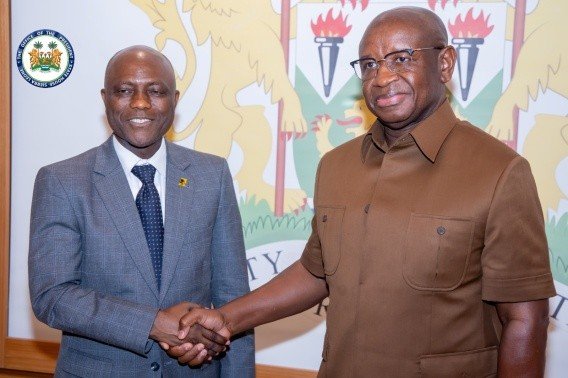
Two professionals shaking hands in a modern office, smiling at the camera.

By Ibrahim Sesay

The Chief Electoral Commissioner and Chairman of the Electoral Commission for Sierra Leone,  Edmond Sylvester Alpha, on Tuesday, 5th May 2026, paid a courtesy visit to the President of the Sierra Leone Bar Association (SLBA), Madam Tuma Adama Gento-Kamara, as part of ongoing engagements aimed at strengthening electoral governance and promoting democratic accountability in Sierra Leone.

The meeting focused on enhancing collaboration among key national stakeholders in support of credible, transparent and accountable electoral processes across the country.

Speaking during the engagement, Edmond Sylvester Alpha emphasized the importance of sustained cooperation, coordination and dialogue among institutions, including civil society organizations, political parties and professional bodies, in rebuilding public trust and confidence in Sierra Leone’s electoral system.

He noted that strengthening partnerships with respected institutions such as the Sierra Leone Bar Association remains critical in advancing electoral reforms and reinforcing democratic integrity nationwide.

According to the ECSL Chairman, the role of legal professionals and institutions in promoting justice, constitutionalism and electoral accountability is vital to ensuring peaceful and credible elections.

In response, Madam Tuma Adama Gento-Kamara reaffirmed the Sierra Leone Bar Association’s commitment to supporting the Commission’s reform agenda and democratic initiatives.

She assured the ECSL leadership that the Association stands ready to work closely with the Commission and other stakeholders in promoting transparency, accountability and public confidence in the electoral process.

Madam Tuma Adama Gento-Kamara further stressed the importance of inclusive stakeholder participation in strengthening democratic institutions and safeguarding the rule of law in Sierra Leone.

The engagement forms part of ECSL’s broader strategy to deepen partnerships with national institutions and stakeholders as efforts continue toward meaningful electoral reforms and improved democratic governance in the country.

Observers say such engagements are essential in fostering mutual understanding, institutional cooperation and public confidence in Sierra Leone’s democratic processes.